
Basic Math knowledge Worksheets for Ages 3-8
3 filtered results
Difficulty Level
Grade
Age
-
From - To
Subject
Activity
Standards
Discover engaging Basic Math Knowledge Worksheets designed for children ages 3-8. Our worksheets offer a fun and interactive way to develop essential math skills, including number recognition, counting, addition, and subtraction. With colorful illustrations and varied activities, these worksheets capture young learners' attention while fostering their mathematical understanding. Tailored to different learning levels, our resources cater to preschoolers and early elementary students, promoting a solid foundation as they explore the world of numbers. Encourage your child's confidence in math and watch them thrive with our thoughtfully crafted materials. Start their mathematical journey today with enjoyable worksheets that make learning a joyful experience!
Favorites
With answer key
Interactive
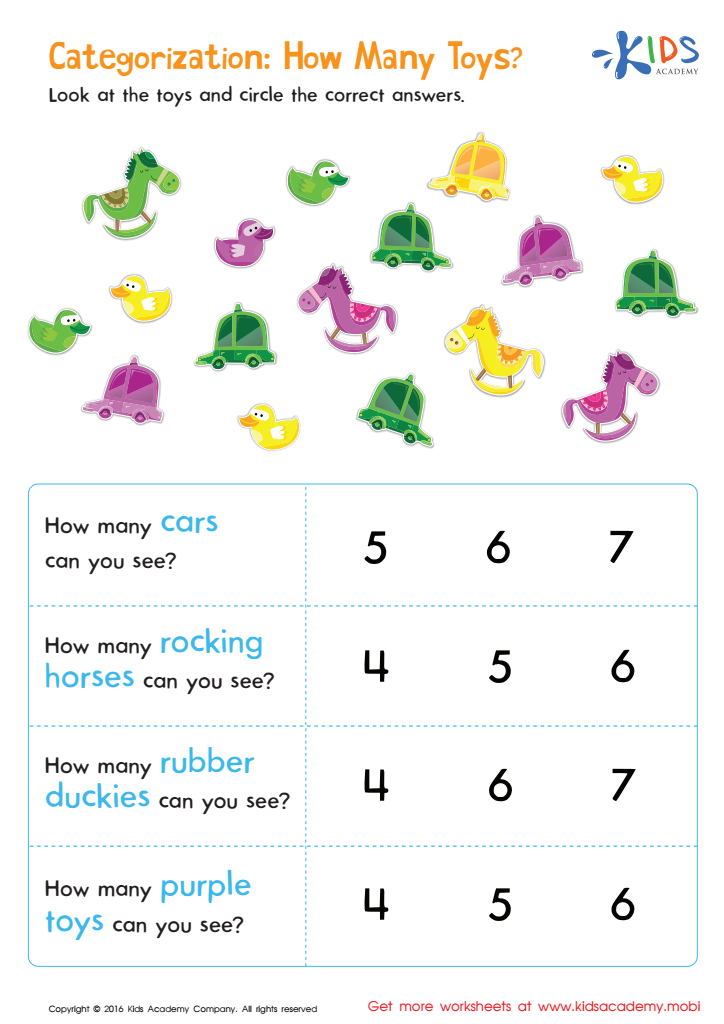
Classifying Toys by Type and Color Sorting Worksheet
Kids Academy offers free math worksheets to help practice counting, categorization & recognition skills. Kids will enjoy counting by color & type while strengthening problem-solving & literacy skills.
 Assign to My Students
Classifying Toys by Type and Color Sorting Worksheet
Worksheet
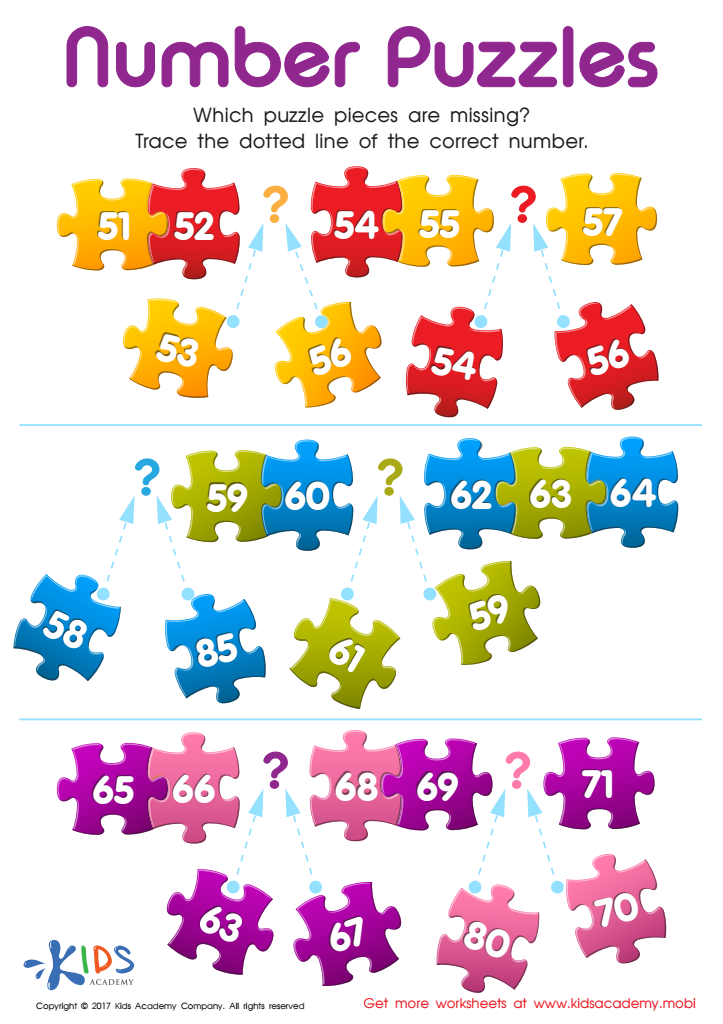
Number Puzzles Worksheet
In this tracing paper, your child must identify the missing numbers in the puzzle. Guide them as they trace the line for the correct number to complete the worksheet. This activity will help boost their problem-solving skills.
Number Puzzles Worksheet
Worksheet
Join Kids Academy for Free
Who is primarily going to use this learning content?








Basic math knowledge in children aged 3-8 is crucial for several reasons that resonate with both parents and teachers. Early exposure to mathematical concepts fosters a strong foundation for future learning, making critical connections in more advanced mathematical concepts later on. At this age, children are naturally curious and receptive to learning, enabling them to grasp mathematical ideas through play, stories, and practical experiences.
Developing basic math skills enhances cognitive abilities, such as problem-solving, critical thinking, and logical reasoning. These skills are not only essential for mathematics but also profoundly impact literacy and overall academic performance. Understanding numbers, shapes, patterns, and measurements contribute significantly to a child’s ability to understand the world around them, promoting skills that are vital in everyday life.
Furthermore, positive early experiences with math can help reduce math anxiety and build confidence, paving the way for a more inquisitive and engaged learner. By actively nurturing math skills through engaging activities and encouragement, parents and teachers can instill a love for learning and empower children to become lifelong learners. In essence, fostering basic math knowledge during these formative years equips children with essential life skills and prepares them for future success both academically and personally.








