Character recognition Worksheets for Ages 3-8
4 filtered results
-
From - To
Explore our engaging character recognition worksheets designed for children aged 3-8! These worksheets provide a fun and interactive way for young learners to enhance their recognition skills through colorful activities. Perfect for early education, they cover essential concepts like alphabet recognition, letter sounds, and matching letters with images. Our character recognition worksheets foster critical thinking and language development while keeping kids entertained. Ideal for both classroom and home use, these resources are tailored to spark curiosity and promote a love for learning. Visit our website to access a variety of printable worksheets that empower your child's educational journey!
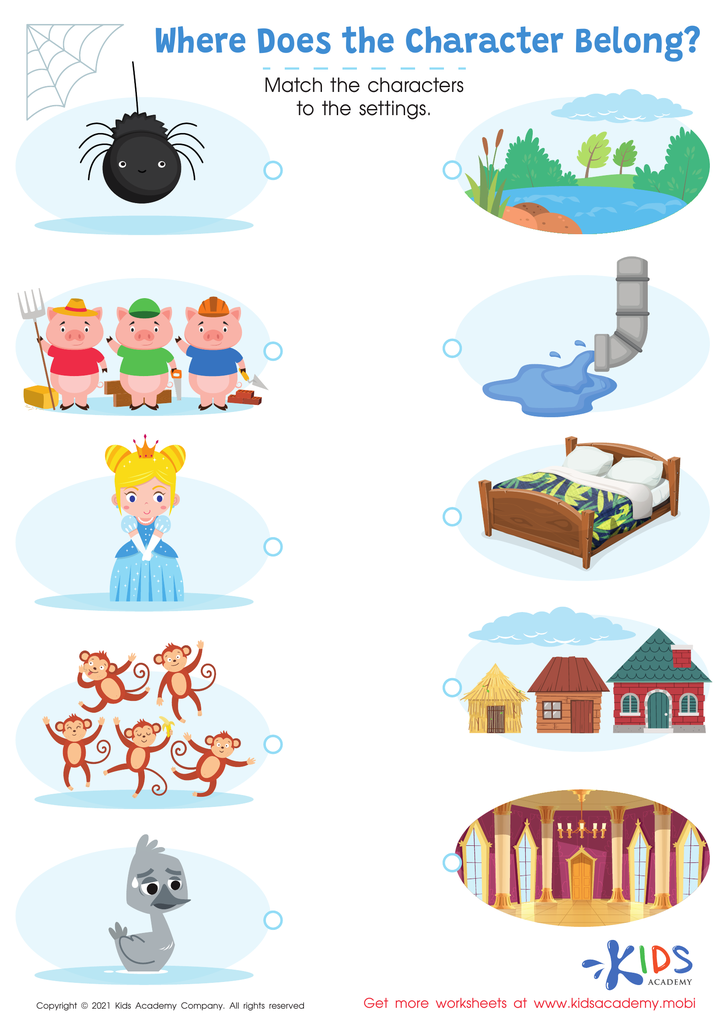
Where Does the Character Belong? Worksheet
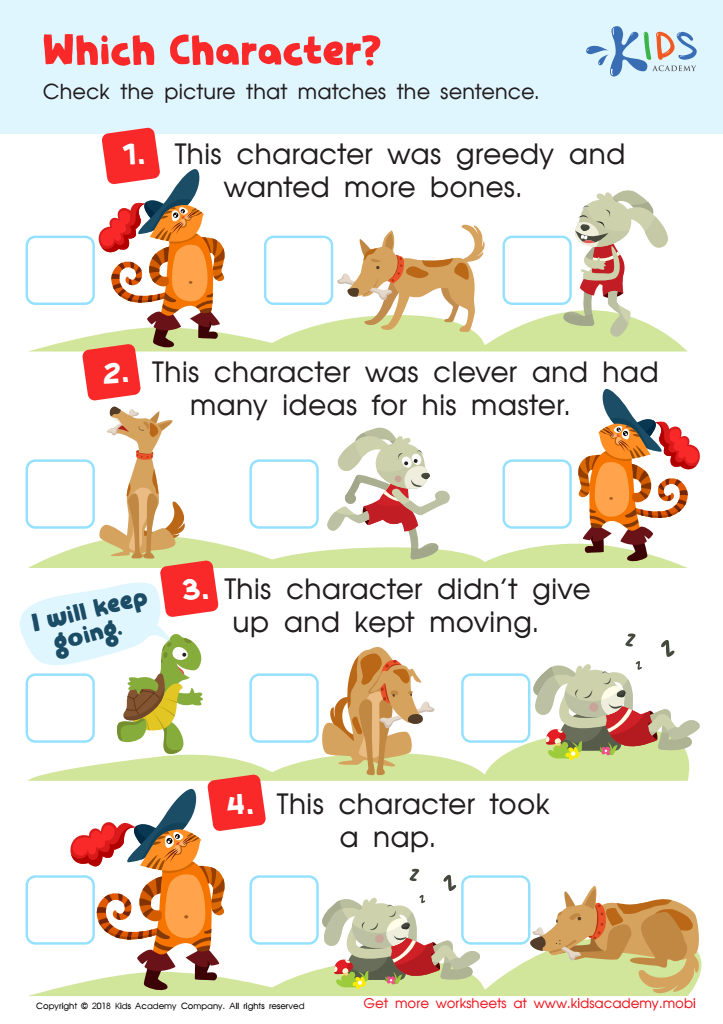
Which Character Worksheet
 Assign to My Students
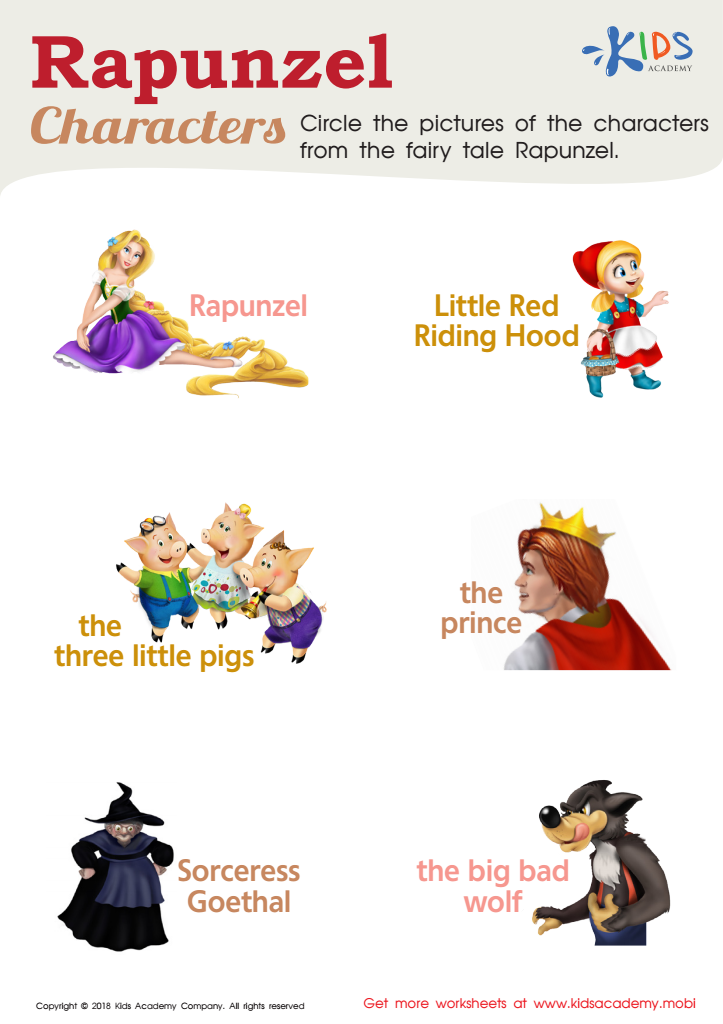
Rapunzel Characters Worksheet
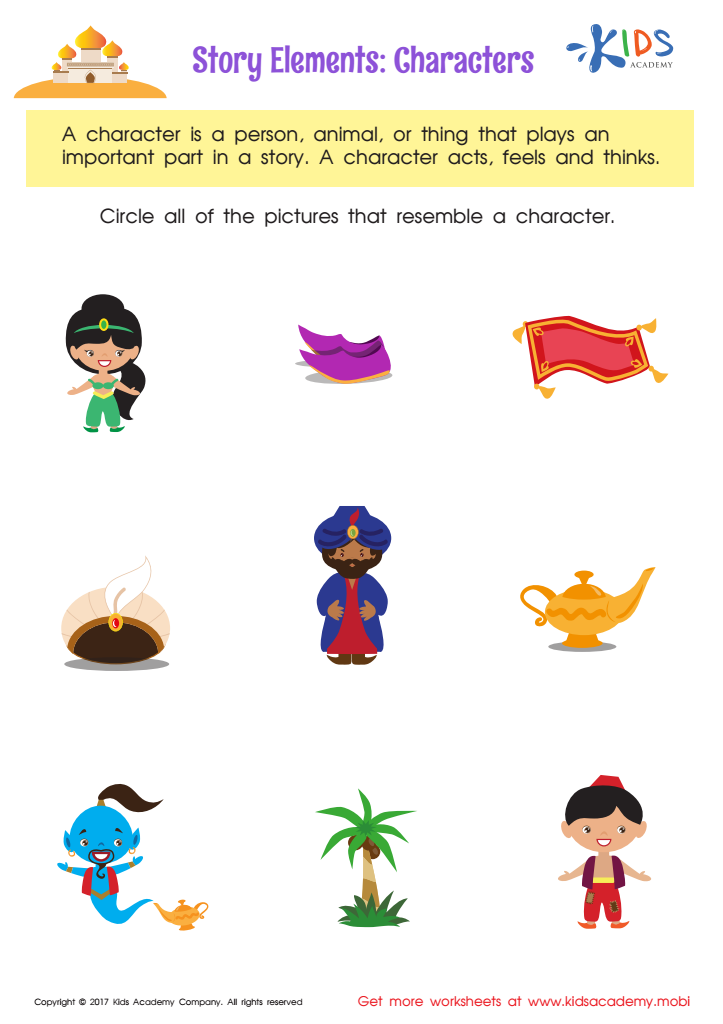
Story Elements Printable








Character recognition is a fundamental skill for children aged 3-8, serving as a cornerstone for literacy development. During these formative years, children encounter letters, numbers, and other symbols, and mastering character recognition plays a pivotal role in their reading and writing capabilities. When parents and teachers prioritize this skill, they empower children to decode words, develop vocabulary, and ultimately become confident readers.
Understanding characters fosters cognitive development, promoting memory and attention to detail. Engaging in activities that reinforce character recognition—like reading together, playing games, or using flashcards—creates a rich learning environment. These interactions also strengthen the parent-child or teacher-student bond, making learning a collaborative experience.
Furthermore, early character recognition lays the groundwork for lifelong learning. As children transition to more complex texts, a solid foundation in recognizing characters enables them to engage with a broader range of literature, enhancing their critical thinking and comprehension skills.
By prioritizing character recognition, parents and teachers cultivate an environment that values literacy and learning from an early age, equipping children with essential skills that extend far beyond the classroom. Fostering a love for reading helps set the stage for a bright academic future and nurturing lifelong learners.








