Compare fractions Worksheets for Ages 3-8
6 filtered results
-
From - To
Help young learners master the concept of comparing fractions with our engaging worksheets designed for ages 3-8. Our vibrant, easy-to-follow activities introduce children to the basics of fractions, focusing on how to compare sizes and values using visual aids and guided practice. These worksheets encourage critical thinking and allow children to recognize larger versus smaller fractions in a fun, interactive way. Perfect for classrooms or at-home learning, our comparing fractions worksheets foster essential math skills, boost confidence, and make learning enjoyable. Dive into the world of fractions with Kids Academy and watch your child's math abilities flourish!
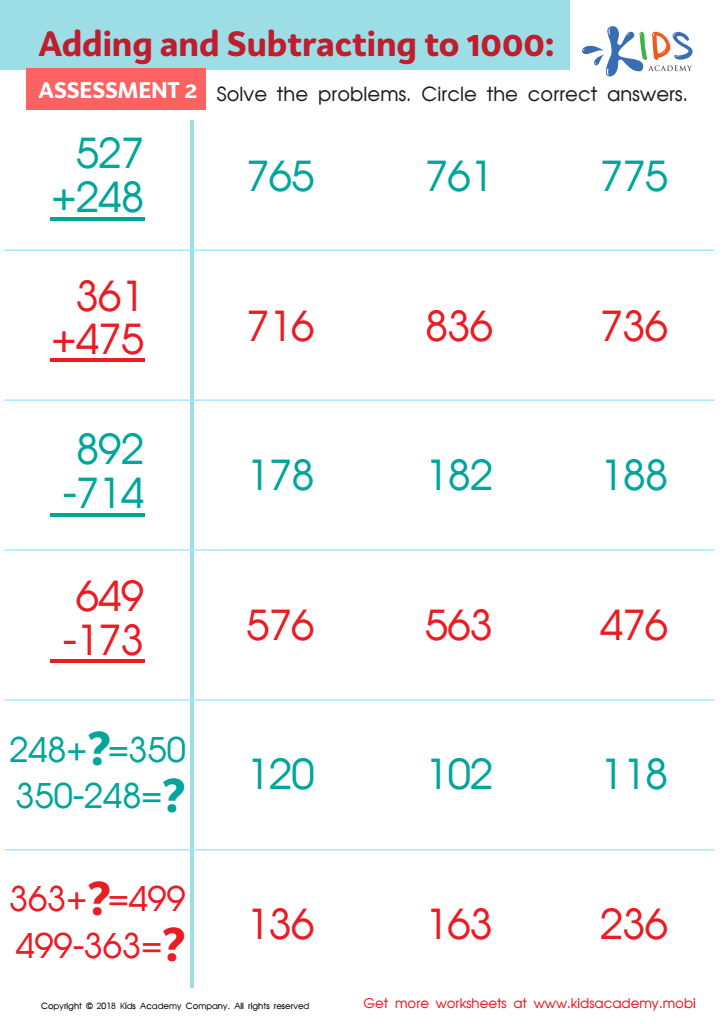
Adding and Subtracting to 1 Worksheet: Assessment 2
 Assign to My Students






Understanding how to compare fractions is fundamentally important for young learners aged 3 to 8, as it lays the groundwork for various mathematical concepts. Firstly, grasping fractions fosters a sense of number sense and proportionality, critical skills that extend beyond the realm of math into everyday life. For example, children encounter fractions in cooking, sharing snacks, or dividing toys, making these concepts relatable and engaging.
Moreover, learning to compare fractions enhances critical thinking abilities. When children evaluate which fraction is larger or smaller, they develop problem-solving skills and the ability to analyze relationships between numbers. These foundational skills serve not only in math but in science, social studies, and logical reasoning.
Teachers and parents should recognize that early exposure to fractions can cultivate a positive attitude towards math. By introducing these concepts through interactive activities such as visual aids, games, or practical applications, educators can reduce math anxiety and promote confidence. Additionally, familiarity with fractions prepares students for more complex mathematical topics in later years, ensuring a smoother transition as they progress through their education. In summary, a solid understanding of comparing fractions sets young learners on a path toward academic success and instills essential life skills.








