
Comparing heights Worksheets for Ages 3-8
3 filtered results
Difficulty Level
Grade
Age
-
From - To
Subject
Activity
Standards
Discover a fun way to teach children ages 3-8 with our Comparing Heights Worksheets! These engaging printables help young learners develop essential measurement skills by comparing the heights of different objects and characters. Perfect for preschool and early elementary students, our worksheets feature colorful illustrations and easy-to-follow instructions to make learning enjoyable. These activities foster critical thinking, observation, and comparison abilities in growing minds. Download now and give your child an early advantage in mastering vital math concepts while having fun with our age-appropriate, interactive resources! Ideal for parents, teachers, and homeschoolers.
Favorites
With answer key
Interactive
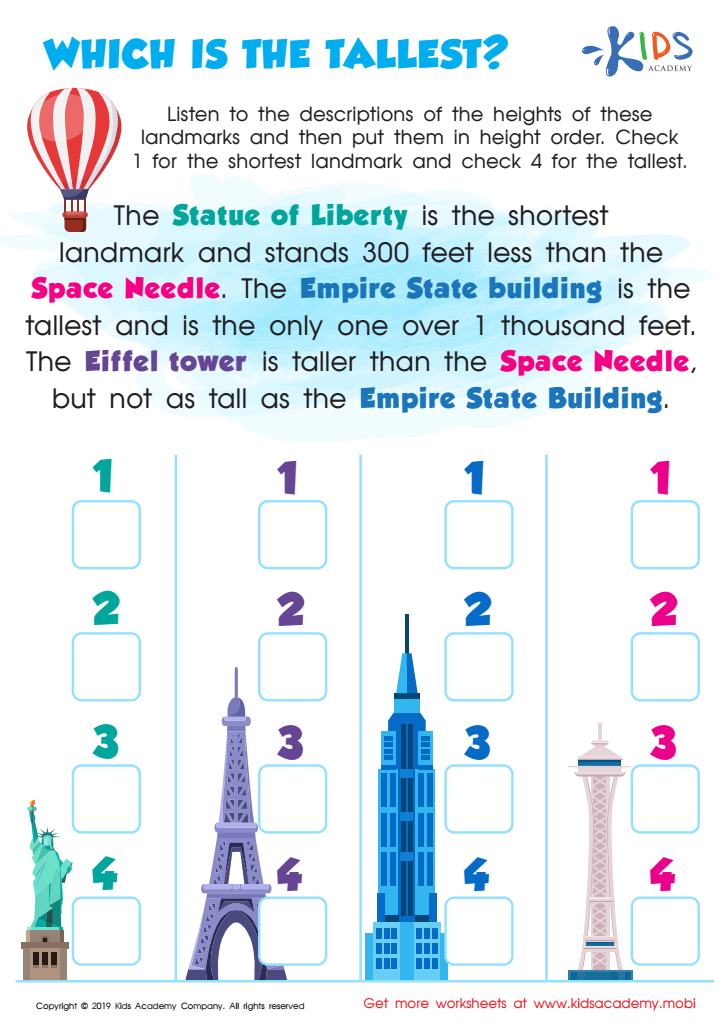
Which is the Tallest? Worksheet
Help your kids arrange the buildings in order of height: highest (4) to lowest (1). Ask them if they can think of other ways things can be measured. Read the texts describing the buildings and check 4 for the tallest and 1 for the shortest.
 Assign to My Students
Which is the Tallest? Worksheet
Worksheet
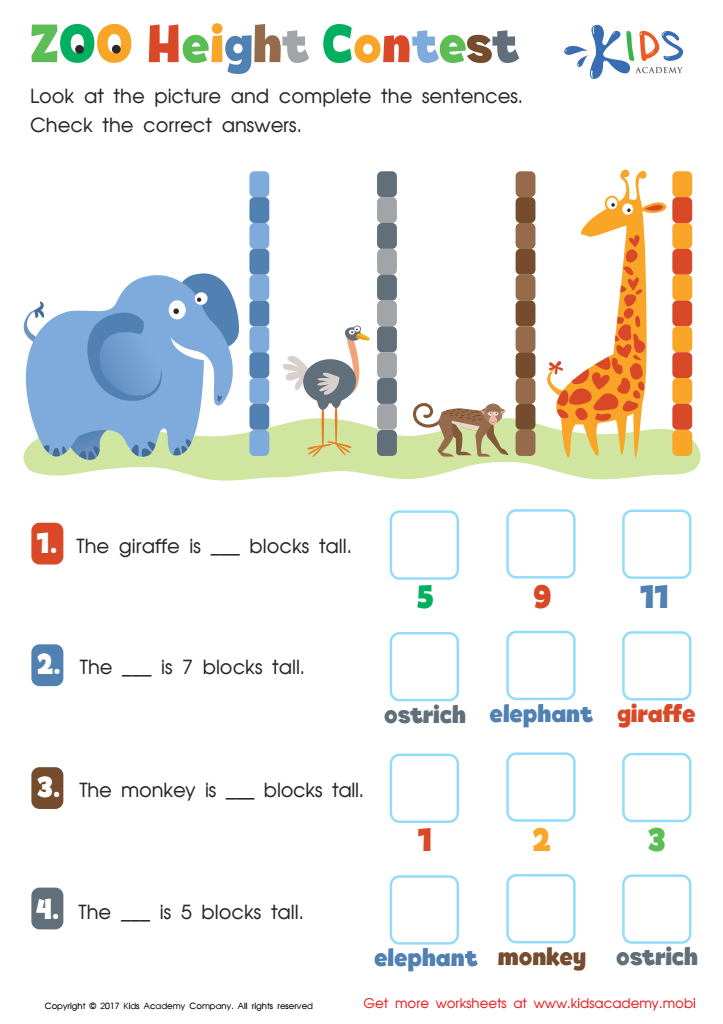
Zoo Height Contest Worksheet
Let's head to the zoo and use colorful blocks to measure your child's favorite animals! With this Kids Academy worksheet, help them practice and prepare for learning measurement. Guide them in looking at the zoo animals and counting blocks to find the height. Then, read the questions and check the box next to the correct answer.
Zoo Height Contest Worksheet
Worksheet
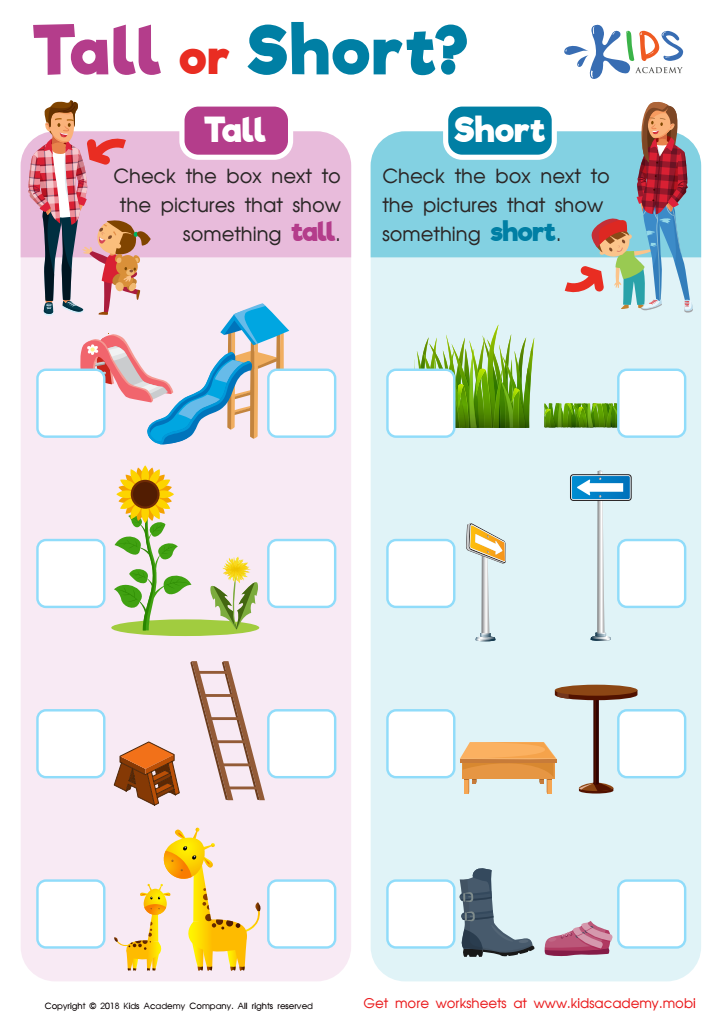
Tall or Short? Worksheet
Comparing tall and short objects is an early math skill. Our free worksheet uses fun colors and pictures to help kids practice. This will give them a head start for higher-level measurement skills, and they'll remember tangible objects for comparison.
Tall or Short? Worksheet
Worksheet
Join Kids Academy for Free
Who is primarily going to use this learning content?


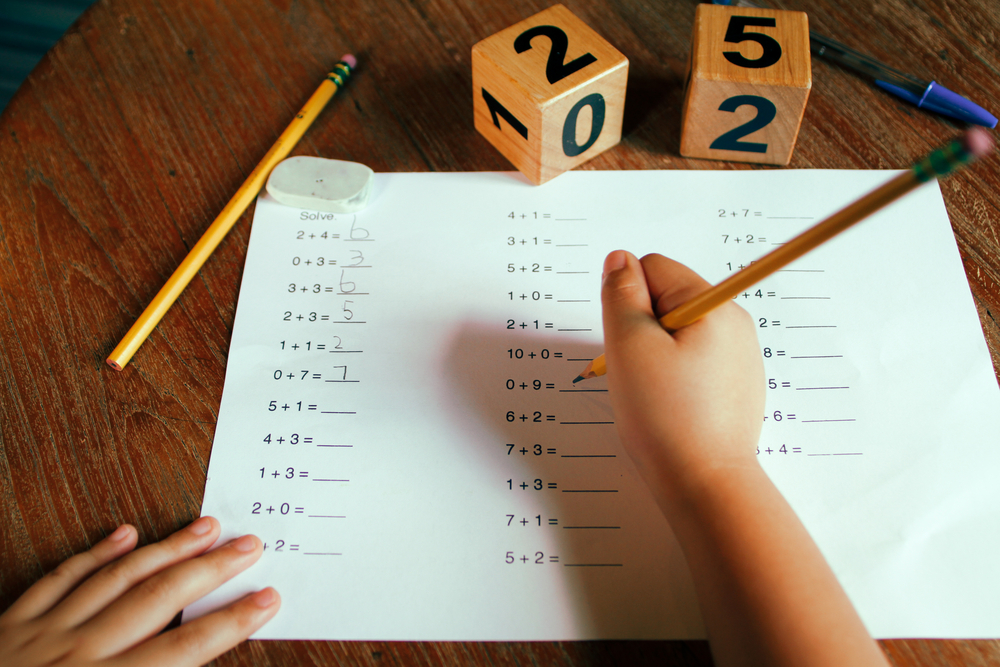




Comparing heights for children ages 3-8 holds substantial significance for both parents and teachers. Firstly, it serves as an indicator of physical development and overall health. Consistent monitoring can help identify growth patterns, ensuring children are developing typically. If a child falls significantly below or above the average growth curves, it could signal potential health concerns such as nutritional deficiencies or hormonal imbalances, warranting further examination by healthcare professionals.
Tracking height also accentuates the importance of personalized education. Understanding the physical growth of children can inform the arrangement of classroom environments, ensuring accessibility and comfort. For instance, appropriate desk sizes and playground equipment must be suited to their sizes to prevent strains or injuries.
Moreover, comparing height helps to foster social awareness and empathy among peer groups. It allows children to understand diversity and accept natural differences, promoting inclusiveness and positive self-esteem. This can be integrated into lessons involving size comparison in math or literature, making learning more tangible and relatable.
In conclusion, being mindful of children’s height fluctuations is a practical blend of healthcare vigilance and fostering an adaptable, empathetic learning environment. This nurtures not only the physical but also the social and intellectual growth of young children.








