Counting skills enhancement Worksheets for Ages 3-8
3 filtered results
-
From - To
Enhance your young learner's counting skills with our engaging worksheets designed for children ages 3-8! Perfect for parents and educators, these worksheets feature vibrant illustrations and age-appropriate activities that make learning to count both fun and effective. Your child will develop essential math skills through interactive exercises that promote number recognition, one-to-one correspondence, and basic arithmetic concepts. As they progress, they'll gain confidence in their counting abilities, setting a solid foundation for future math success. Explore our diverse range of counting skills enhancement worksheets today and help your child master the art of counting in an enjoyable and supportive environment!
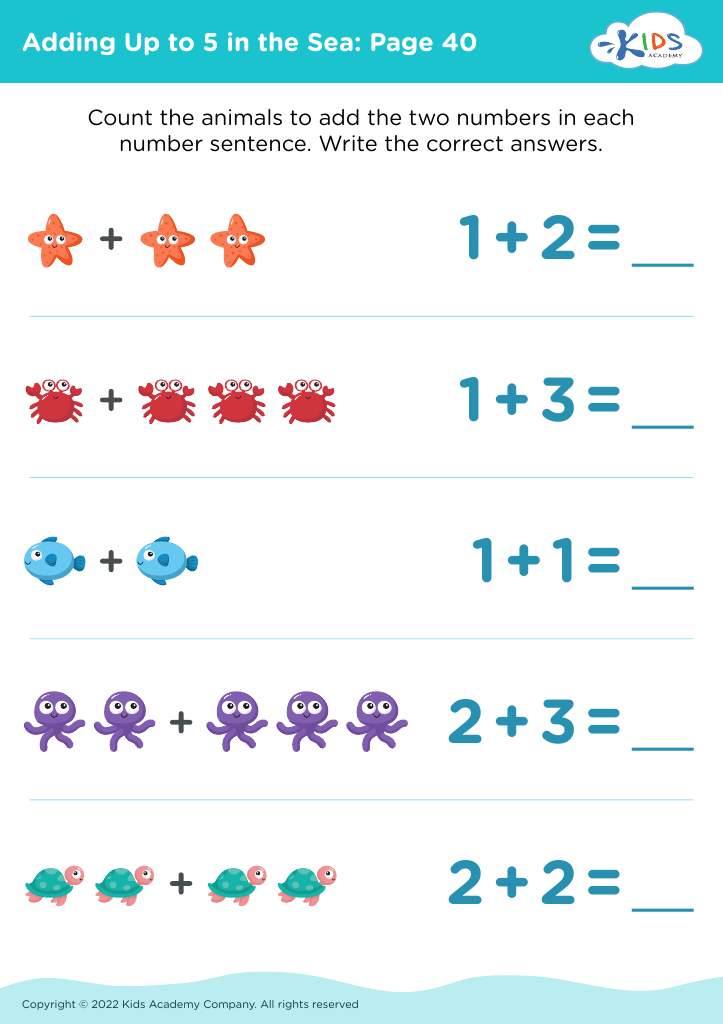
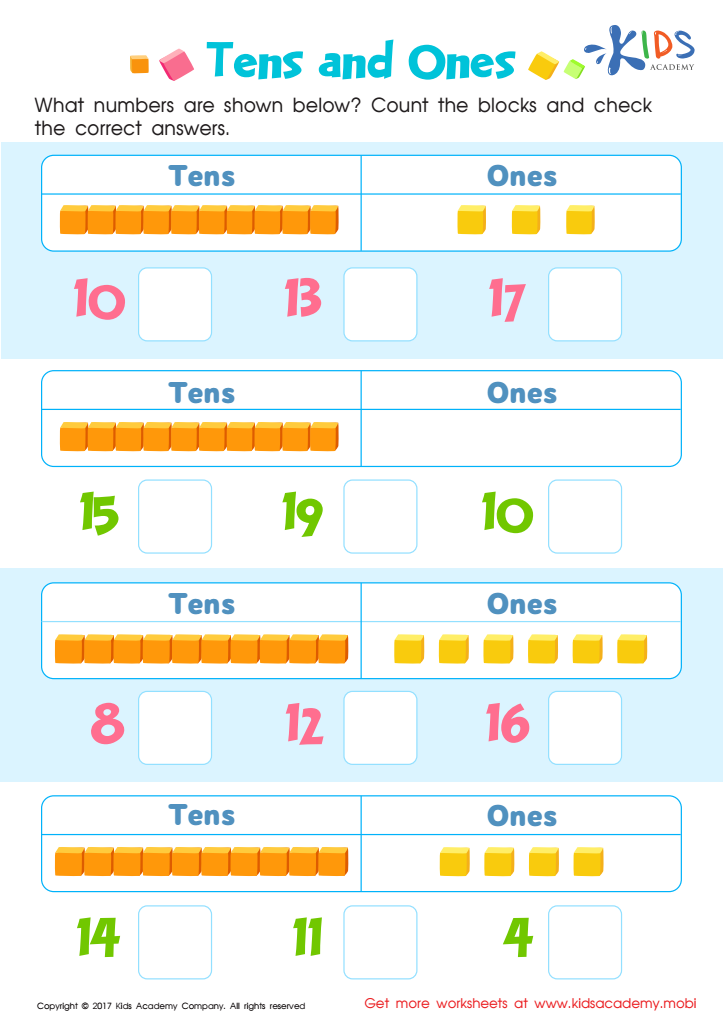
Tens and Ones Worksheet
 Assign to My Students
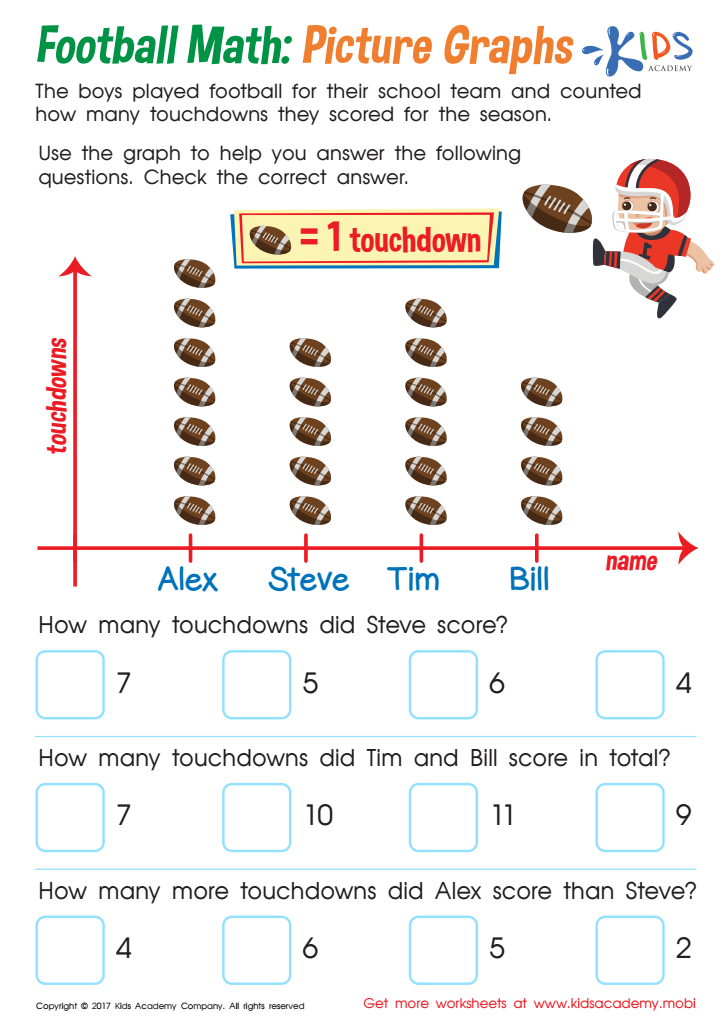
Football Math Worksheet








Enhancing counting skills for children aged 3-8 is crucial for their overall cognitive development and lays the groundwork for future academic success, particularly in mathematics. Counting serves as a foundational skill that helps children understand quantitative concepts, number relationships, and basic arithmetic. Mastery of counting supports logical thinking and problem-solving abilities, which are important not just in math, but across various subjects.
Moreover, counting skills are interlinked with literacy and language development. Children learn to verbalize numbers, recognize numerical patterns, and expand their vocabulary related to quantity. Engaging in counting activities fosters critical thinking and promotes a fun, interactive learning environment.
For parents, supporting counting skills encourages participation in their child's learning journey, strengthening the parent-child bond. For teachers, integrating counting exercises into lesson plans can enhance classroom dynamics and improve academic outcomes, tailoring learning experiences to various developmental stages.
Furthermore, a solid foundation in counting sets children on a path to enjoying mathematics rather than fearing it. Early enhancement of counting skills prepares children not just for standardized tests, but for real-life problem-solving and decision-making, ensuring they are well-equipped for the challenges ahead.








