Counting skills improvement Worksheets for Ages 3-8
4 filtered results
-
From - To
Enhance your child's foundational math abilities with our "Counting Skills Improvement Worksheets for Ages 3-8." Designed by educational experts, these engaging and interactive activities cater to young learners at various developmental stages. Each worksheet aims to build confidence in counting, number recognition, and basic arithmetic seamlessly. With colorful illustrations and fun exercises, your child will develop a strong mathematical foundation through hands-on practice. Perfect for both classroom and at-home learning, these worksheets are a reliable resource for parents and educators committed to nurturing early math skills. Unlock your child's potential today with engaging and effective counting practice!
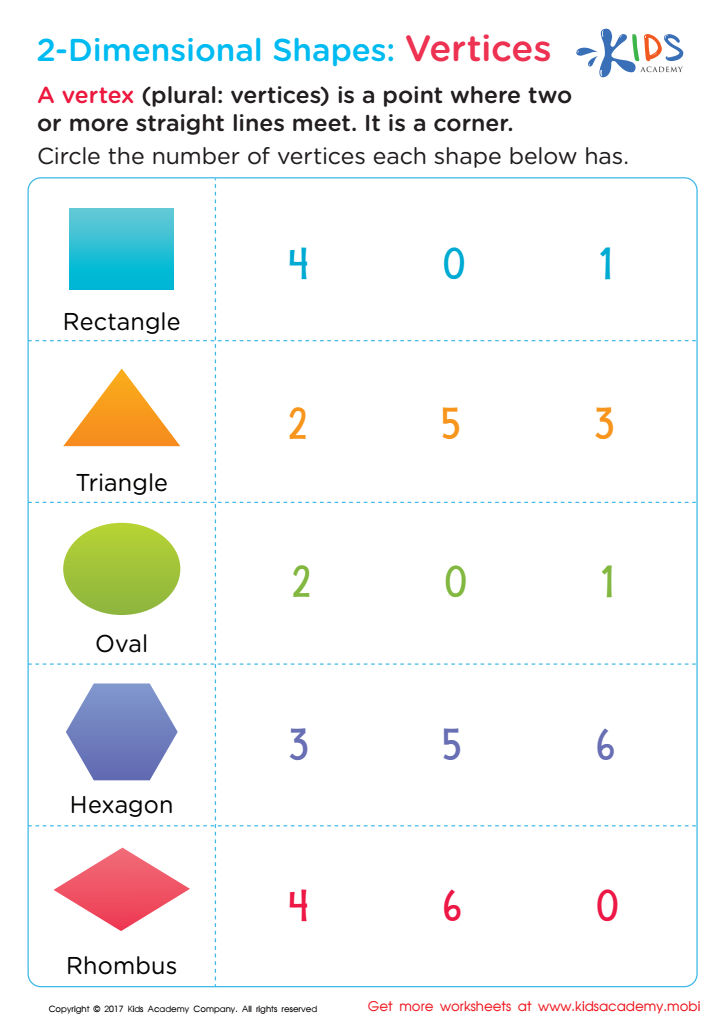
Two–Dimensional Shapes: Vertices Printable
 Assign to My Students
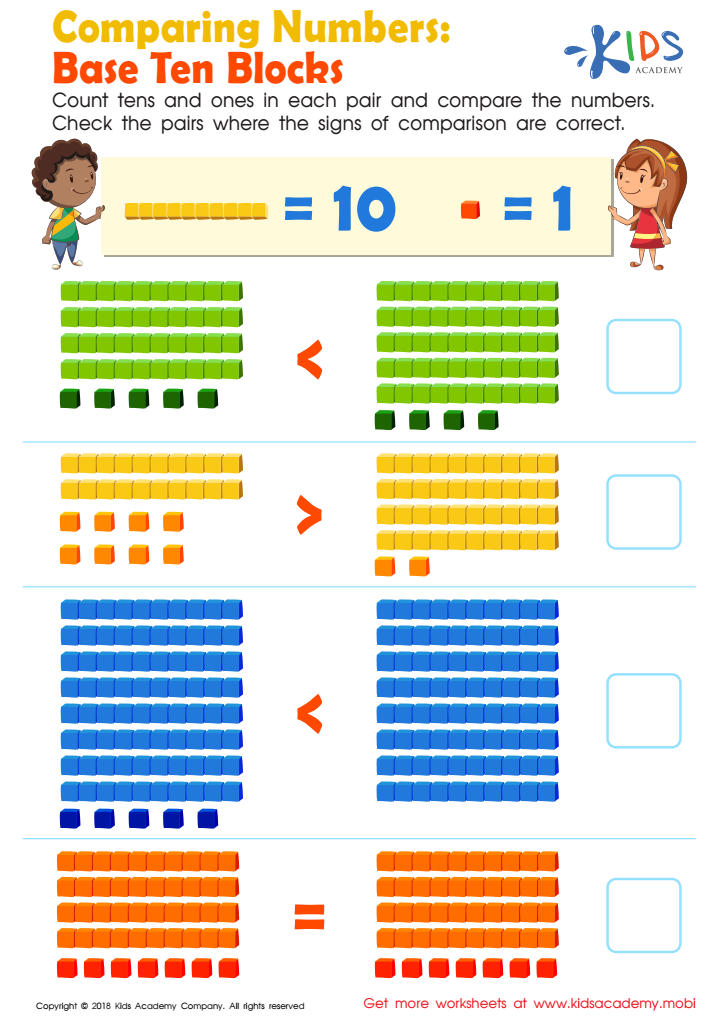
Comparing Numbers: Base Ten Blocks Worksheet
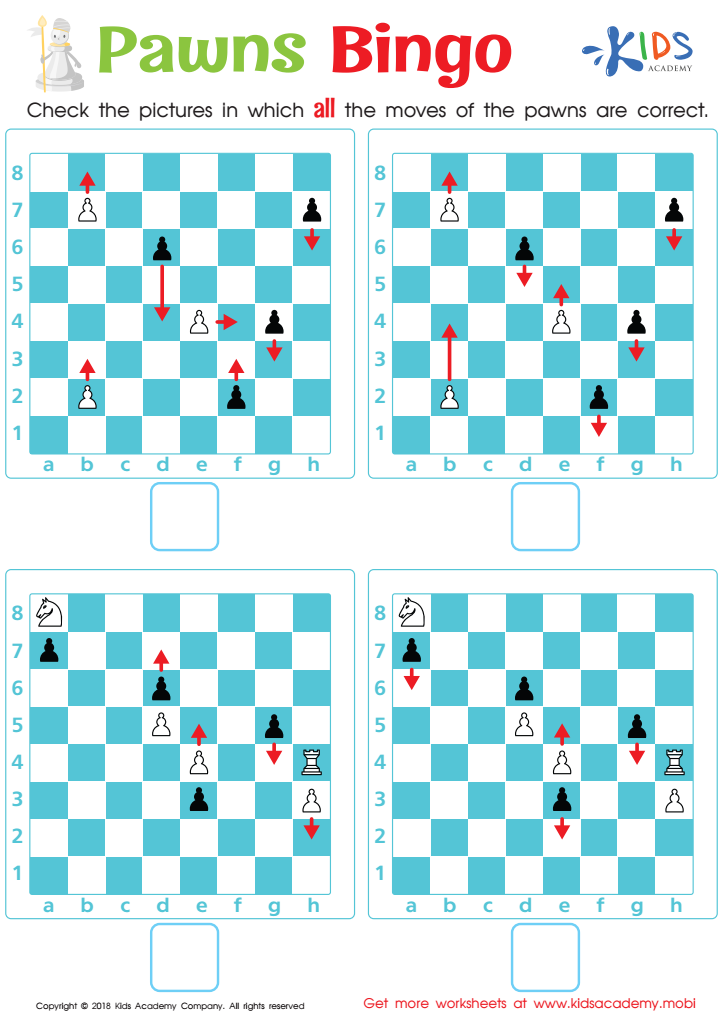
Pawns Bingo Worksheet







Counting skills in children aged 3-8 lay the foundational groundwork for future mathematical understanding and everyday problem-solving abilities. At this critical stage, children learn not only to recite numbers but also to recognize quantities and understand the concept of "how many." This early numeracy is essential for developing more complex mathematical skills such as addition, subtraction, and pattern recognition.
When parents and teachers focus on improving counting skills, they are nurturing a child's cognitive development, particularly in areas related to logic and critical thinking. These skills are transferable and contribute to a child's overall intellectual growth. Early competence in counting also promotes confidence and enthusiasm for learning mathematics, countering any math-related anxiety that might develop later.
Moreover, counting serves practical purposes in daily life. For instance, understanding numbers helps children manage time, follow rules in games, and measure during cooking and crafting activities. As children learn to count objects accurately, they also improve their fine motor skills through hands-on activities like placing objects in rows or sorting items.
In a nutshell, giving attention to counting skills is a crucial part of early education, equipping children with the tools they need for academic progression and practical daily problem-solving. It's an investment in their future learning potential and overall development.








