
Creativity enhancement Worksheets for Ages 3-8
14 filtered results
Difficulty Level
Grade
Age
-
From - To
Subject
Activity
Standards
Unleash your child's imaginative potential with our Creativity Enhancement Worksheets, designed for ages 3-8. These worksheets are curated to inspire and nurture budding creativity through fun and engaging activities. By combining drawing, storytelling, and interactive exercises, our resources help children develop critical thinking and problem-solving skills. Perfect for both classroom and home use, these worksheets offer a theme-based approach to make learning enjoyable and productive. Help your child explore their creative abilities while building a strong foundation in learning skills with Kids Academy's high-quality, age-appropriate activities. Let's spark a lifetime joy of creativity and learning today!
Favorites
With answer key
Interactive
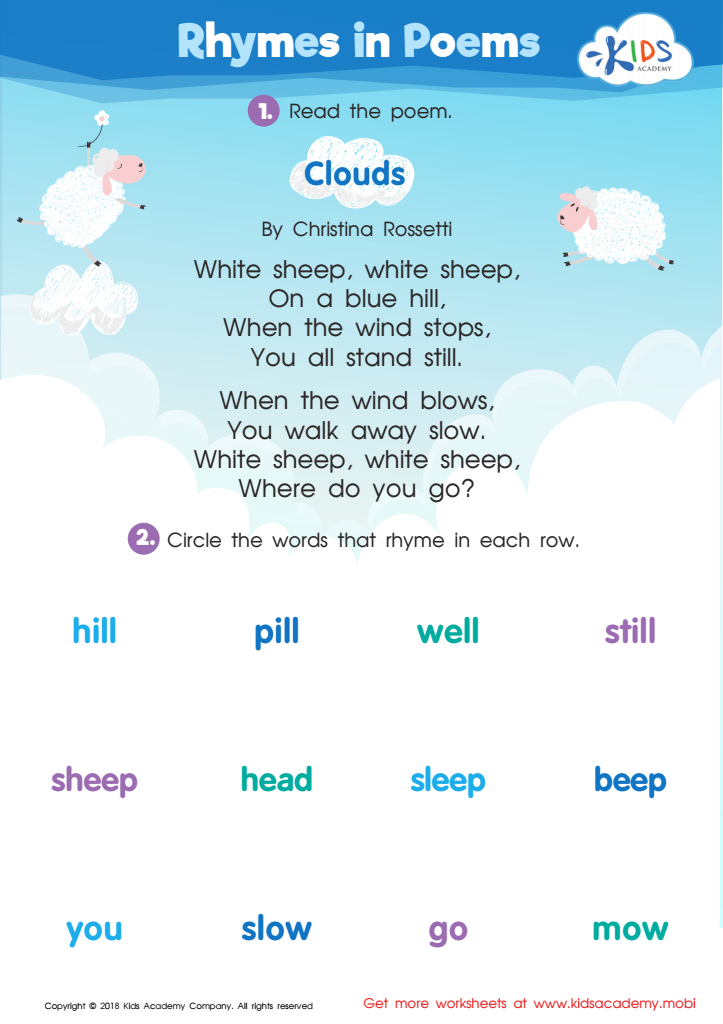
Rhymes in Poems Worksheet
Poems are lovely works of literature; some with rhymes, and some without. This poem for kids is full of rhymes and tells the tale of a sheep. Read it aloud to your kids, then help them circle the rhyming words.
Rhymes in Poems Worksheet
Worksheet
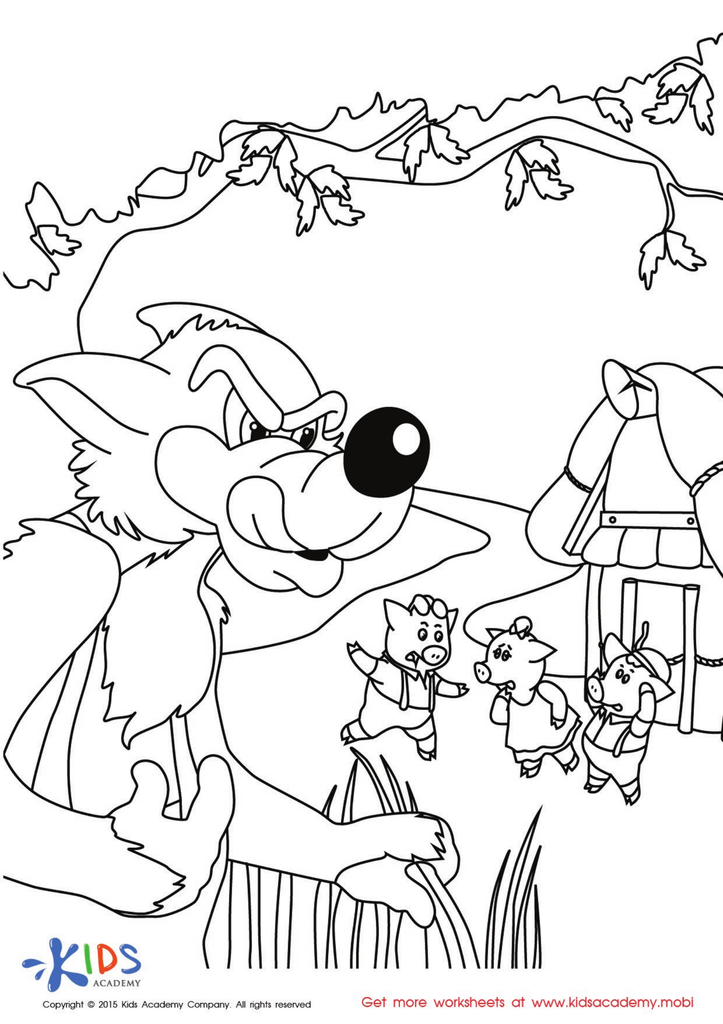
The Story of the Three Little Pigs Coloring Worksheet
The three little pigs play on the grass, enjoying the sun and peace. But a Big Bad Wolf has found them! Ask your child what he looks like? Is he scary? And hungry? Will the little pigs be safe in their houses? Unleash their imaginations with a printable coloring page to make the story of the little pigs come alive.
The Story of the Three Little Pigs Coloring Worksheet
Worksheet
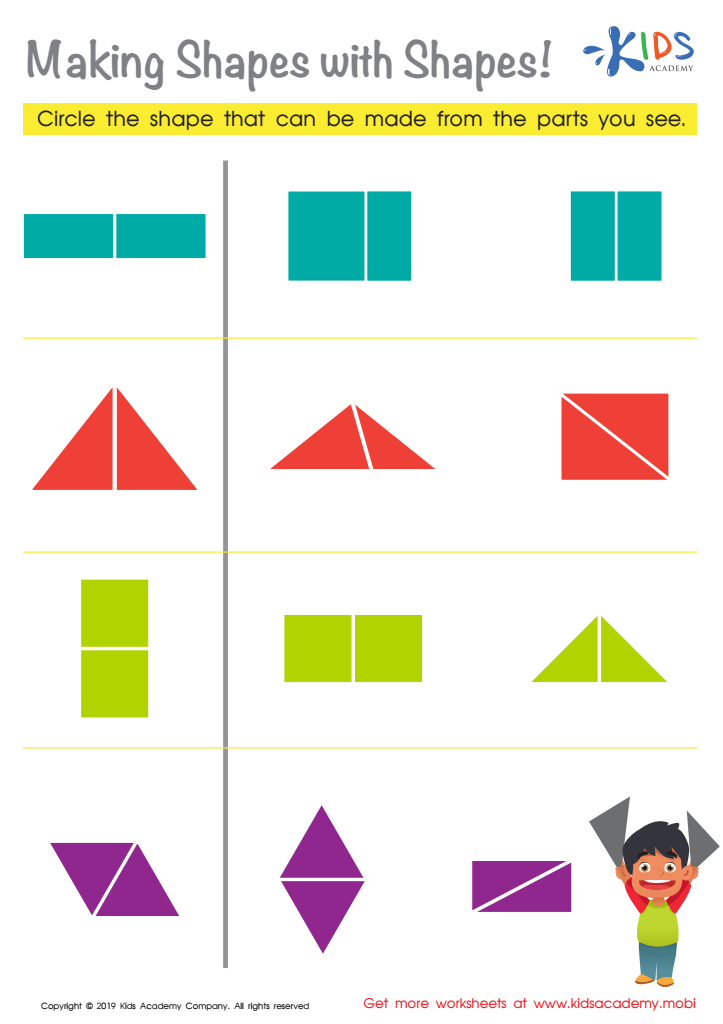
Making Shapes with Shapes Worksheet
Help your kindergartners identify shapes with this simple worksheet. Examine the shapes on the left and have them circle the one they can make from the parts in the picture. Shapes can be tricky, but this exercise will help clear up any confusion.
Making Shapes with Shapes Worksheet
Worksheet
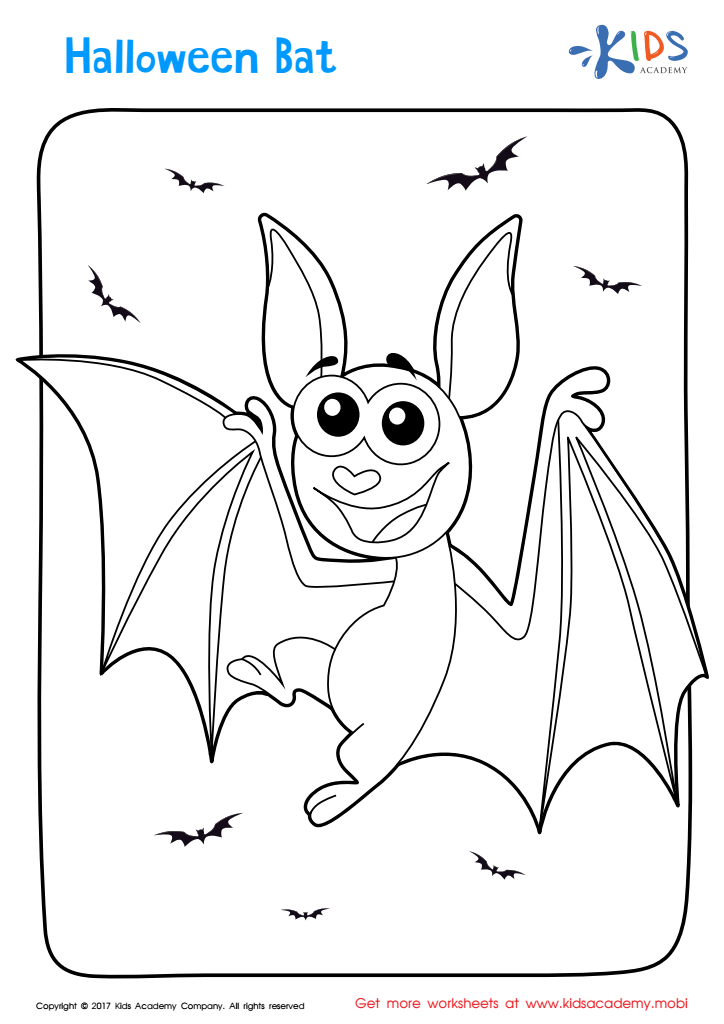
Halloween: A Bat Printable
Give your child a Halloween boost with our free coloring page. They'll have a blast adding their own decorations and creating a spooky scene!
Download (PDF)
 Assign to My Students
Assign to My Students
Halloween: A Bat Printable
Worksheet
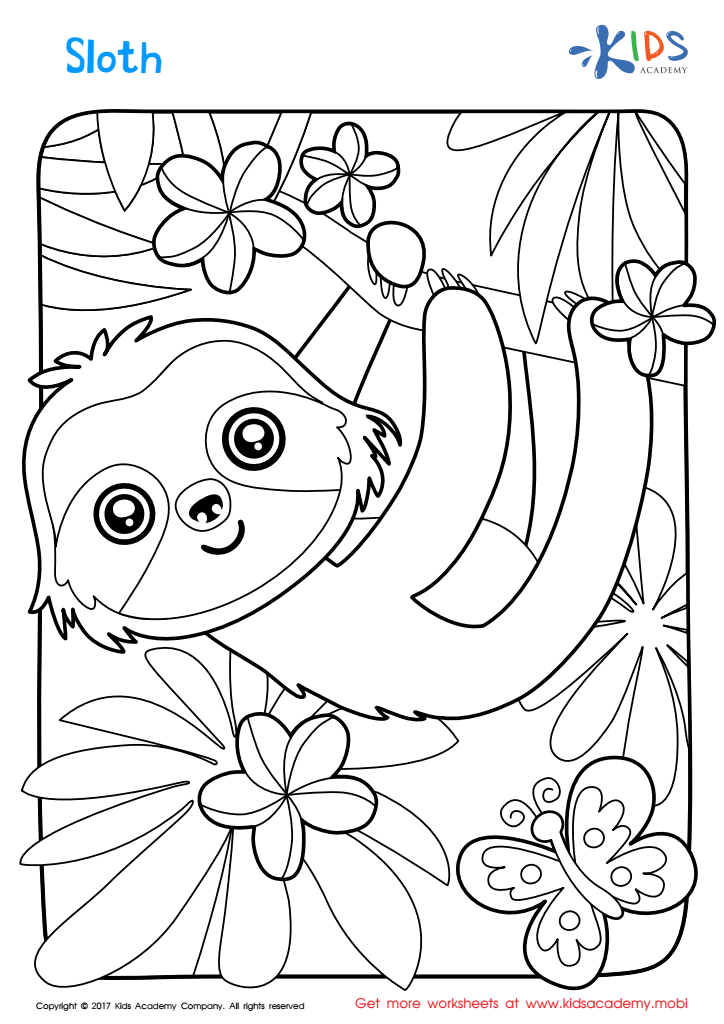
Sloth Worksheet
Get your kid excited to color the sloth coloring page! Explain to them the fascinating details of this slow-moving animal. Once complete, show it off on the fridge! For an extra lesson, look up more sloth pics and facts!
Download (PDF)
Assign to My Students
Assign to My Students
Sloth Worksheet
Worksheet
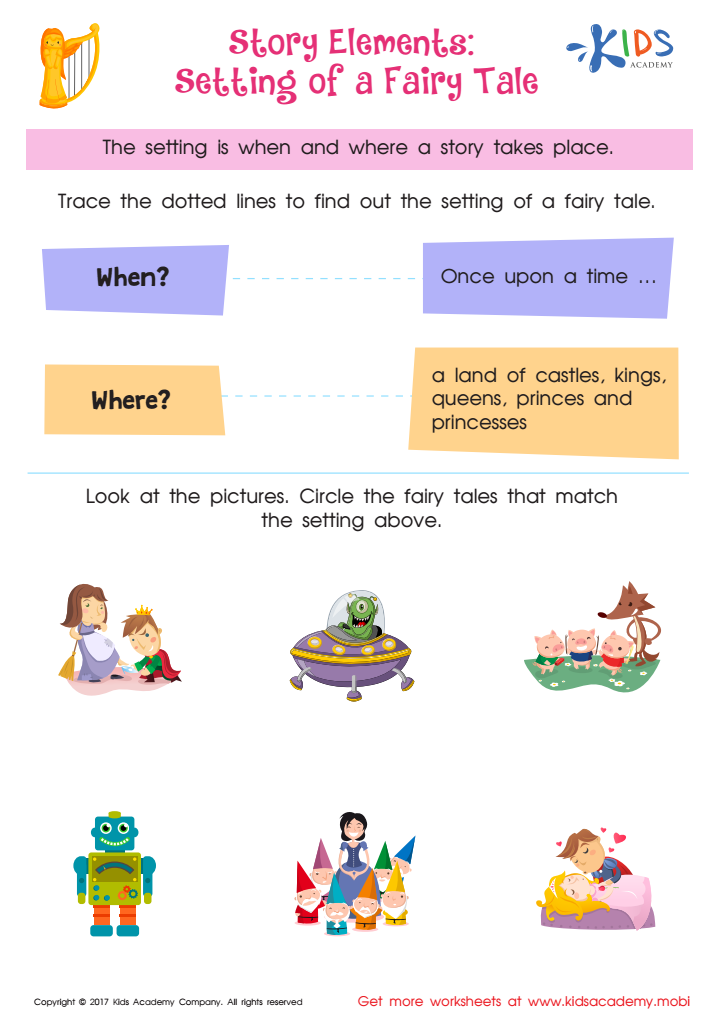
Story Elements: Setting of a Fairy Tale Printable
Help your child learn to analyze stories starting with setting. Use Story Elements worksheet to break down setting into two parts. This will help your child recognize setting quickly and understand its importance in the plot.
Story Elements: Setting of a Fairy Tale Printable
Worksheet
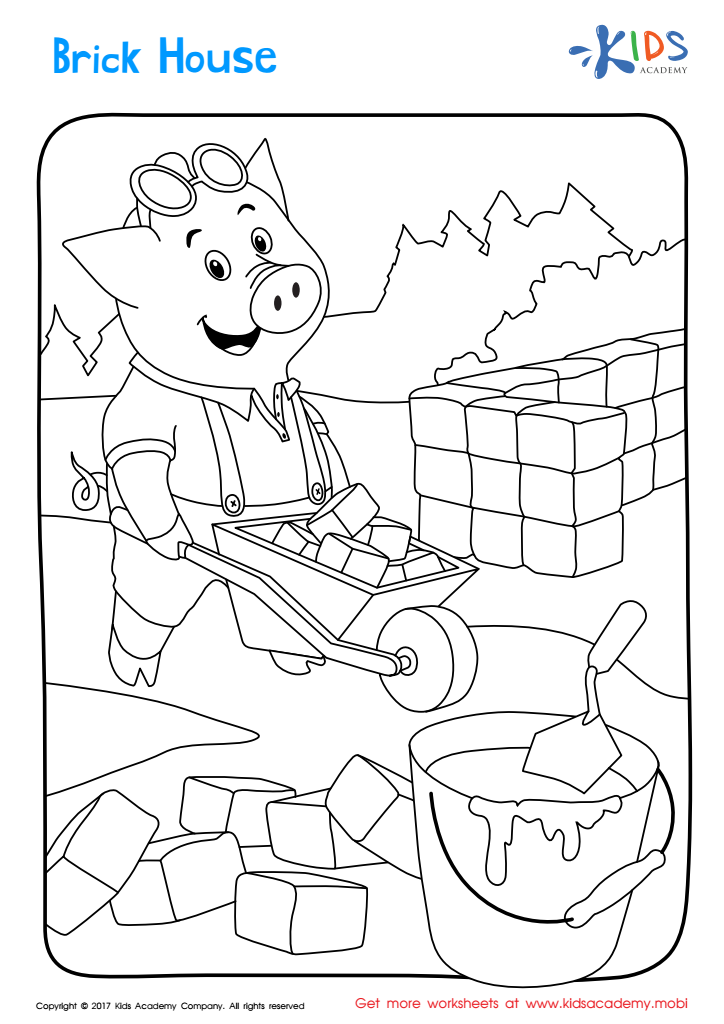
Brick House Printable Coloring Page
Let your child's imagination run wild as they color this delightful brick house from the 3 Little Pigs story! It's a great way to encourage creative expression, build imagination and have fun. Plus, use it as an opportunity to retell the story afterwards!
Download (PDF)
Assign to My Students
Assign to My Students
Brick House Printable Coloring Page
Worksheet
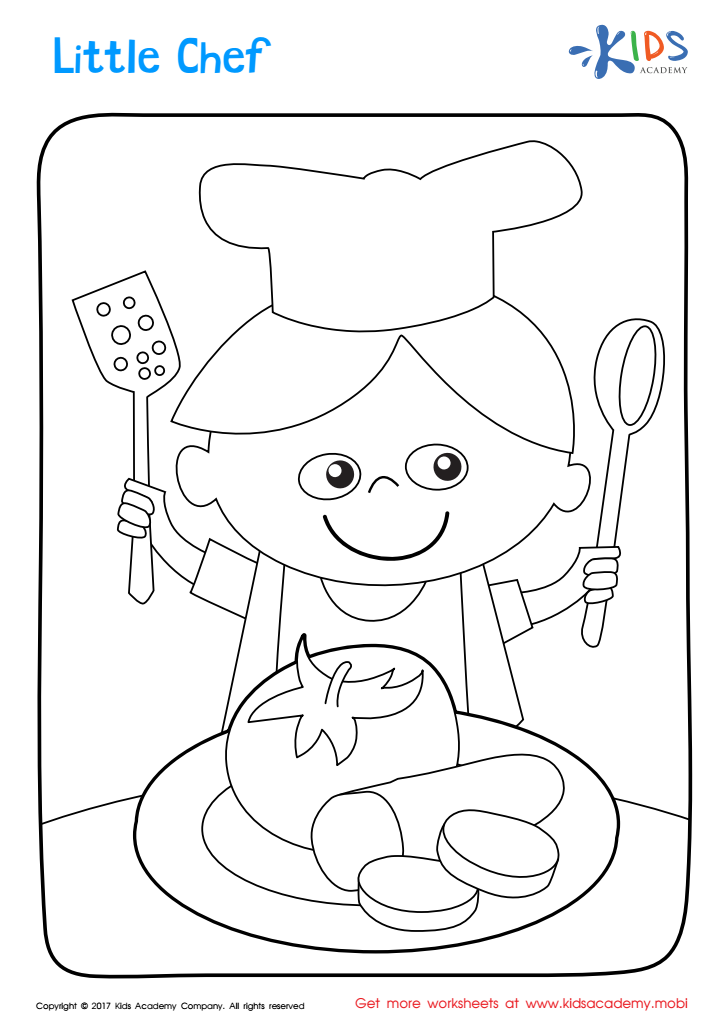
Little Chef Coloring Page
Does your child love to cook? This printable coloring page, Little Chef, is great for encouraging their inner culinary expertise. Talk about the kitchen utensils and veggies to increase their knowledge and love for cooking as they color.
Download (PDF)
Assign to My Students
Assign to My Students
Little Chef Coloring Page
Worksheet
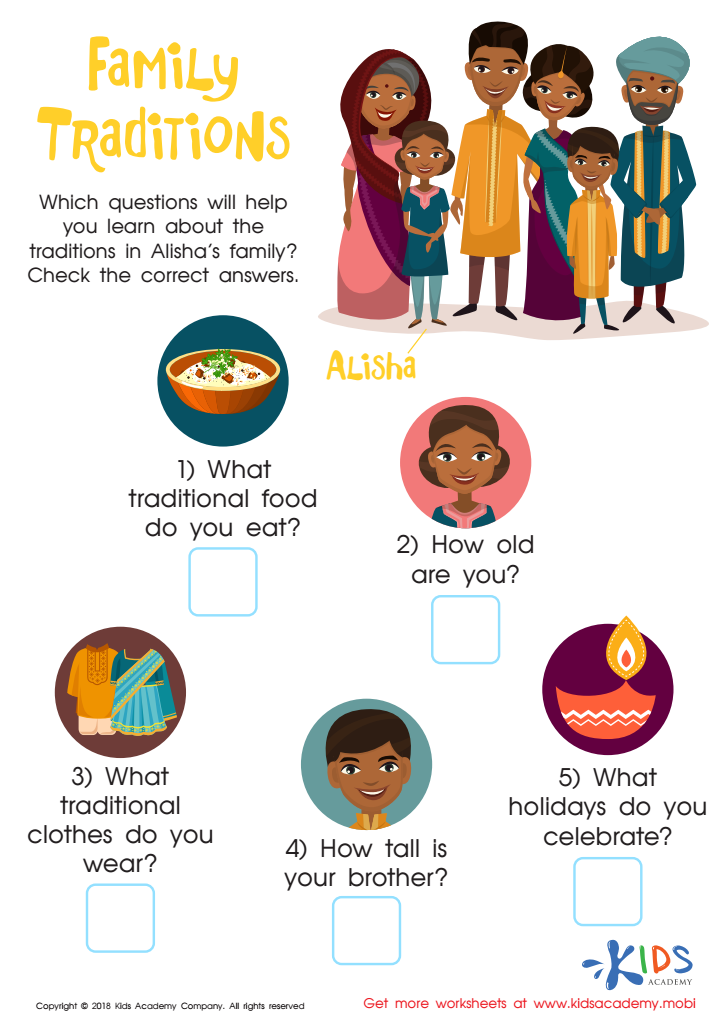
Family Traditions Worksheet
This worksheet helps kids understand Alisha's family traditions. It has questions a child can ask a new friend from a different culture. These questions cover food, clothing and holidays. Explain to your child how the answers are educational and guide them through the questions.
Family Traditions Worksheet
Worksheet
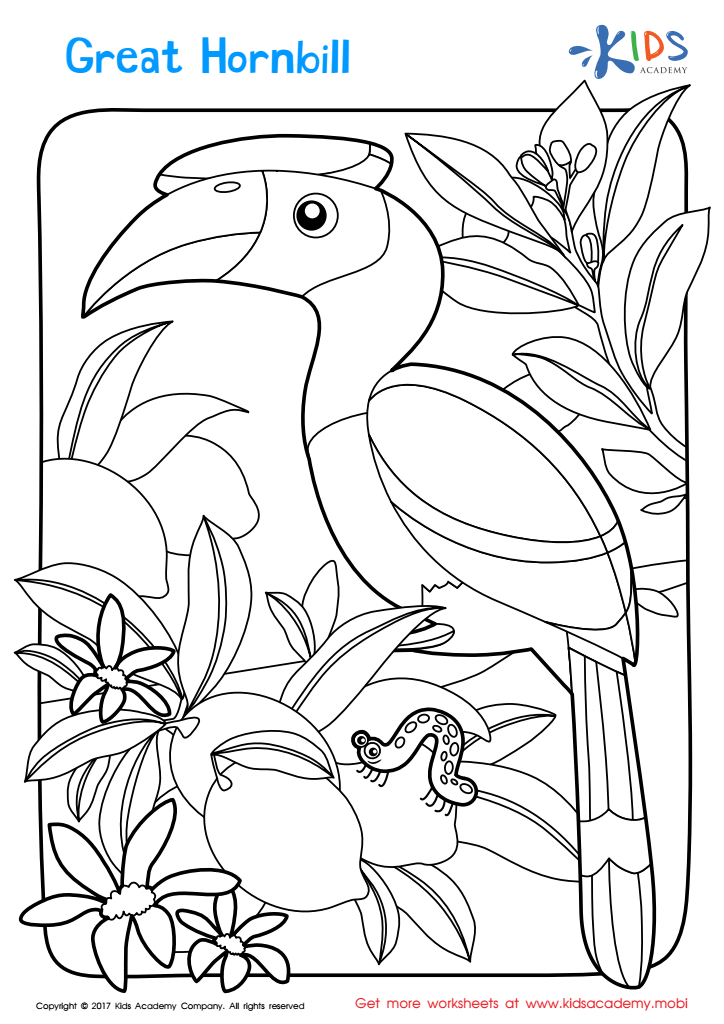
Great Hornbill Worksheet
Expand your child's knowledge with our exotic animal printable: the great hornbill coloring page. It’s a fun and easy way to explore this beautiful bird's stunning array of colors without leaving home. Look up pics online to get a better understanding of this incredible creature.
Download (PDF)
Assign to My Students
Assign to My Students
Great Hornbill Worksheet
Worksheet
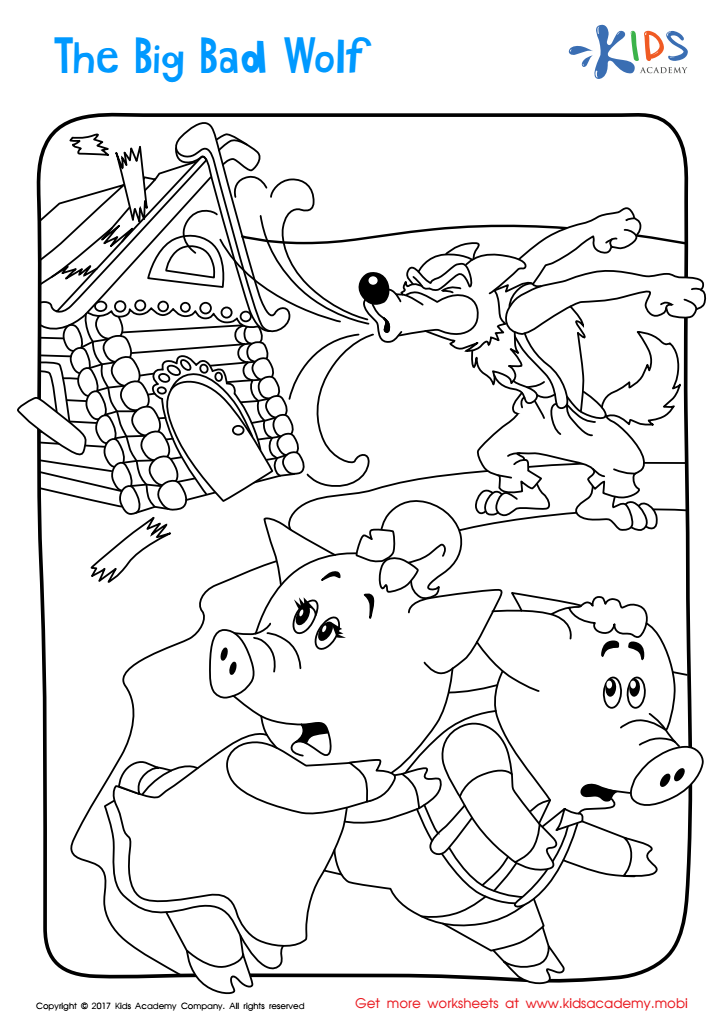
Big Bad Wolf Printable Coloring Page
Let your child have fun coloring the Big Bad Wolf blowing down the little pig's house! This printable coloring page introduces the classic tale, helping to develop reading comprehension skills.
Download (PDF)
Assign to My Students
Assign to My Students
Big Bad Wolf Printable Coloring Page
Worksheet
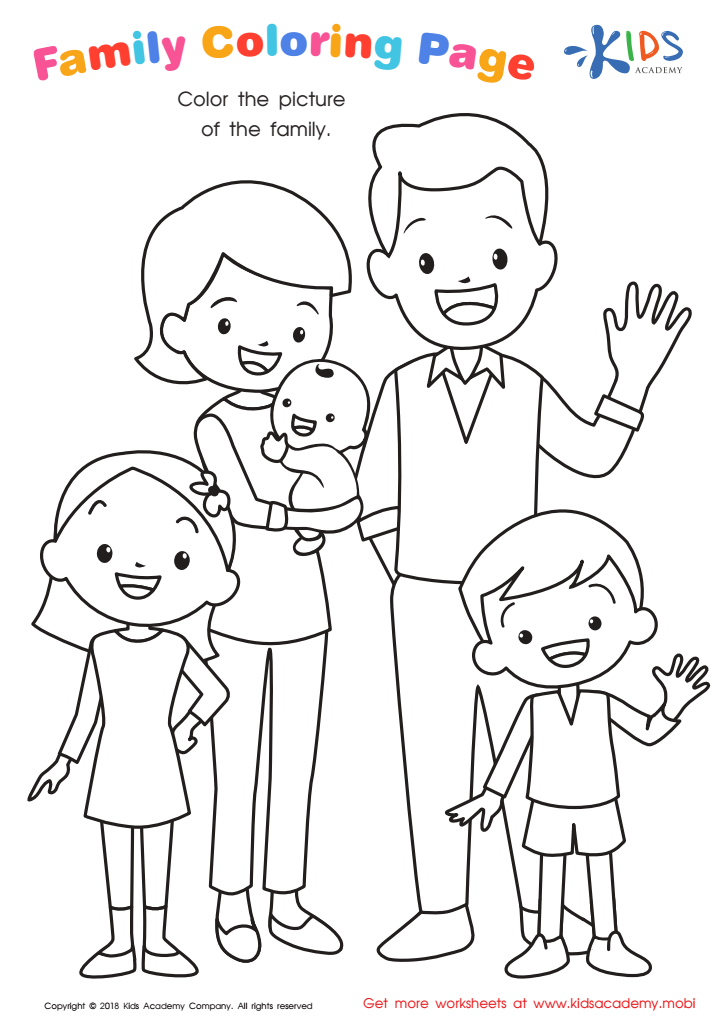
Family Coloring Page
Have fun coloring and naming each family member with this family worksheet! It's a great enrichment activity for those teaching social studies and community activities. Young students will practice fine motor skills and discuss family members on the printable. It's an excellent opportunity to talk about families!
Download (PDF)
Assign to My Students
Assign to My Students
Family Coloring Page
Worksheet
Join Kids Academy for Free
Who is primarily going to use this learning content?








Creativity enhancement in ages 3-8 is crucial for multiple developmental reasons. This formative period is synonymous with rapid cognitive, emotional, and social growth, making it the ideal time to foster creativity. For one, creativity stimulates neural connections, facilitating problem-solving skills and critical thinking capabilities that form the bedrock for future learning. When children engage in creative activities, they learn to think divergently, opening up multiple solutions to problems, as opposed to the linear thinking traditional education often encourages.
Furthermore, nurturing creativity is essential for emotional development. It provides an outlet for self-expression, helping young children articulate thoughts and feelings they may not yet have the words for. Emotional intelligence and resilience can be cultivated through role-play, art, and storytelling, where children learn empathy and manage emotions.
On a social level, creative activities often require collaboration. Group art projects, dramatic play, and musical activities teach children cooperation, negotiation, and respect for others’ ideas—skills that form the foundation of teamwork and social relationships.
Lastly, instilling creativity fosters a love for learning. A creatively-engaged child finds joy in discovery and experimentation, attributes valuable in lifelong learning. For these reasons, parents and teachers should prioritize creativity from ages 3-8 to holistically develop well-rounded, innovative, and emotionally secure individuals.








