Eye-hand coordination Worksheets for Ages 3-8
3 filtered results
-
From - To
Explore our engaging Eye-Hand Coordination Worksheets designed for children ages 3-8! These activities aim to enhance fine motor skills and strengthen the connection between visual perception and physical movement. Our worksheets offer a variety of fun tasks, such as tracing, coloring, and recognition games, tailored to keep young learners entertained while developing essential coordination skills. Ideal for home or classroom use, these resources foster independent learning and build confidence in children as they master different challenges. Jumpstart your child’s learning journey with our comprehensive collection of eye-hand coordination worksheets that promote skill development in a fun and interactive way!
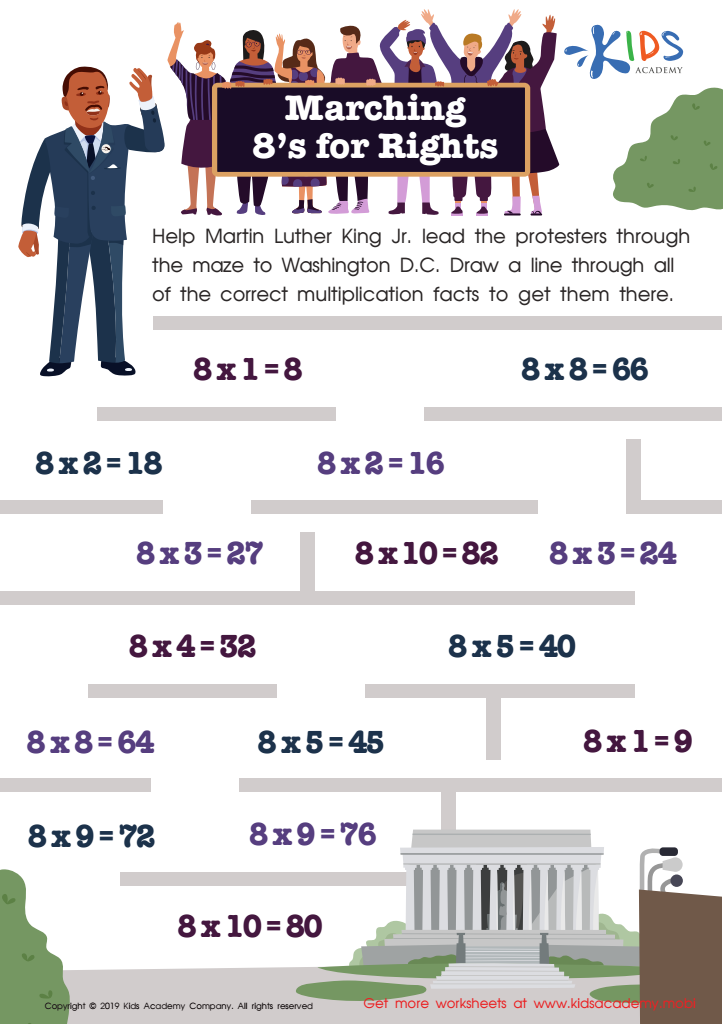
Marching 8’s for Rights Worksheet
 Assign to My Students








Eye-hand coordination is a critical developmental skill for children ages 3-8, playing a fundamental role in their overall growth and learning. It involves the ability to visually track an object and coordinate hand movements accordingly, which is essential for a range of everyday activities. For young children, refined eye-hand coordination can influence their ability to engage in basic tasks such as writing, drawing, and playing sports, making it vital for their academic success.
Parents and teachers should care about this skill because it directly impacts cognitive development, fine motor skills, and social interactions. Mastering eye-hand coordination enhances a child's ability to perform self-care tasks, like buttoning a shirt or tying shoelaces, promoting independence. Additionally, strong coordination skills can lead to increased confidence in physical activities, fostering a love for movement, play, and sports.
Promoting eye-hand coordination can also improve focus and concentration, power skills that benefit educational achievement. Through fun activities such as arts and crafts, building blocks, or playing catch, parents and teachers can nurture these skills. By prioritizing eye-hand coordination, caregivers support not only physical development but also emotional and social growth, laying a strong foundation for future learning and success.








