
Handwriting development Worksheets for Ages 3-8
3 filtered results
Difficulty Level
Grade
Age
-
From - To
Subject
Activity
Standards
Welcome to our Handwriting Development Worksheets for Ages 3-8! These engaging and educational resources are designed to nurture and enhance your child's handwriting skills, from essential letter formation to improving overall penmanship. With a variety of printable worksheets tailored to different learning stages, your child will benefit from fun, hands-on activities that promote fine motor skills and confidence in writing. Ideal for parents, teachers, and caregivers, our worksheets support early learners as they embark on their writing journey. Help your child take the next step in their educational growth while fostering a love for learning through creativity and exploration!
Favorites
With answer key
Interactive
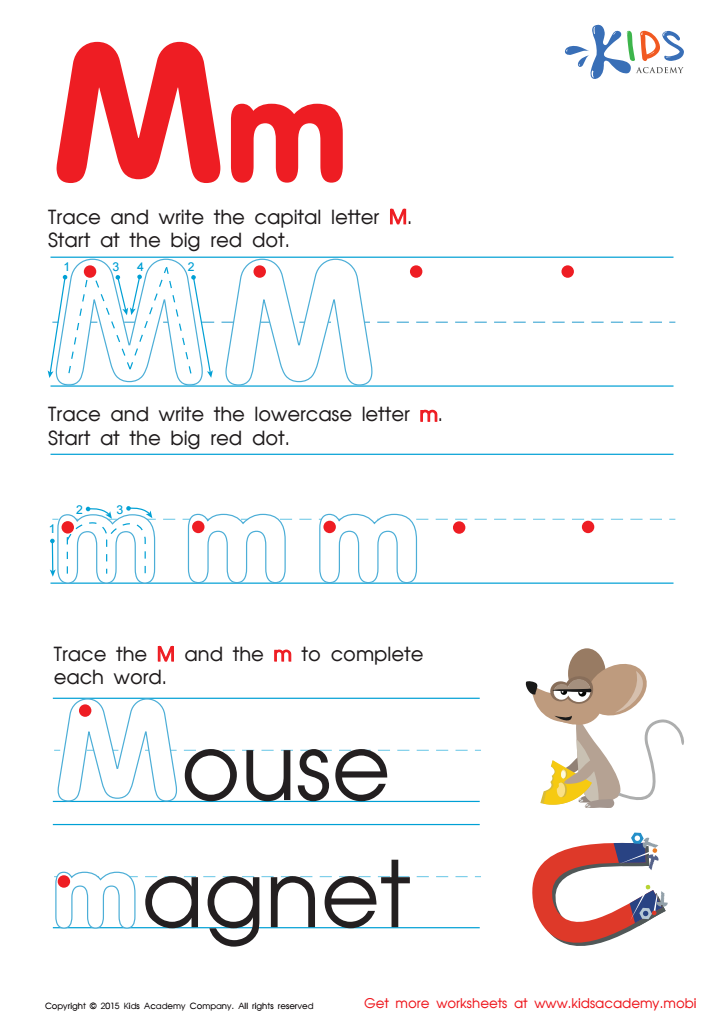
Letter M Tracing Page
Trace and write the letter "M" to help kids learn the alphabet. Start at the red dot and practice several times. Trace the capital letter first, then move on to the lowercase. Complete words like "mouse" and "magnet" in the further exercise. Get more free printables here.
Letter M Tracing Page
Worksheet
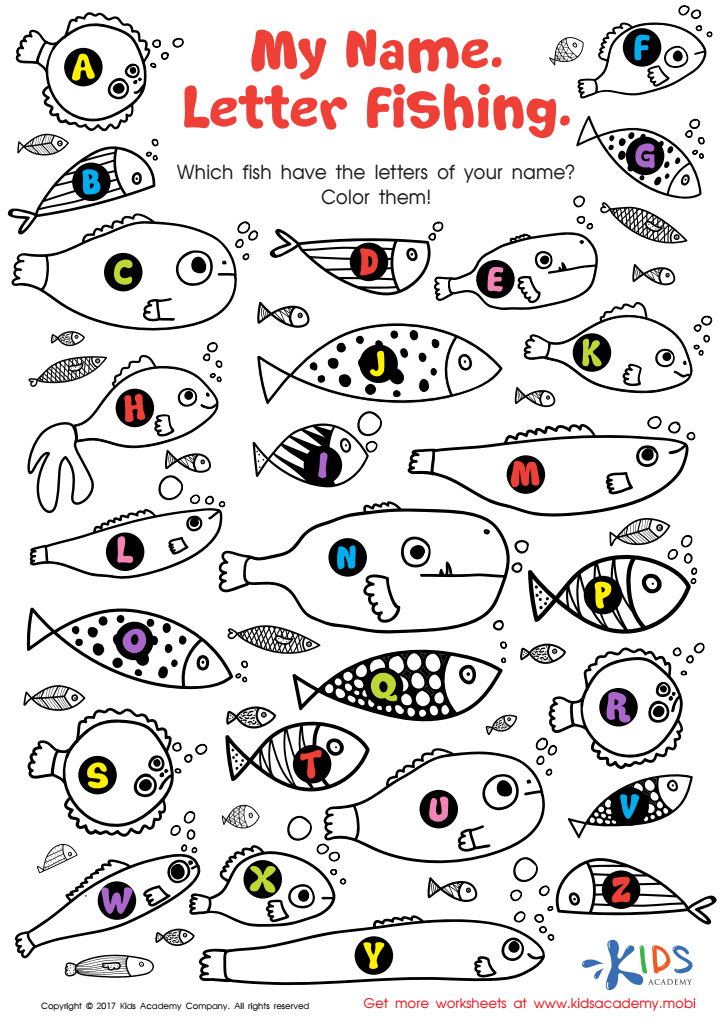
My Name: Letter Fishing Worksheet
Dive into the deep sea and search for fish with a letter on them. Can you find all the letters from your name? Color your favorite fish with crayons and be creative! On the other side, use the letters you found to write your name. Have fun coloring and finding the letters of your name! (80 words)
Download (PDF)
 Assign to My Students
Assign to My Students
My Name: Letter Fishing Worksheet
Worksheet
Join Kids Academy for Free
Who is primarily going to use this learning content?






Handwriting development is crucial for children aged 3-8 as it lays the foundation for effective communication and cognitive growth. During these formative years, handwriting helps children express their thoughts, improve their fine motor skills, and develop their individuality. As they learn to write, they engage in practicing hand-eye coordination and muscle control, essential skills for various daily activities.
Furthermore, handwriting proficiency can enhance a child's academic performance. Good handwriting contributes to clearer and more organized work, allowing teachers to better understand students' ideas. It also fosters their confidence; when children feel proud of their writing abilities, they are more likely to participate in classroom discussions and writing assignments.
Parents and teachers should also be aware that handwriting is linked to spelling and composition skills. The physical act of writing helps reinforce memory and learning, making it easier for children to recall information. As literacy rates and digital communication continue to rise, it is essential to balance technology with traditional writing practices, ensuring children develop both skills.
Investing time and resources into handwriting development early on will support children's academic success and foster their overall well-being, setting them on a path toward future learning and personal expression.








