Identify colors Worksheets for Ages 3-8
4 filtered results
-
From - To
Discover our vibrant collection of "Identify Colors" Worksheets designed specifically for children aged 3-8! Our engaging worksheets help young learners effortlessly master the recognition of different colors while enhancing their cognitive and fine motor skills. With fun activities ranging from coloring objects to matching hues, each worksheet captivates young minds and fosters creativity. Perfect for home or classroom use, these printable worksheets support developmental milestones through playful learning. Visit us online to access and download your free, easy-to-use tools that inspire curiosity and boost confidence in identifying colors while ensuring a delightful learning journey for every child.
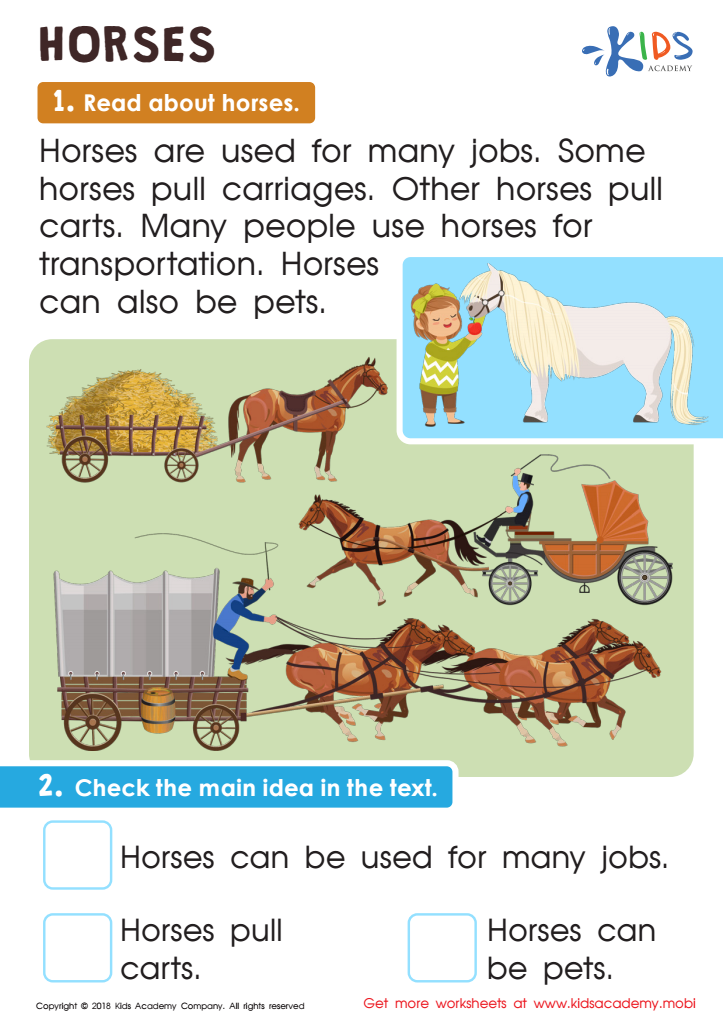
Horses Worksheet
 Assign to My Students
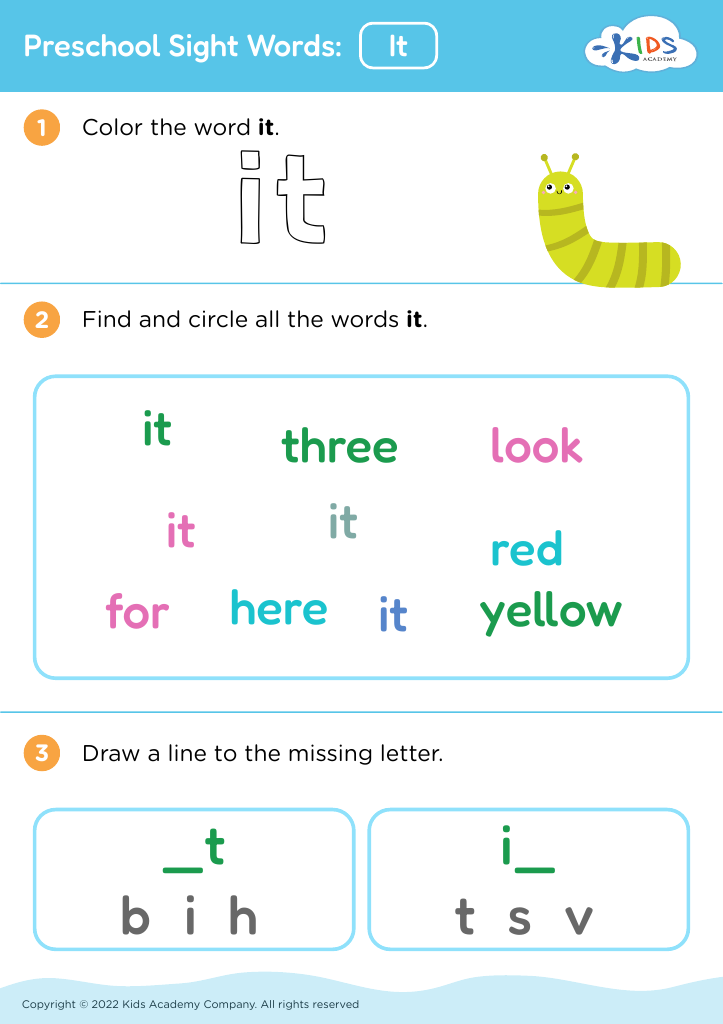







Teaching young children to identify colors is an essential aspect of early childhood development. For children ages 3-8, recognizing and naming colors goes beyond simple visual recognition; it weaves into cognitive and linguistic growth. When parents and teachers focus on color identification, they help children develop a crucial part of their vocabulary. This verbal ability strengthens communication skills, facilitating clearer and more effective expression of ideas and emotions.
Color recognition is also fundamental to categorization—a cognitive skill that plays a significant role in various aspects like math, science, and logic. By learning to differentiate colors, children practice comparing, contrasting, and categorizing, strengthening their problem-solving abilities and aiding in more complex future learning.
Moreover, color activities like sorting, matching, and mixing encourage fine motor skills. For example, sorting colored beads enhances hand-eye coordination, an essential skill for writing.
Engaging with colors also taps into a child’s emotional and creative realms. Colors help them describe their feelings and engage in creative activities like drawing and crafting, which boost self-expression and confidence.
Lastly, grasping color names and properties aligns with many preschool and kindergarten learning metrics, setting a solid academic foundation. Parents and teachers who emphasize color education, therefore, support holistic development, combining cognitive, emotional, and motor skills in a fun, engaging way.








