
Improve handwriting Worksheets for Ages 3-8
3 filtered results
Difficulty Level
Grade
Age
-
From - To
Subject
Activity
Standards
Enhance your child's handwriting skills with our "Improve Handwriting Worksheets" designed for ages 3-8. Our engaging worksheets incorporate fun exercises and activities that make practicing penmanship enjoyable. With a variety of tracing, writing prompts, and letter formation practices, these worksheets are tailored to boost fine motor skills and increase confidence. Ideal for both home and classroom settings, they support early literacy development in a playful way. Whether your child is just starting to write or looking to refine their skills, our resources offer the perfect foundation for clearer and more legible handwriting. Download today and watch your child's writing flourish!
Favorites
With answer key
Interactive
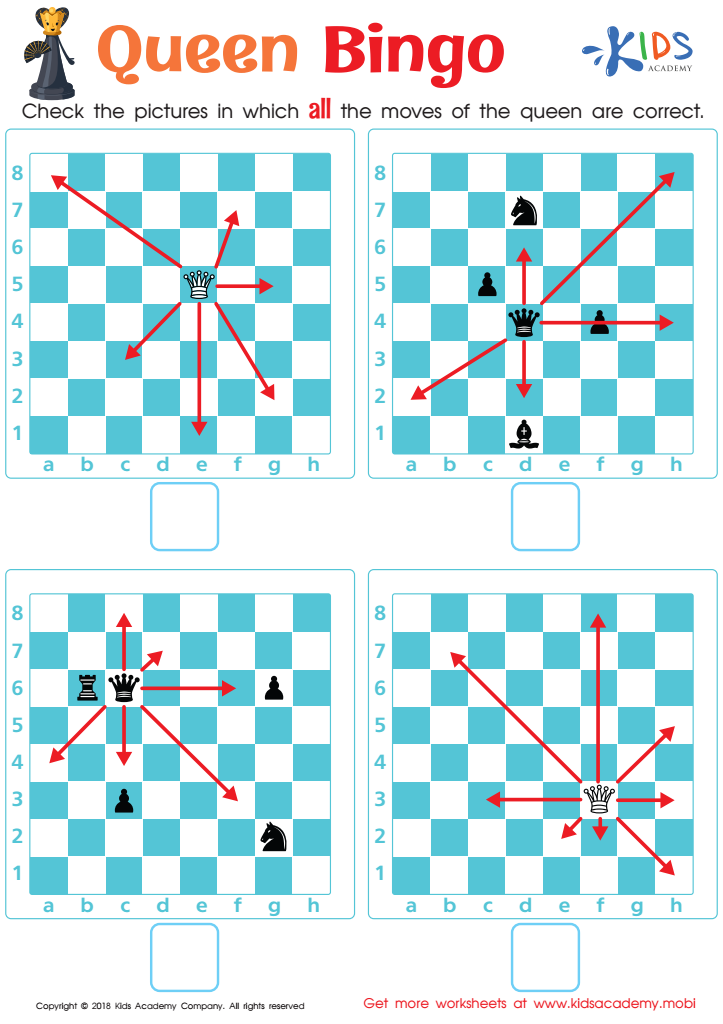
Queen Bingo Worksheet
Test your child's knowledge of chess rules and moves with this free worksheet! Kids look at four pictures and must decide if the queen moves are correct. This exercise helps hone your little one's chess skills!
Queen Bingo Worksheet
Worksheet
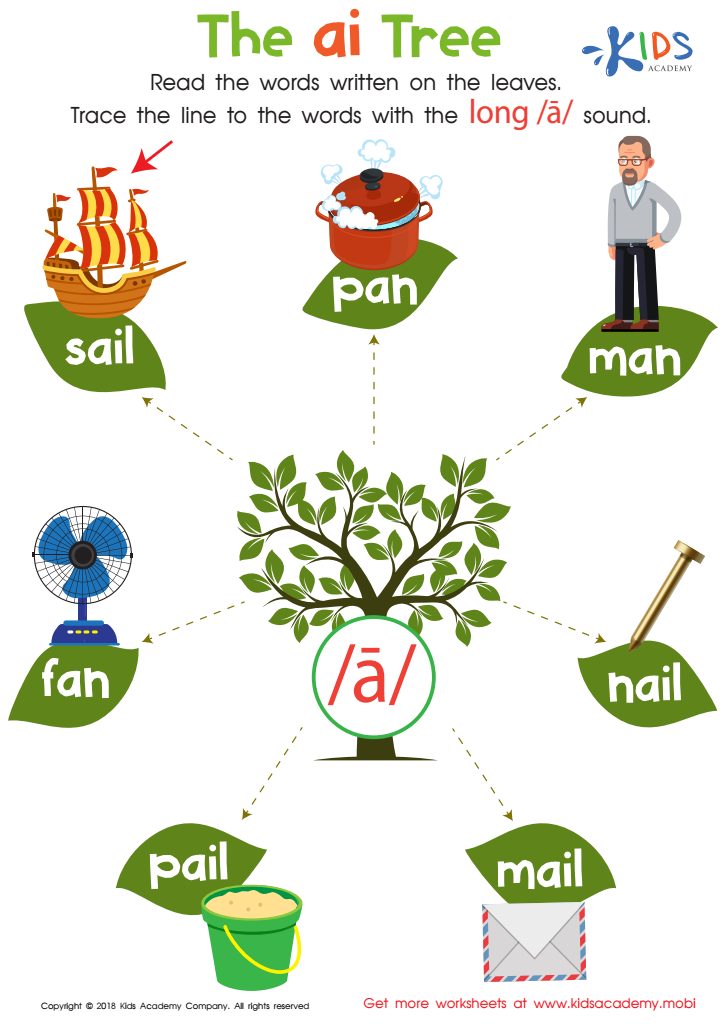
The AI Tree Worksheet
Help your kids learn to read better with this worksheet! Introduce the vowel pair 'ai' and give them familiar examples. Ask them to give you some in return. Then, have them read the words on the leaves and help them trace the ones with the long /a/ sound.
 Assign to My Students
The AI Tree Worksheet
Worksheet
Join Kids Academy for Free
Who is primarily going to use this learning content?








Improving handwriting for children aged 3-8 is crucial for several reasons. First, developing fine motor skills during these formative years sets the foundation for a child’s overall academic success. Handwriting involves coordination and dexterity, which are essential for various tasks beyond writing, such as playing sports or using tools.
Secondly, clear handwriting fosters effective communication. As children begin to express their thoughts and ideas through writing, legible handwriting ensures that their messages are conveyed accurately, reducing frustration for both the child and the reader. This clarity promotes confidence in their writing skills and encourages them to engage more actively in classroom activities.
Furthermore, handwriting development promotes cognitive skills. The act of writing—whether it's letters, numbers, or words—engages the brain in ways that typing does not, supporting critical thinking and memory retention. Additionally, handwriting can aid in the understanding of phonetics and spelling as children learn to connect sounds with symbols.
Lastly, instilling good handwriting habits in young children sets them on a path towards a lifelong appreciation for writing as both an academic tool and a form of self-expression, fostering creativity, literacy, and personal growth. Consequently, parents and teachers play a vital role in nurturing and improving these essential skills.








