Improve observational skills Worksheets for Ages 3-8
3 filtered results
-
From - To
Our "Improve Observational Skills Worksheets for Ages 3-8" are expertly designed to help young learners hone their ability to notice details and make sense of their surroundings. These engaging, age-appropriate worksheets feature colorful illustrations and fun activities that stimulate children’s curiosity. By completing puzzles, matching exercises, and find-the-difference games, kids will enhance their attention to detail, memory, and critical thinking skills. Perfect for both classroom and home use, these worksheets provide a solid foundation for lifelong learning and observation. Explore our collection today and watch your child's cognitive skills flourish!
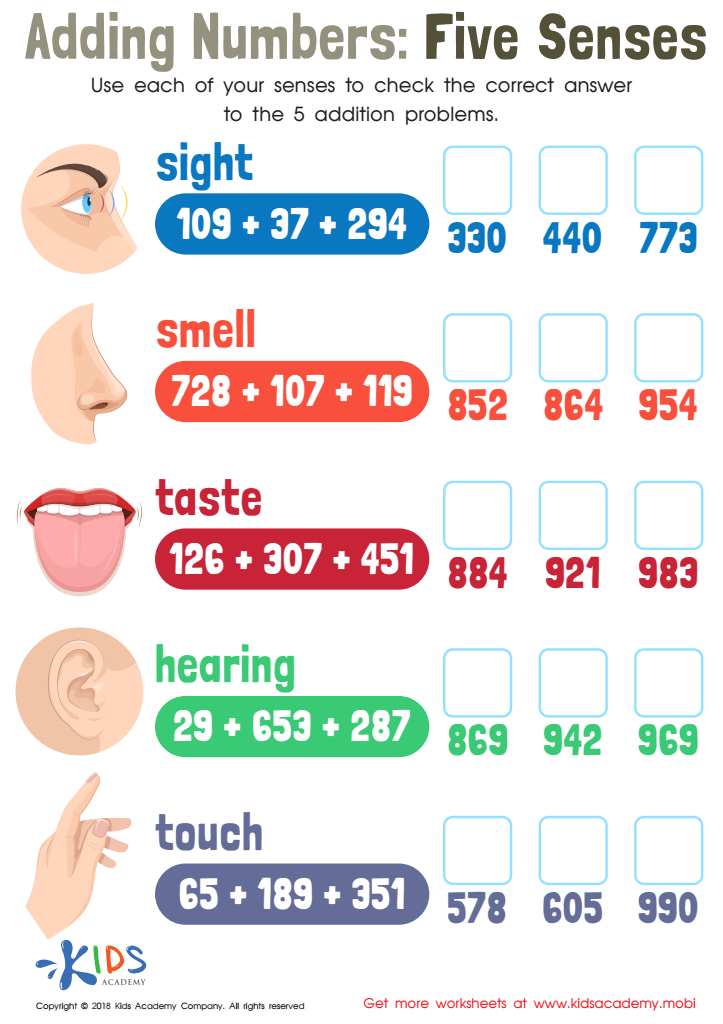
Adding Numbers: Five Senses Worksheet
 Assign to My Students
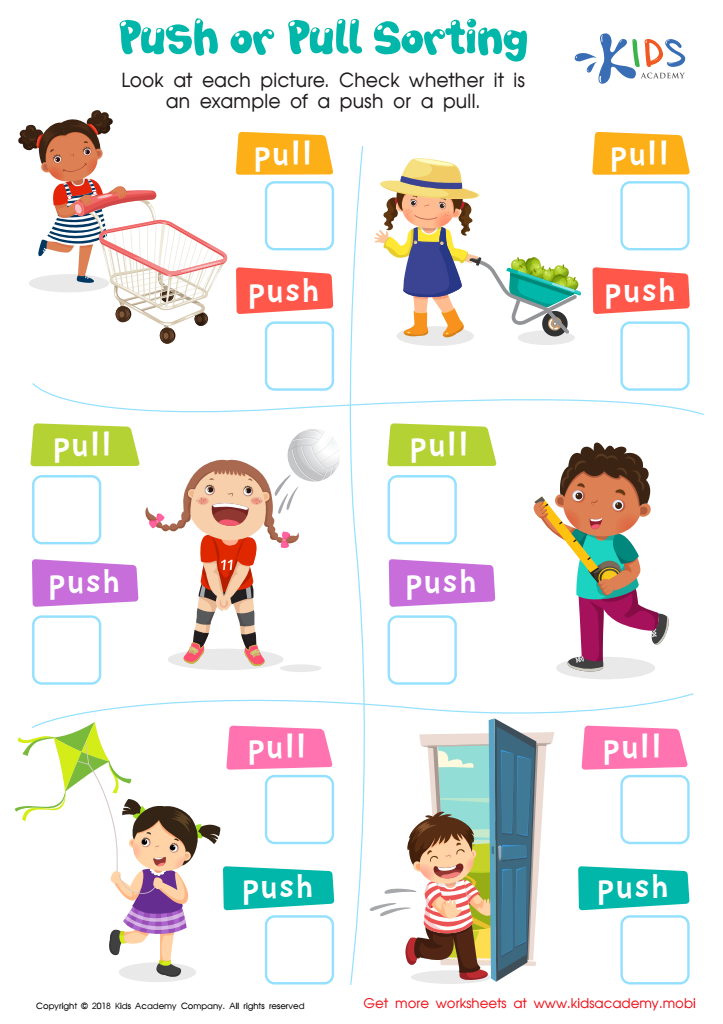
Push or Pull Sorting Worksheet






Parents and teachers should prioritize the development of observational skills in young children because these skills are foundational to learning and personal growth. For children between the ages of 3 and 8, honing their ability to observe the world around them can significantly enhance both their cognitive and social abilities. Observational skills empower children to notice and absorb details, boosting their capacity to understand complex concepts, differentiate between patterns, and make connections. This attention to detail is crucial for succeeding in subjects such as science, math, and reading.
Moreover, strong observational skills contribute to a child's social and emotional development. By keenly observing others, children learn to interpret social cues, understand emotions, and develop empathy. This sensitivity better equips them to build healthy relationships and collaborate effectively with peers.
In addition to academic and social benefits, fostering observational skills encourages a sense of curiosity and wonder about the world. This heightened curiosity promotes lifelong learning and an openness to exploring new ideas and experiences. By nurturing these skills early on, parents and teachers lay a foundation for remarkably perceptive, inquisitive, and compassionate individuals, ultimately setting them up for a well-rounded and successful future.








