Improving drawing skills Worksheets for Ages 3-8
3 filtered results
-
From - To
Enhance your child's creativity and fine motor skills with our "Improving Drawing Skills Worksheets" designed for ages 3-8. Our engaging, age-appropriate resources encourage little artists to explore various drawing techniques through fun, interactive activities. With a range of worksheets that focus on shapes, patterns, and visual storytelling, children will build confidence while developing essential art skills. Ideal for homeschooling, classroom use, or extra practice at home, these worksheets make learning enjoyable and effective. Watch your child's imagination come to life as they connect art with learning! Explore our collection today and inspire the young artists in your life!
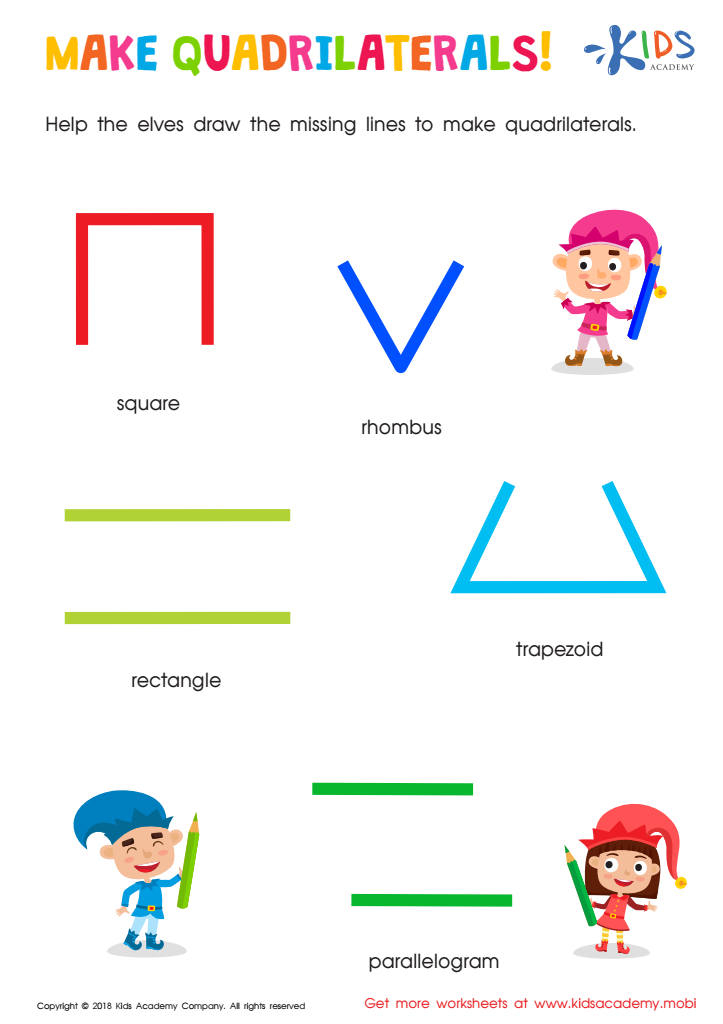
Make Quadrilaterals Worksheet
 Assign to My Students
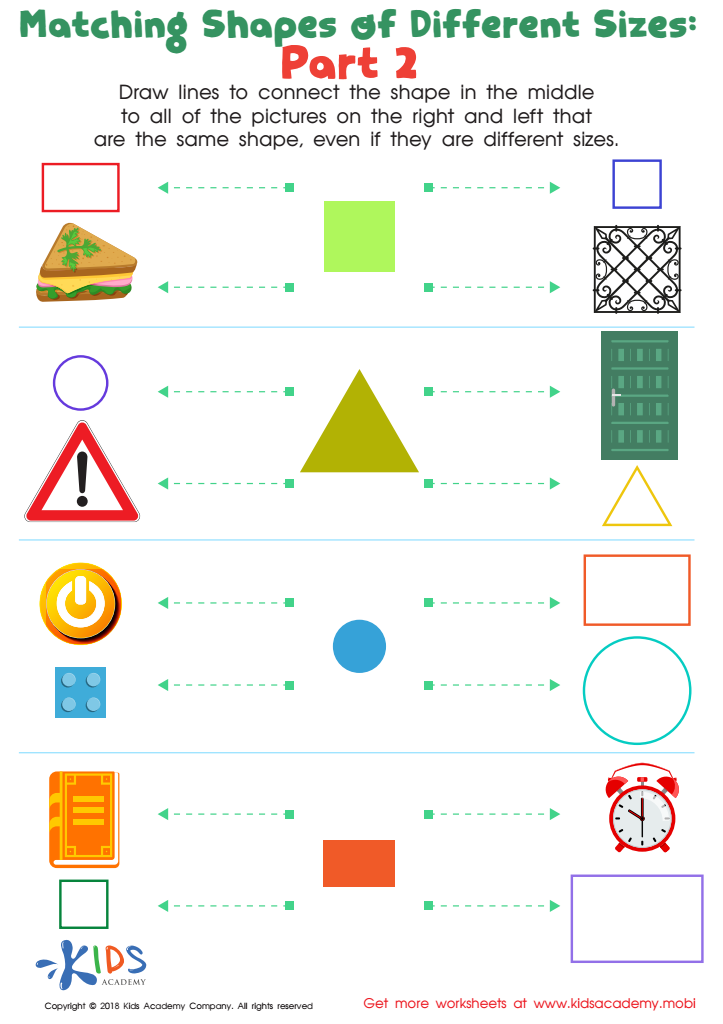
Geometry: Part 2 Worksheet
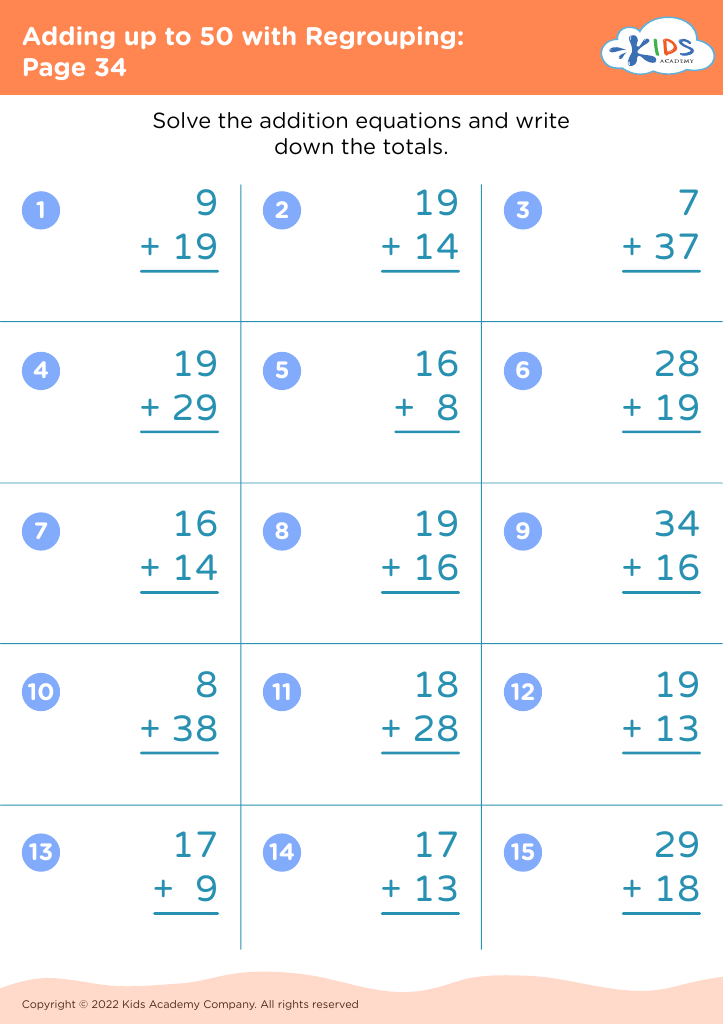


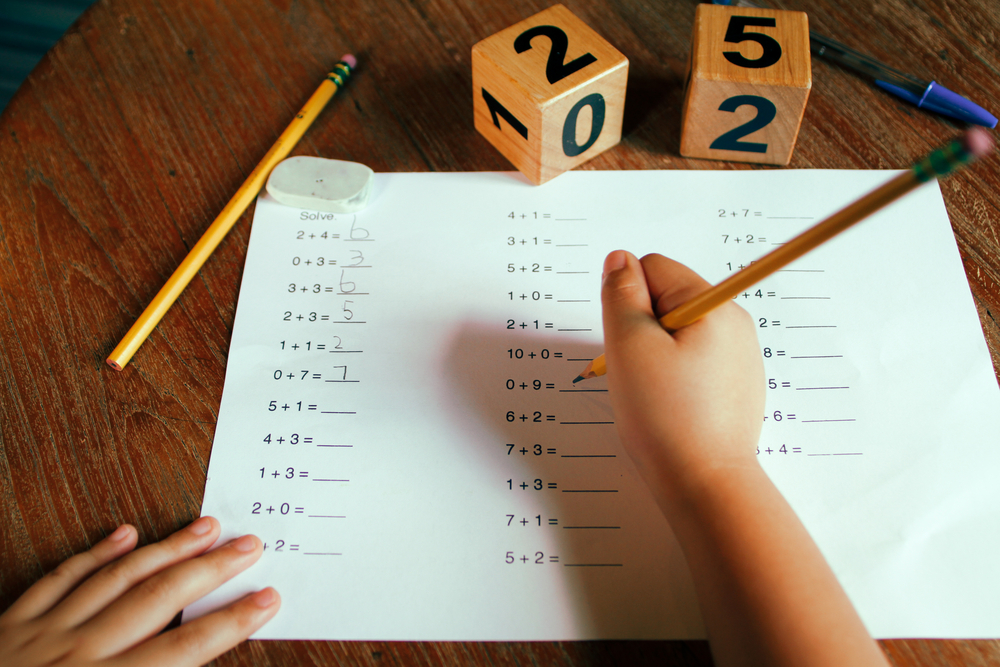




Improving drawing skills in children aged 3-8 is essential for several reasons impacting their overall development. First, drawing enhances fine motor skills, crucial for tasks like writing, buttoning shirts, and self-care. As children grasp crayons or pencils, they develop hand-eye coordination and dexterity.
Moreover, drawing serves as a vital form of self-expression, allowing young learners to communicate thoughts and feelings that they may not yet articulate verbally. It fosters creativity, encouraging them to explore and visualize concepts beyond their immediate environment.
Supportive of cognitive development, drawing stimulates critical thinking and problem-solving as children plan their compositions and make imaginative decisions. It also aids in understanding spatial relationships and different perspectives.
Furthermore, engaging in drawing activities promotes social skills when children collaborate with peers or receive feedback from adults, enhancing their ability to work in teams. Parents and teachers play a crucial role in encouraging drawing as a recreational and educational pursuit, creating an environment where creativity flourishes.
Investing time in improving drawing skills not only enriches artistic expression but also underpins numerous developmental milestones that are foundational for academic success and personal growth. Encouraging children in their artistic endeavors may illuminate pathways to lifelong skills and passions.








