Improving fine motor skills Worksheets for Ages 3-8
3 filtered results
-
From - To
Enhance your child's fine motor skills with our engaging worksheets designed specifically for ages 3-8. These thoughtfully crafted activities promote hand-eye coordination, finger dexterity, and control through fun and interactive exercises. From tracing and cutting to coloring and connecting dots, our worksheets make learning enjoyable while building essential pre-writing skills. Ideal for classrooms or at-home learning, each worksheet supports developmental milestones and encourages creativity. Parents and educators will find a diverse collection that caters to various skill levels, ensuring that every child can thrive. Explore our resource and watch your little ones gain confidence and proficiency as they master fine motor skills!
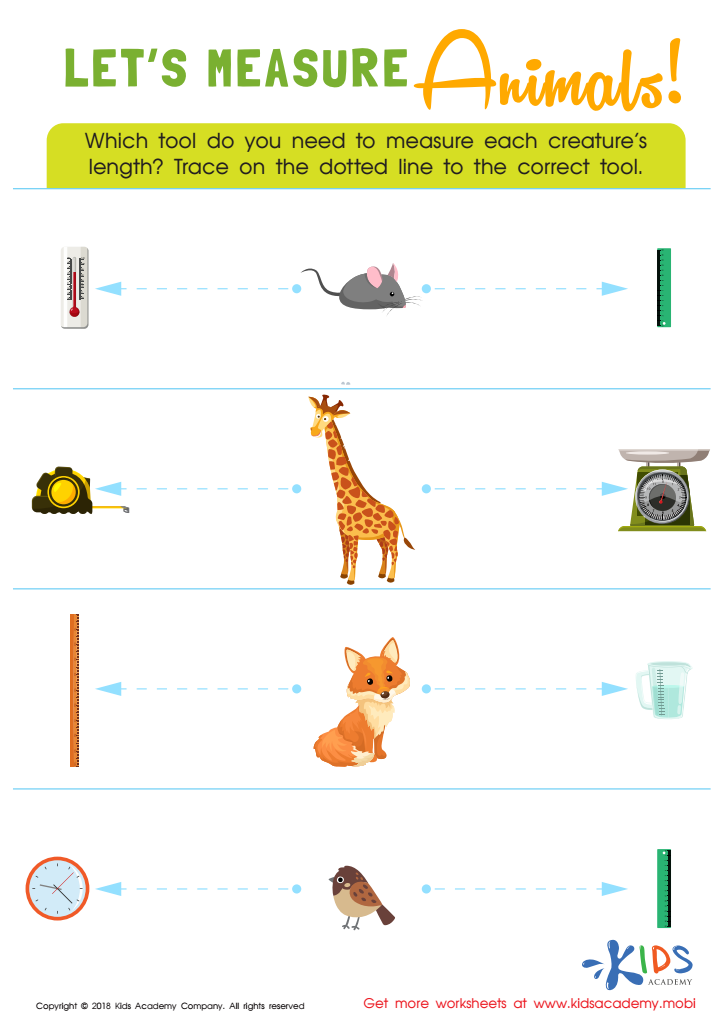
Let's Measure Animals! Worksheet
 Assign to My Students







Improving fine motor skills in children ages 3-8 is essential for their overall development and future success in learning. Fine motor skills involve the ability to use small muscles in the hands and fingers, which are crucial for everyday tasks and activities. These skills are foundational for writing, drawing, cutting, and manipulating small objects, all of which children will encounter in school and life.
For parents and teachers, nurturing fine motor skills can significantly impact a child’s academic performance and self-esteem. As children gain proficiency in these areas, they often experience increased confidence, facilitating a more positive attitude toward learning. Moreover, fine motor skills are closely linked to cognitive development—many activities that strengthen these skills also enhance hand-eye coordination and problem-solving abilities.
Incorporating playful and engaging activities such as crafting, puzzles, and sensory play can make skill development enjoyable. As children become proficient in fine motor tasks, foundational academic skills like writing and math become easier, paving the way for a more successful learning experience. Therefore, understanding the importance of fine motor skills is vital for parents and teachers, as it lays the groundwork for children's future educational achievements and independence.








