Improving number sense Worksheets for Ages 3-8
9 filtered results
-
From - To
Enhance your child's number sense with our engaging worksheets designed for ages 3-8! These thoughtfully crafted activities promote a strong foundation in essential math skills through fun and interactive learning. Your little ones will explore numbers, counting, and basic operations while developing critical thinking and problem-solving abilities. Each worksheet is aligned with educational standards and encourages hands-on practice that makes math enjoyable. Browse our diverse range of exercises tailored to various learning styles, ensuring your child’s success in early math concepts. Download and print our worksheets today to embark on an exciting journey toward numerical confidence and proficiency!
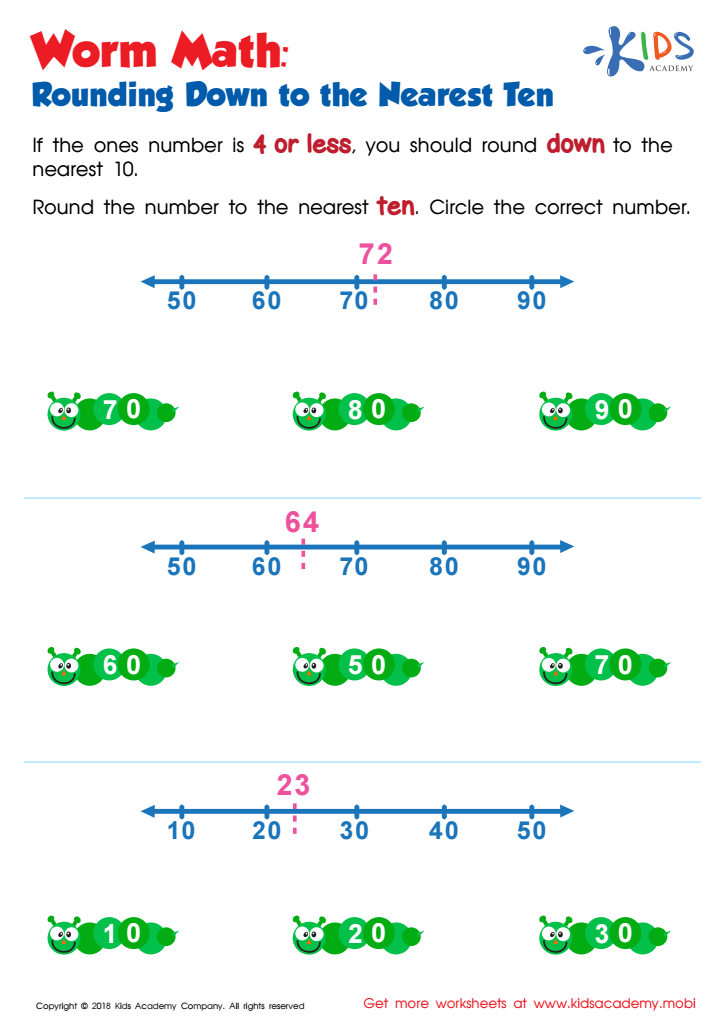
Worm Math Rounding Down to the Nearest Ten Worksheet
 Assign to My Students
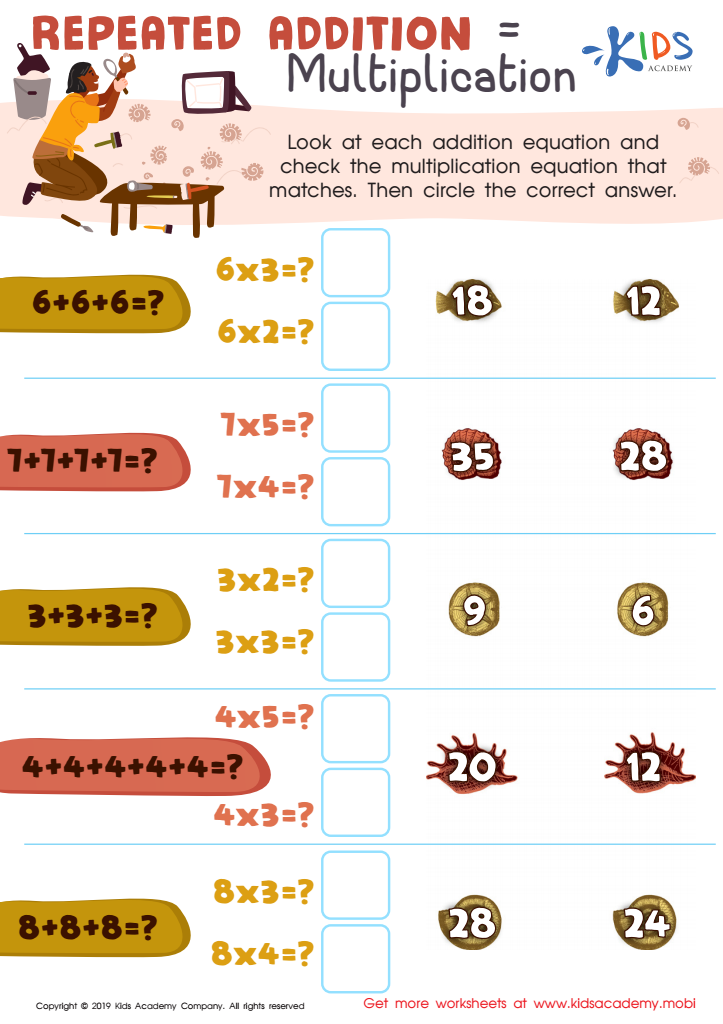
Repeated Addition = Multiplication Worksheet
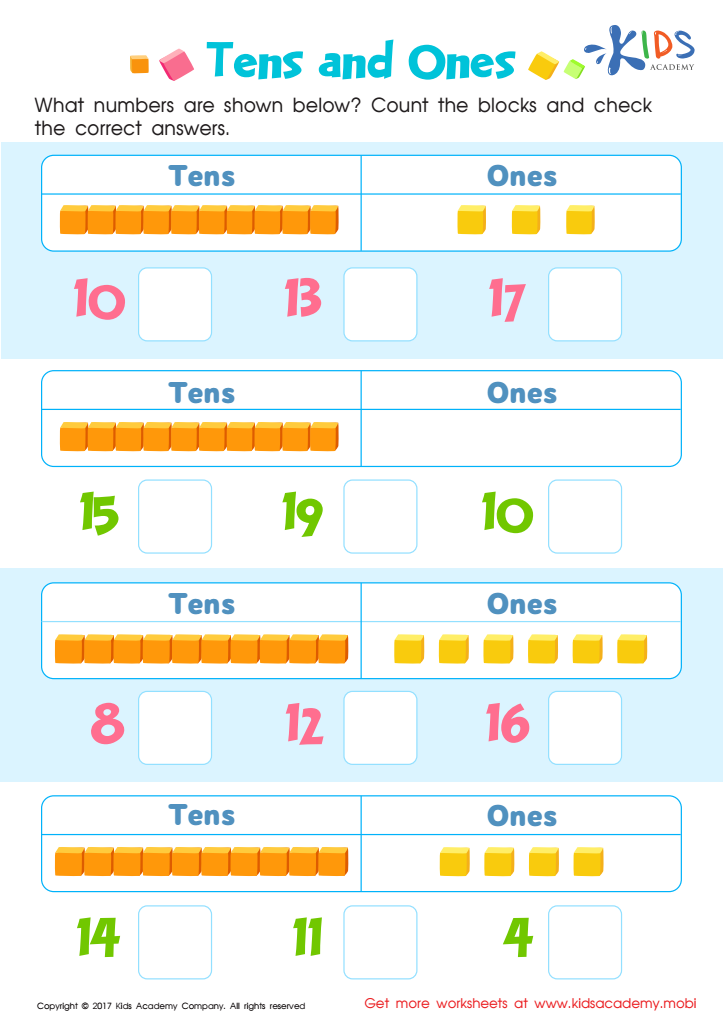
Tens and Ones Worksheet
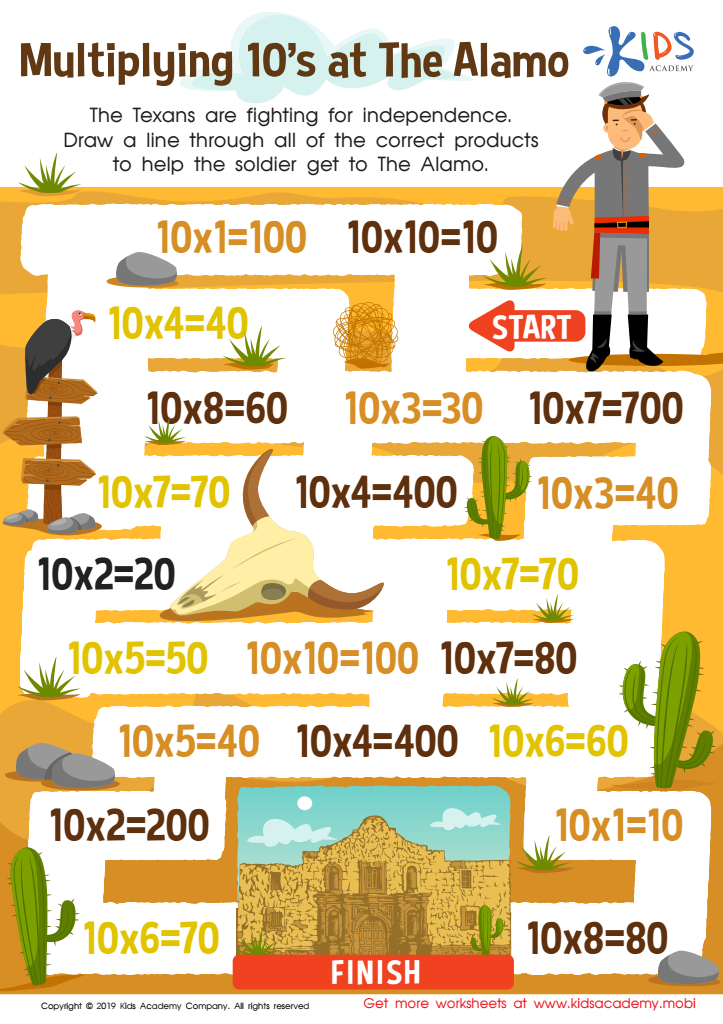
Multiplying 10’s at The Alamo Worksheet
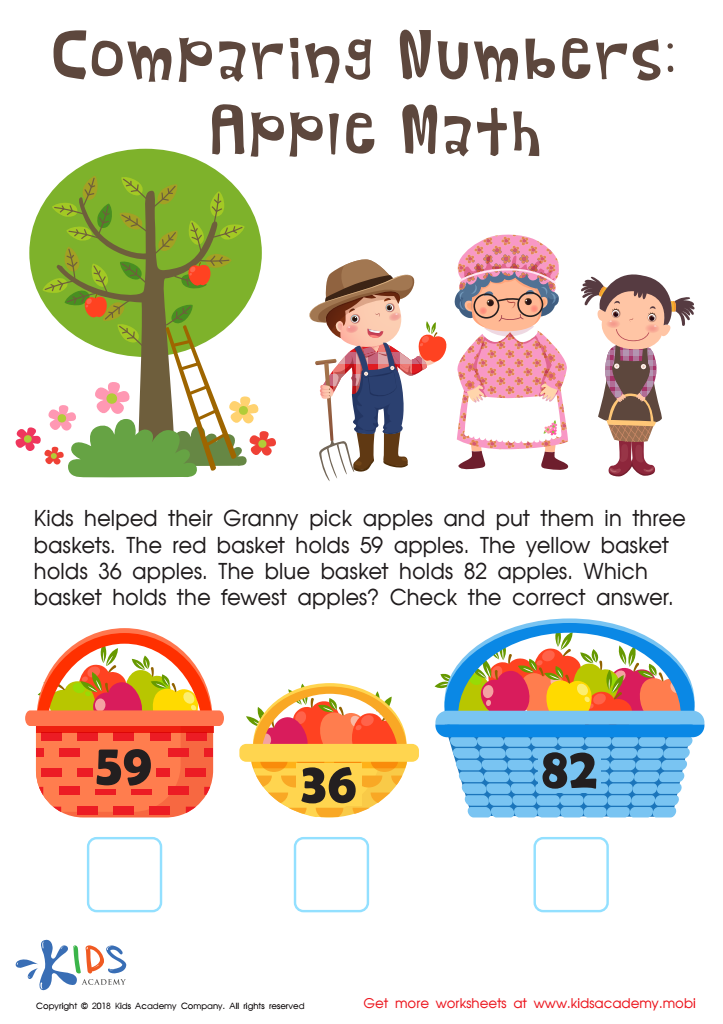
Apple Math Worksheet
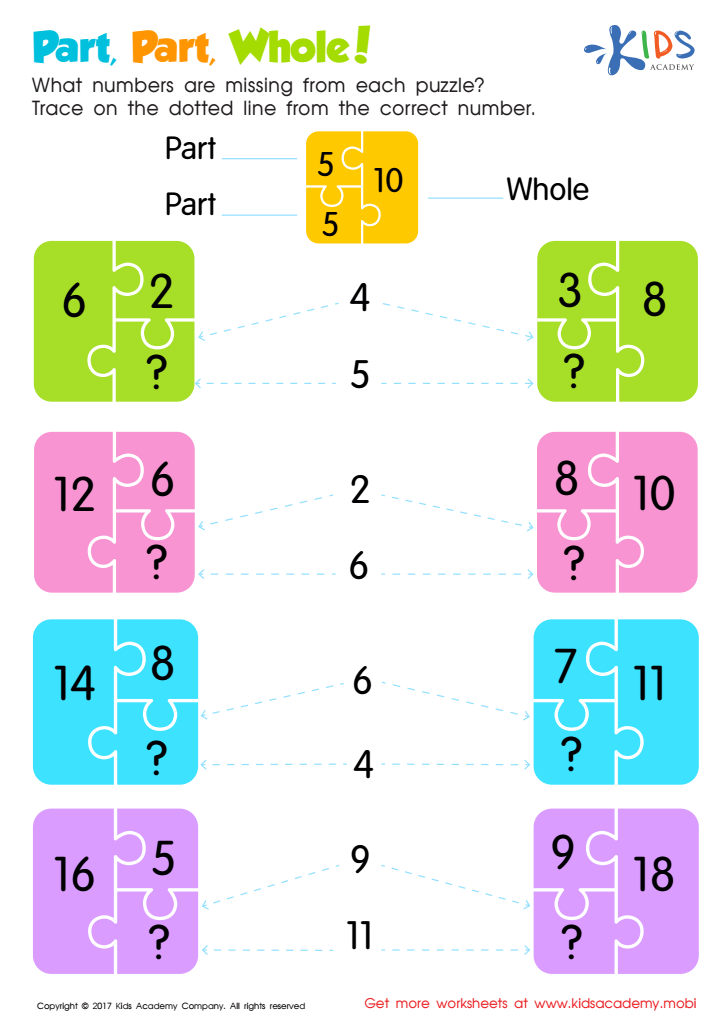
Part, Part, Whole Worksheet
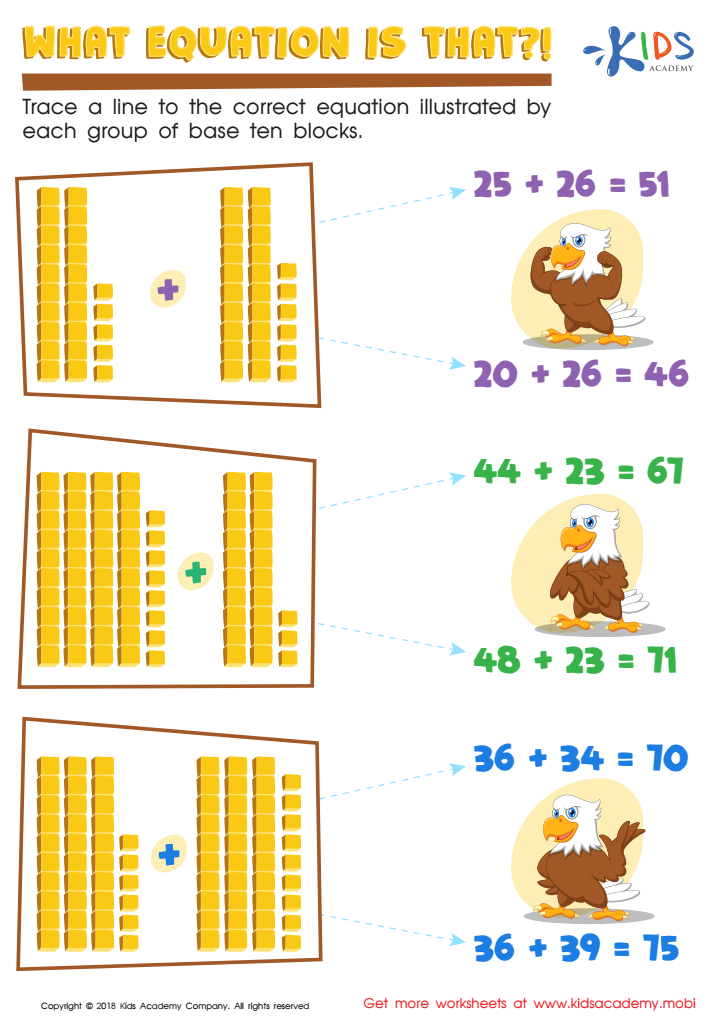
What Equation Is That? Worksheet
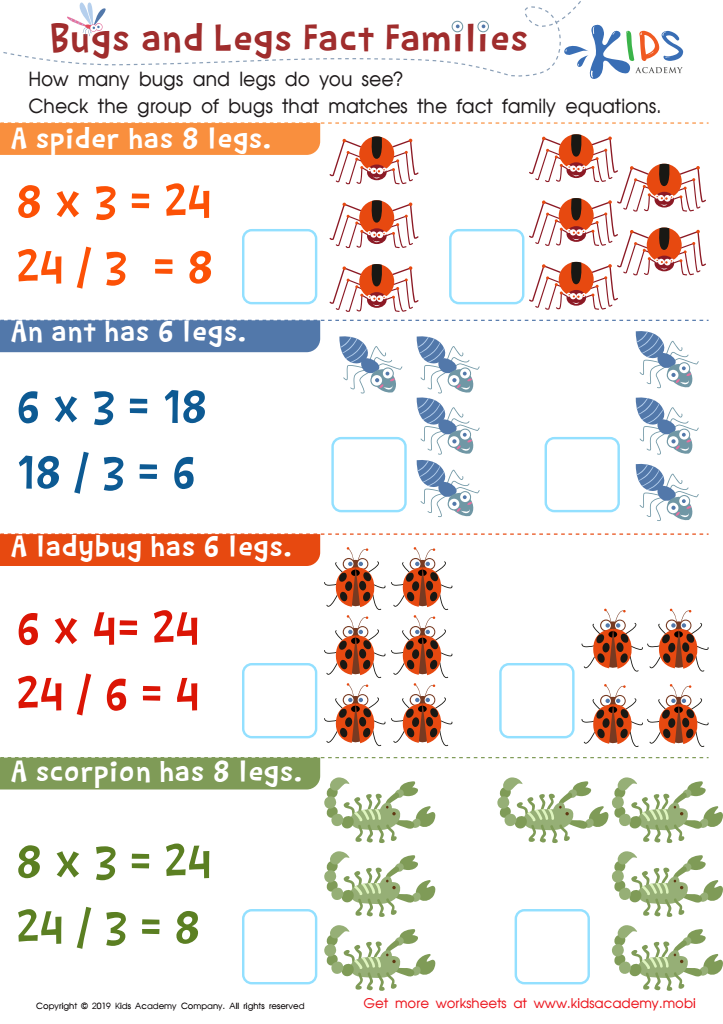
Bugs and Legs Fact Families Worksheet






Improving number sense in children ages 3-8 is foundational for their mathematical development and overall cognitive growth. Number sense refers to a person’s ability to understand, relate, and connect numbers to the world around them. For young learners, this skill fosters a strong foundation for more complex math concepts as they progress in their education.
When parents and teachers prioritize number sense, they help children develop essential skills such as counting, comparing quantities, and understanding numerical relationships. Early mastery of these skills boosts confidence and encourages a positive attitude toward learning math in the future. Furthermore, improving number sense is linked to better problem-solving skills and critical thinking abilities.
Additionally, consistent exposure to number concepts encourages skilled communication about numbers, fostering an environment where children feel comfortable discussing their thoughts and reasoning. Engaging in everyday activities that involve numbers—such as cooking, shopping, or playing games—can make learning meaningful and fun.
Ultimately, investing in number sense during these formative years not only enhances early math education but also equips children with the tools needed for future academic success and daily life situations. For parents and teachers, nurturing these skills is essential to supporting a child’s holistic development in and outside the classroom.








