
Interpreting information Worksheets for Ages 3-8
3 filtered results
Difficulty Level
Grade
Age
-
From - To
Subject
Activity
Standards
Discover our engaging "Interpreting Information Worksheets for Ages 3-8," designed to foster critical thinking and comprehension skills in young learners. These printable worksheets offer a fun and interactive way for children to practice interpreting charts, graphs, stories, and everyday scenarios. Tailored to early developmental stages, the activities help kids understand and process information effectively, building a strong foundation for future learning. Perfect for both classroom and home use, our resources support parents and educators in guiding children through essential learning milestones. Equip your young ones with the skills they need to excel with our expertly crafted worksheets.
Favorites
With answer key
Interactive
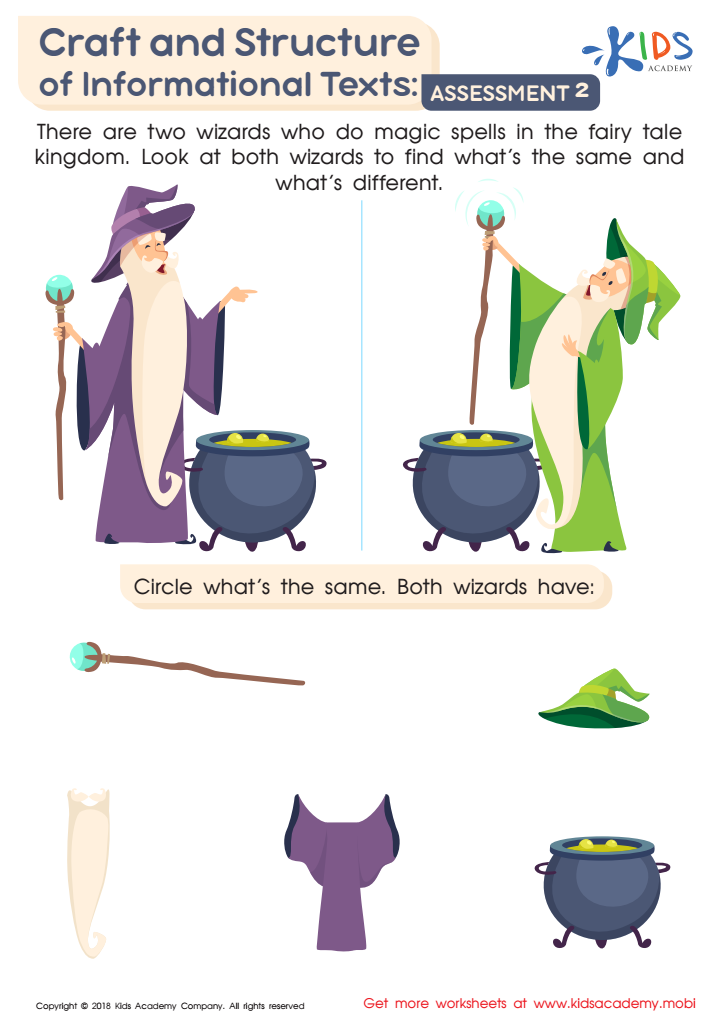
Craft and Structure of Informational Texts: Assessment 2 Worksheet
This assessment has kids looking at two similar fairy tale wizards, focusing on their visuals to find the similarities and differences. Then, they'll circle the things they both have. It's a great way to help children hone their detail-oriented comprehension skills, which is essential when using informational texts.
 Assign to My Students
Craft and Structure of Informational Texts: Assessment 2 Worksheet
Worksheet
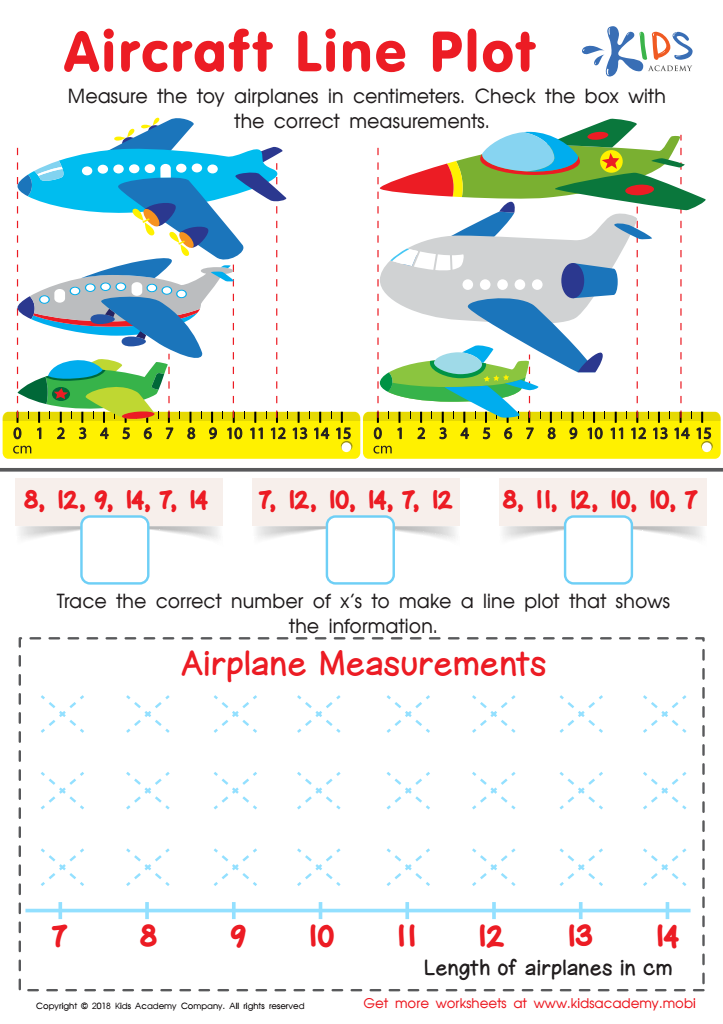
Aircraft Line Plot Worksheet
If your kids are aviation enthusiasts, they'll love this worksheet! Look at the picture with them, then ask them to measure the toy planes in cm. Check the box with the right measurements and then trace the x's to make a line plot with the data.
Aircraft Line Plot Worksheet
Worksheet
Join Kids Academy for Free
Who is primarily going to use this learning content?







Interpreting information for children ages 3-8 is crucial because it lays the foundation for their cognitive and social development. At this young age, kids are like sponges, absorbing information rapidly from their surroundings. However, they often lack the experience to understand context or determine what is true or important.
Parents and teachers act as guides, helping young children navigate and make sense of the world. This interpretation is vital for multiple reasons. First, it fosters critical thinking and decision-making skills. For example, explaining why it's important to share toys during playtime helps kids develop empathy and cooperation. Second, guided interpretation aids in language development. Describing ideas, feelings, or events enriches vocabulary and comprehension skills, which are essential for reading and overall academic success.
Furthermore, without proper guidance, children can misinterpret information, leading to fear, anxiety, or misconceptions about the world. Parents and teachers help filter and frame information in a way that is age-appropriate and reassuring.
Lastly, interpreting information aids emotional development. Understanding feelings—both their own and others'—helps young children build emotional intelligence and resilience. By caring about how young children interpret information, adults not only support intellectual growth but also promote emotional wellbeing, setting the stage for a balanced and healthy life.








