
Learning scientific vocabulary Worksheets for Ages 3-8
3 filtered results
Difficulty Level
Grade
Age
-
From - To
Subject
Activity
Standards
Explore our engaging Learning Scientific Vocabulary Worksheets designed for children ages 3-8! These worksheets aim to introduce young learners to essential scientific terms in a fun and interactive way. Through colorful illustrations and age-appropriate activities, kids will enhance their vocabulary while exploring topics like nature, space, and materials. Perfect for both classroom settings and at-home learning, our resources encourage children to make connections between words and their meanings. Foster curiosity and a love for science early on with our educational materials that promote active learning and development. Start your child’s journey into the world of science today!
Favorites
With answer key
Interactive
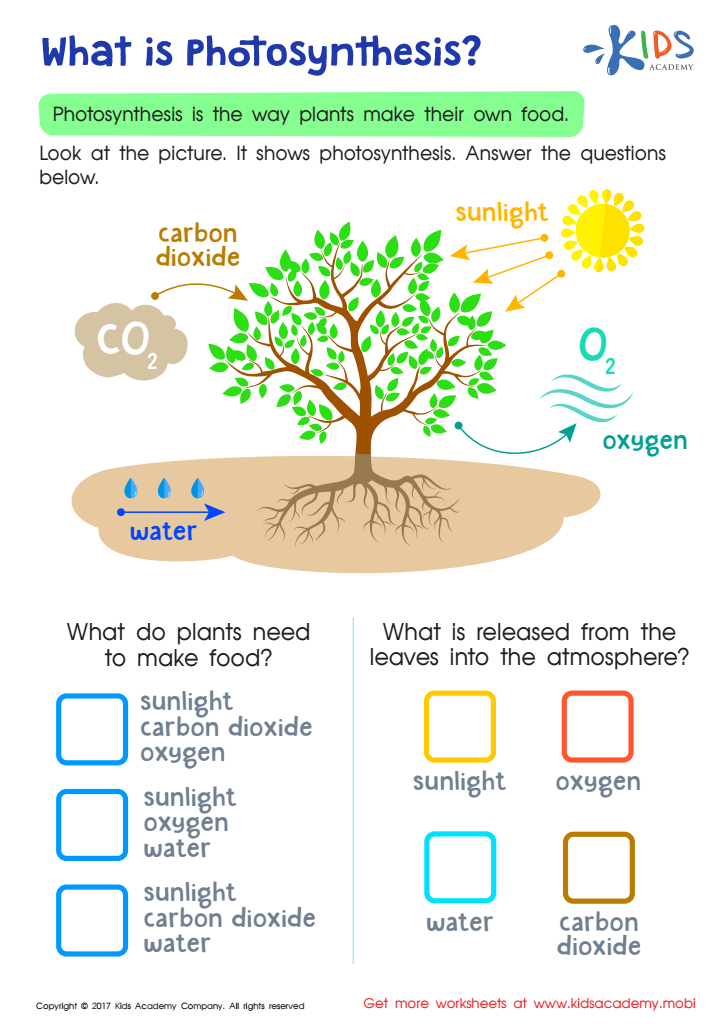
What is Photosynthesis Printable
Plants need to eat too; they make their own food from the air. Introduce them to photosynthesis with this fun worksheet!
 Assign to My Students
What is Photosynthesis Printable
Worksheet
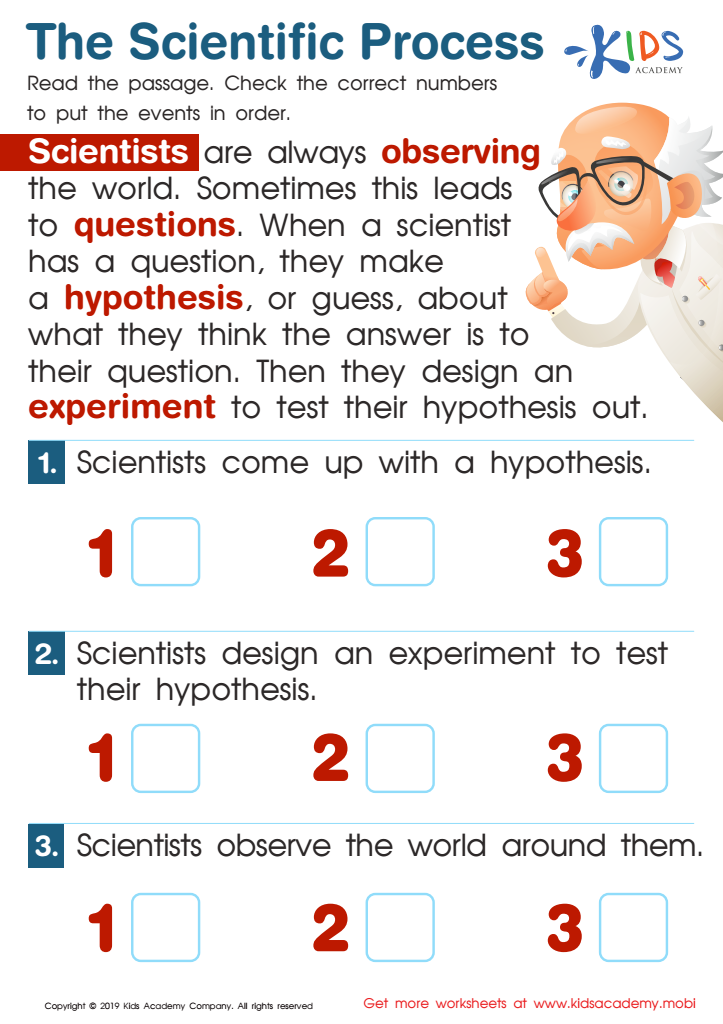
The Scientific Process Worksheet
Help your kids read the passage, then ask them to explain what they've learnt. Ask the questions and help put the events in order. Through this worksheet, your kids will learn more about science and practice reading skills. It's a fun way to explore science! (80 words)
The Scientific Process Worksheet
Worksheet
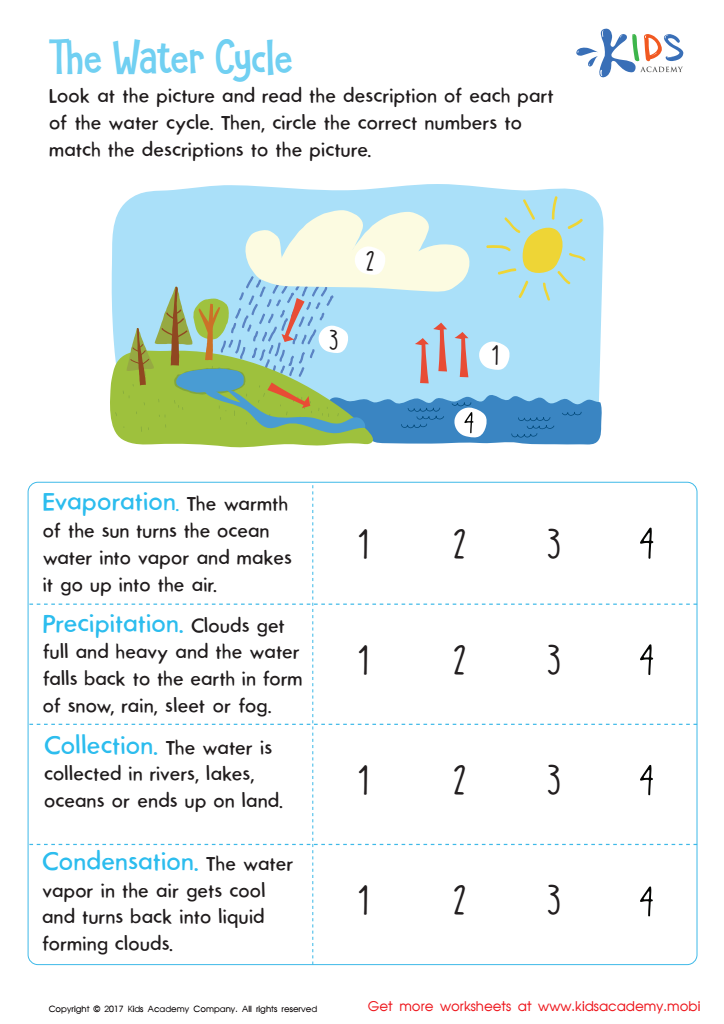
The Water Cycle Worksheet
Kids love science because it sparks their curiosity, so use this worksheet to introduce them to earth science and build a strong foundation for future learning.
The Water Cycle Worksheet
Worksheet
Learning Skills
Join Kids Academy for Free
Who is primarily going to use this learning content?







Learning scientific vocabulary at a young age is crucial for children's cognitive and communicative development. For children aged 3-8, this vocabulary serves as the foundation for understanding the world around them. Engaging with scientific terms not only enriches their language skills but also fosters curiosity and critical thinking. When children can articulate scientific concepts, they become active participants in their learning, asking questions and seeking explanations.
Moreover, early exposure to scientific vocabulary supports comprehension in later academic subjects, particularly in STEM fields, where official language becomes increasingly complex. Teachers and parents play an essential role in establishing this foundation. By integrating scientific vocabulary into everyday conversations and playful activities, children can form connections between words and the natural world.
Furthermore, developing a robust scientific vocabulary contributes to confidence and communication skills as children learn to express their observations and experiences. Ultimately, fostering an early interest in science equips the next generation with the skills needed for future exploration and understanding of complex ideas. Parents and educators who prioritize scientific vocabulary recognize its long-term benefits, leading to well-rounded, inquisitive children prepared for lifelong learning.








