Math problem-solving skills Worksheets for Ages 3-8
5 filtered results
-
From - To
Discover our engaging Math Problem-Solving Skills Worksheets designed specifically for children ages 3-8. These worksheets promote critical thinking and help young learners develop essential math skills through fun and interactive activities. With a variety of topics, including basic addition, subtraction, and pattern recognition, our resources encourage exploration and hands-on learning. Each worksheet is crafted to improve cognitive skills while ensuring that children remain excited about math learning. Whether at home or in the classroom, these worksheets are perfect for fostering a solid mathematical foundation. Empower your child's problem-solving abilities and make math an enjoyable journey today!
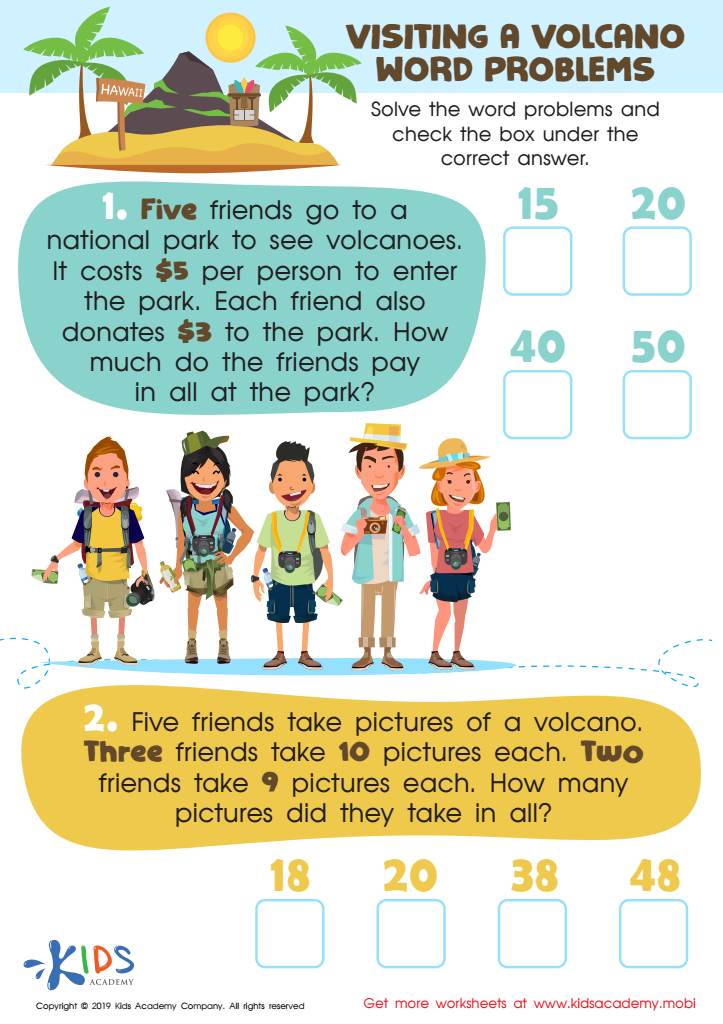
Visiting a Volcano Word Problems Worksheet
 Assign to My Students








Parents and teachers should prioritize math problem-solving skills for children ages 3-8 because these foundational skills lay the groundwork for future academic success and critical thinking. During this crucial developmental stage, children are naturally curious and eager to explore their environment. Engaging them in problem-solving activities helps nurture their innate curiosity while enhancing their cognitive abilities.
Math problem-solving not only develops numerical skills but also promotes logical reasoning and creativity. Children learn to approach challenges methodically, fostering resilience and perseverance. These skills are essential not just in math, but across all subjects and life situations.
Moreover, early exposure to math enriches language development, as children articulate their thoughts and strategies, gaining valuable vocabulary in the process. Parents and teachers can create a supportive environment that encourages collaboration, builds social skills, and instills confidence.
Investing in math problem-solving at this young age can ensure that children not only become competent in mathematics but also develop a love for learning that lasts a lifetime. By nurturing these skills early on, we set the stage for well-rounded individuals who can tackle complex problems effectively in their future endeavors.








