Mental math development Worksheets for Ages 3-8
3 filtered results
-
From - To
Unlock your child’s potential with our Mental Math Development Worksheets for Ages 3-8! Tailored for young learners, these engaging resources help reinforce foundational math skills through fun, interactive activities. Each worksheet focuses on core concepts such as number recognition, simple addition and subtraction, and problem-solving strategies. Our thoughtfully designed activities inspire critical thinking while building confidence in math. Perfect for home or classroom use, these worksheets make learning enjoyable and effective. Give your child a head start in mathematics with our comprehensive collection—ensuring they enjoy math while mastering essential skills that will serve them for years to come!
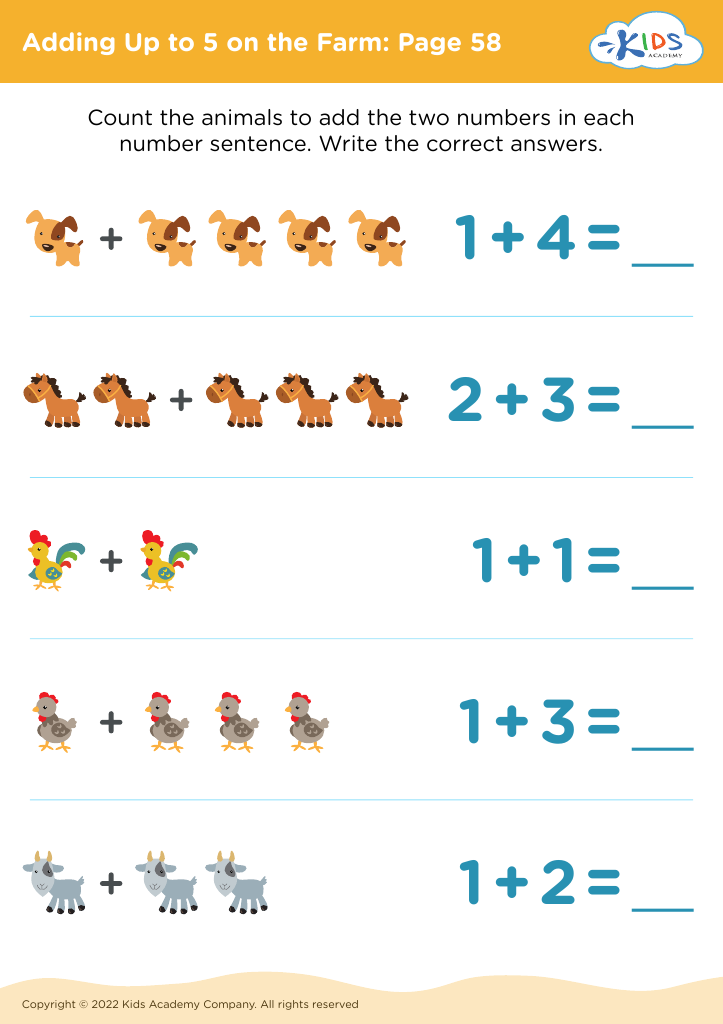
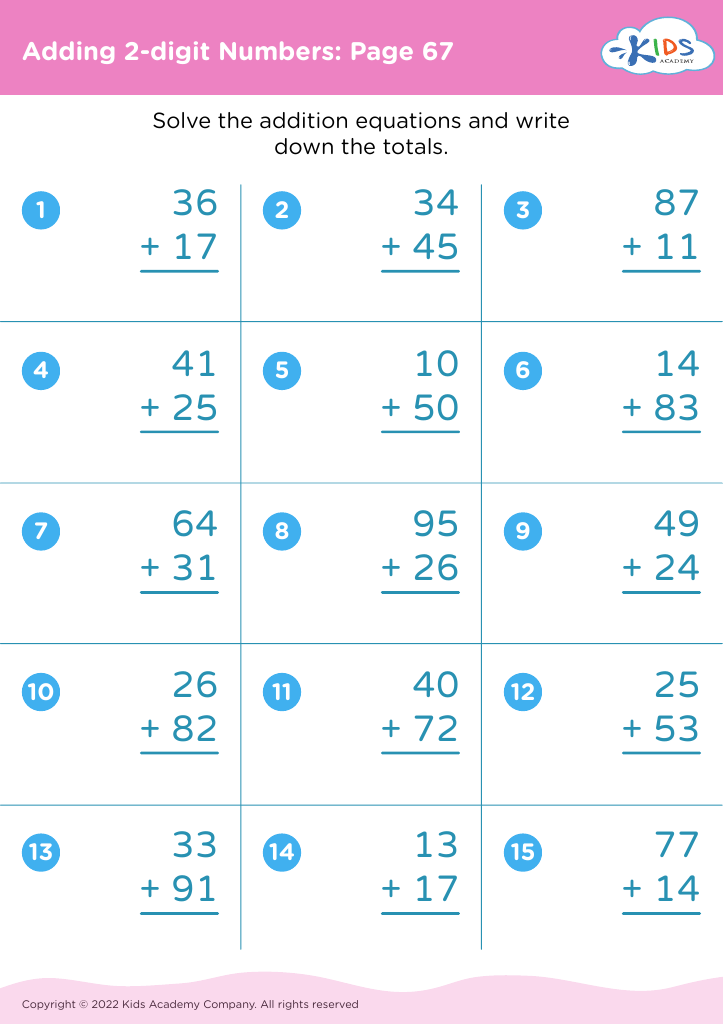
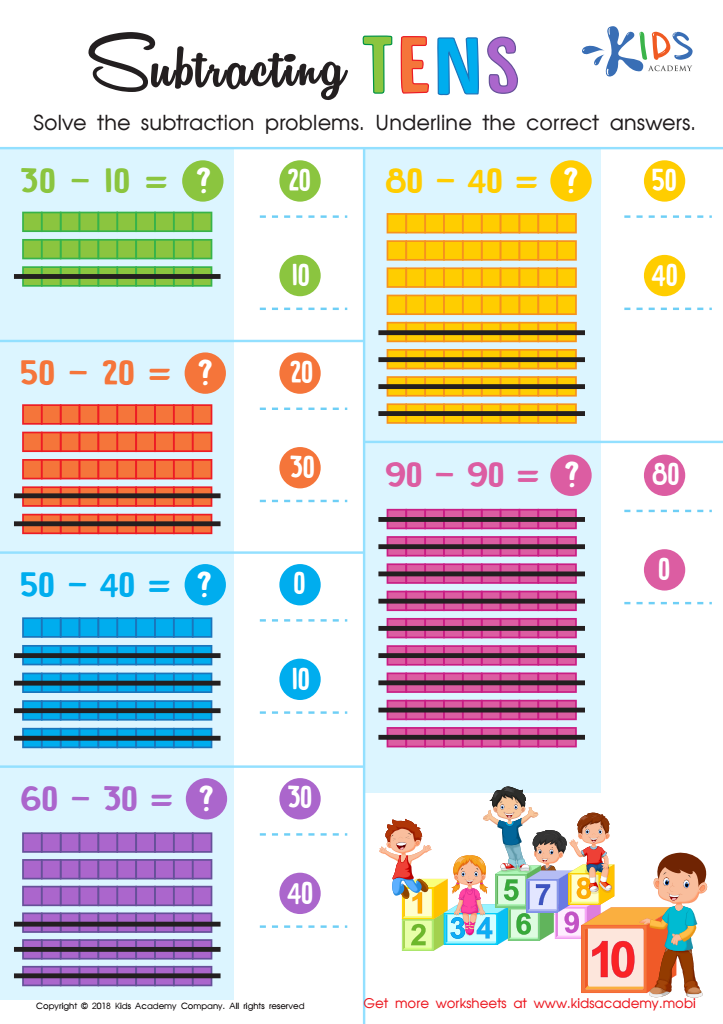
Subtracting Tens Worksheet
 Assign to My Students








Mental math development is crucial for children ages 3-8 as it forms the foundation for more advanced mathematical concepts. At this early stage, children's brains are highly adaptable, making it easier for them to grasp mathematical relationships and patterns. Engaging in mental math activities, such as counting games or simple arithmetic problems, sharpens their problem-solving skills, improves critical thinking, and fosters a positive attitude toward mathematics.
Additionally, strong mental math skills enhance a child's confidence, allowing them to tackle more complex math tasks without intimidation. This confidence can lead to a lifelong appreciation of math, crucial for academic success in science and technology-related fields.
Parents and teachers should also recognize that mental math capabilities support cognitive development. Quick calculations and mental estimations encourage memory retention and concentration. Furthermore, integrating mental math into everyday activities—like cooking, shopping, or playing number games—makes learning enjoyable and relevant.
By prioritizing mental math development, adults empower children to become independent thinkers and adept learners. Ultimately, fostering these skills at a young age equips children for future academic challenges and everyday decision-making, promoting overall lifelong learning and adaptability in an increasingly numerically-driven world.








