Multiplication practice Worksheets for Ages 3-8 - Page 4
83 filtered results
-
From - To
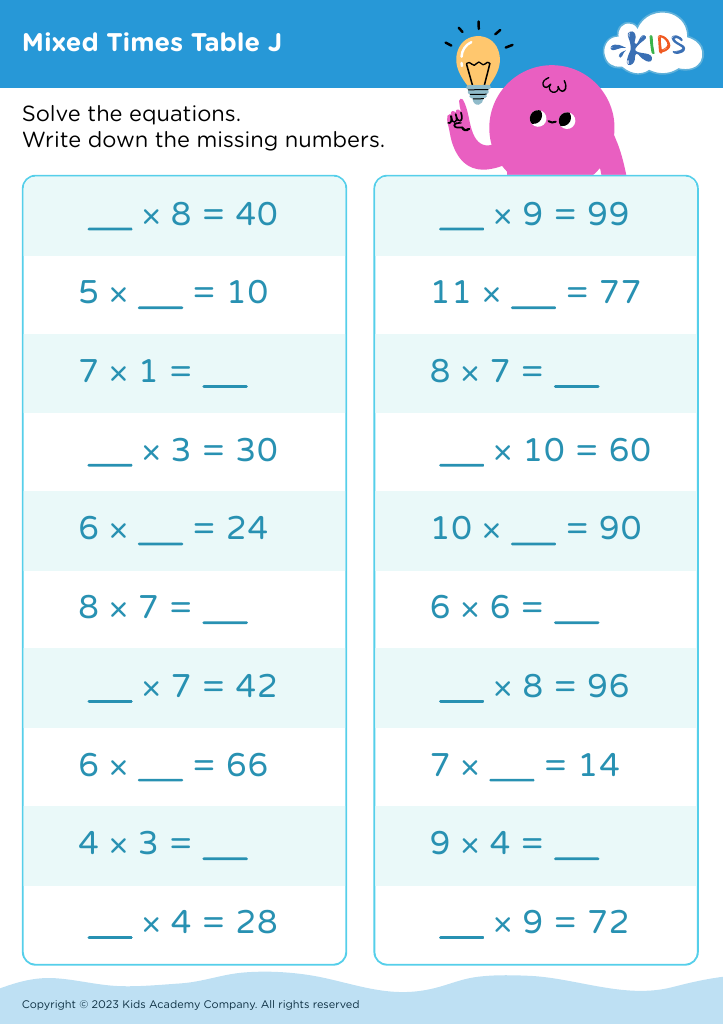
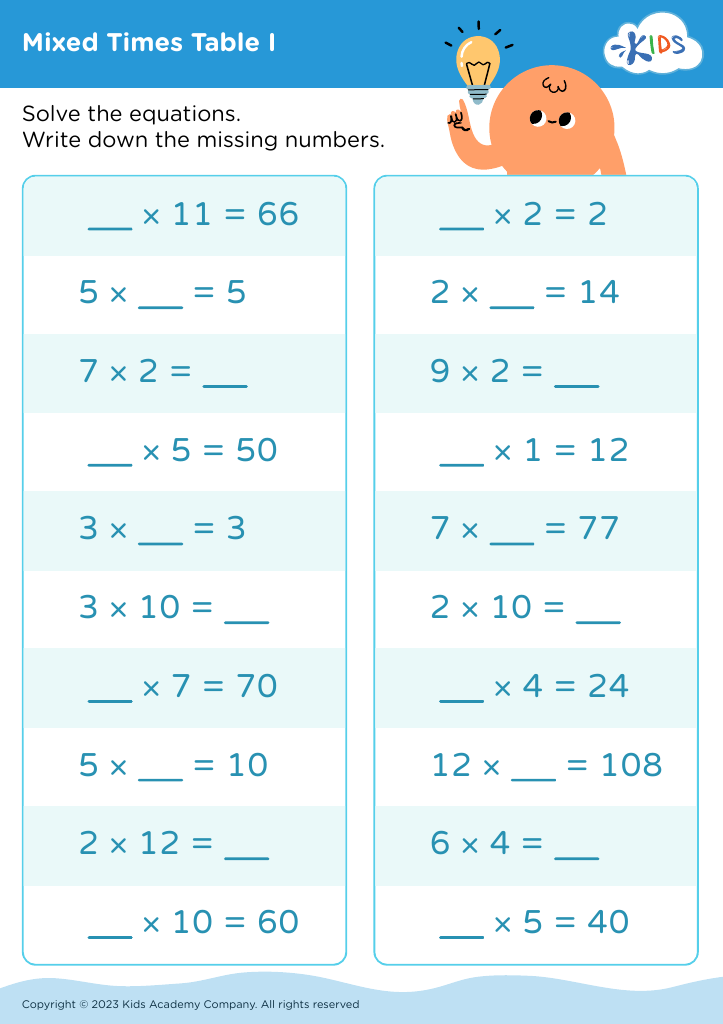
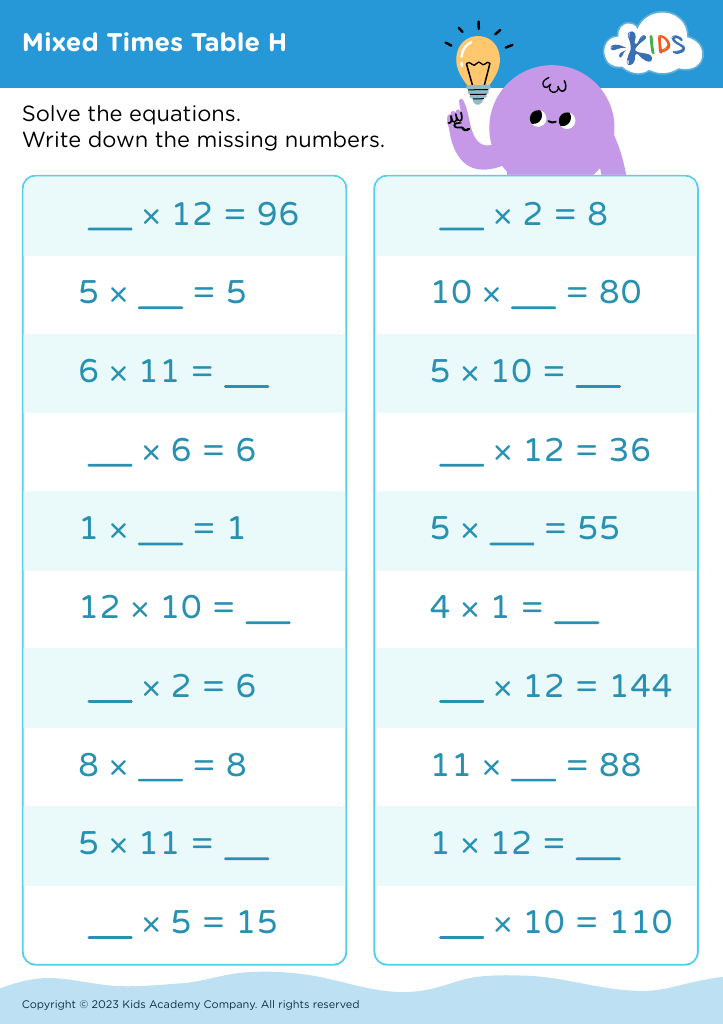
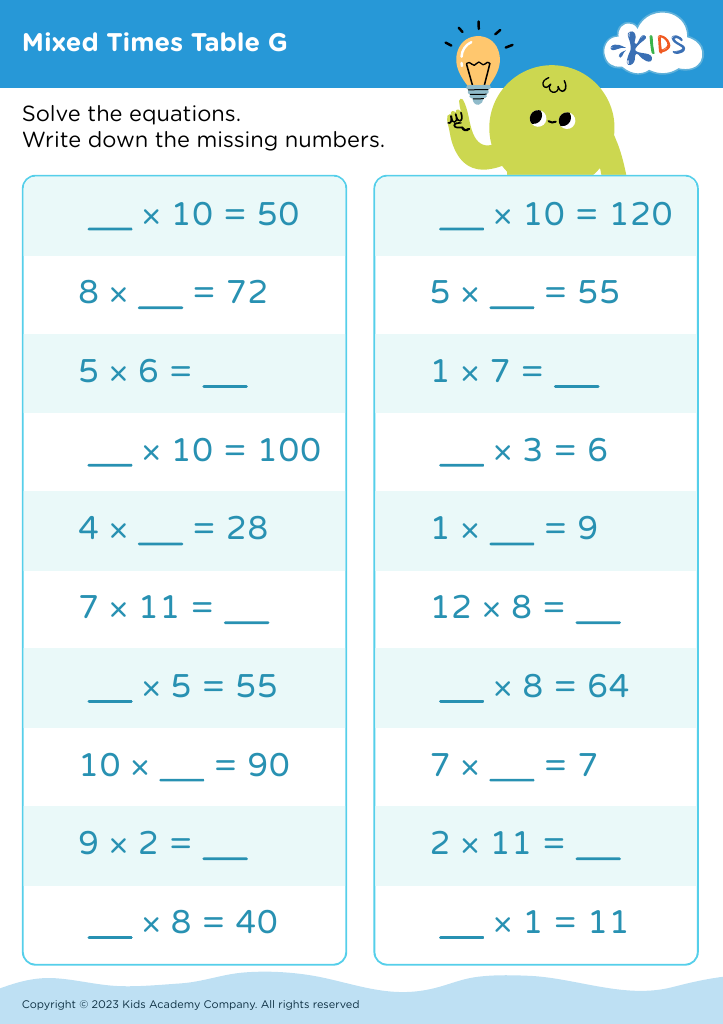
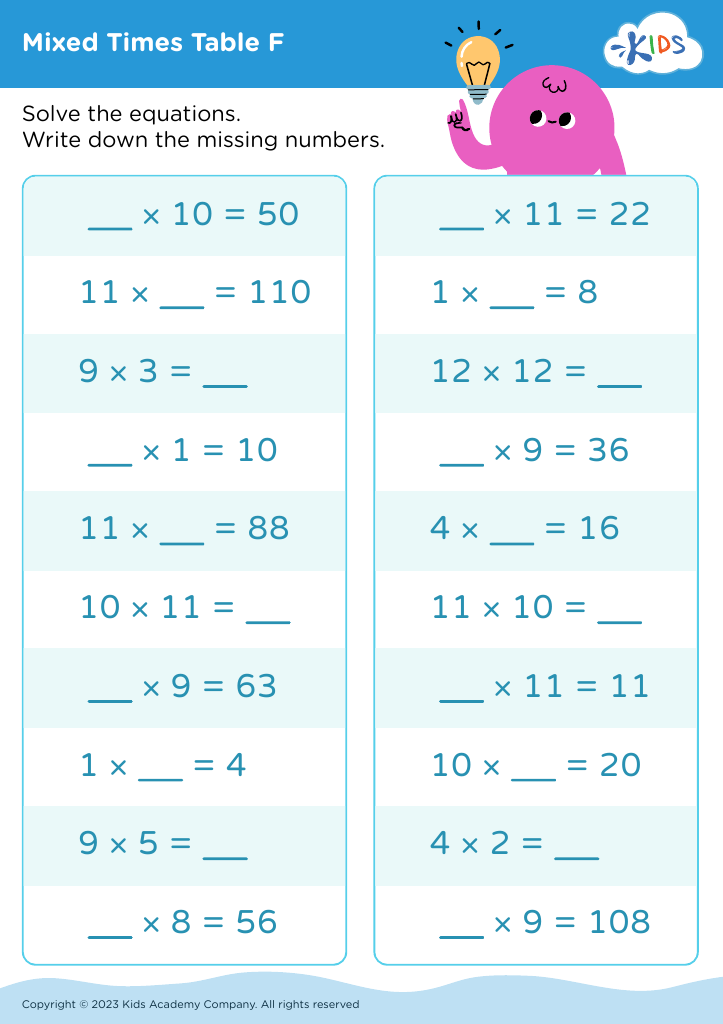
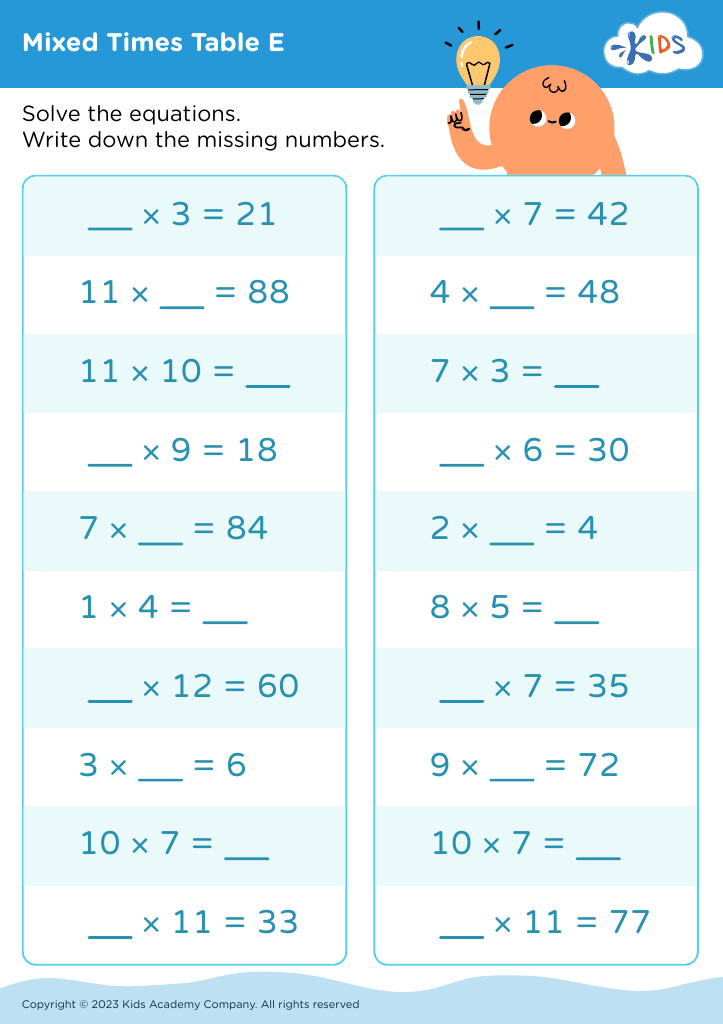
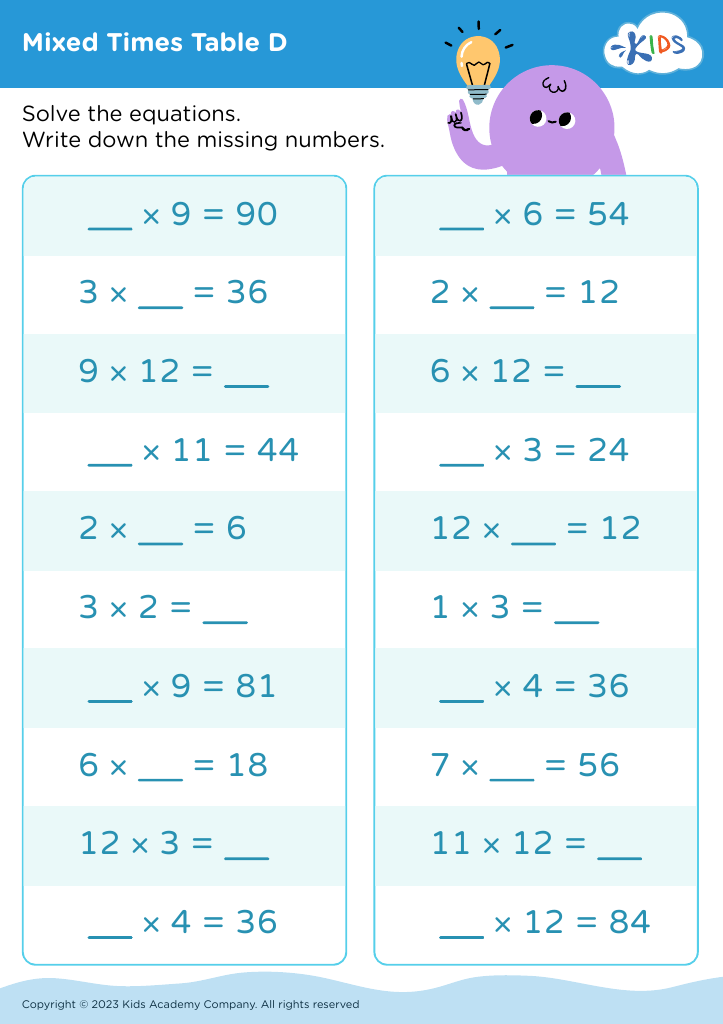
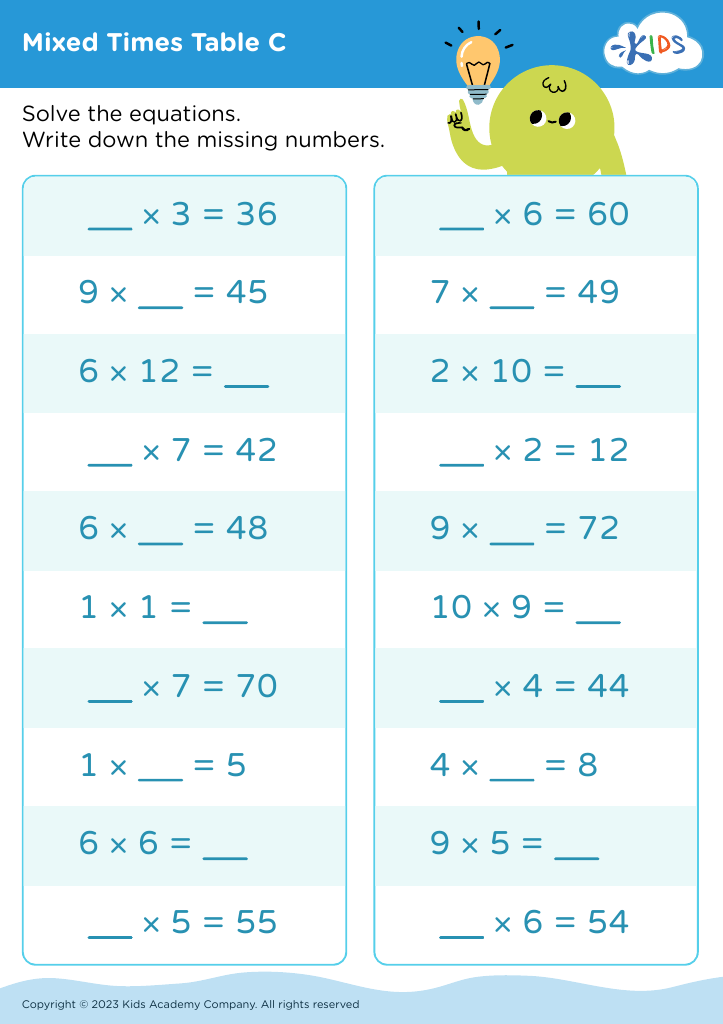




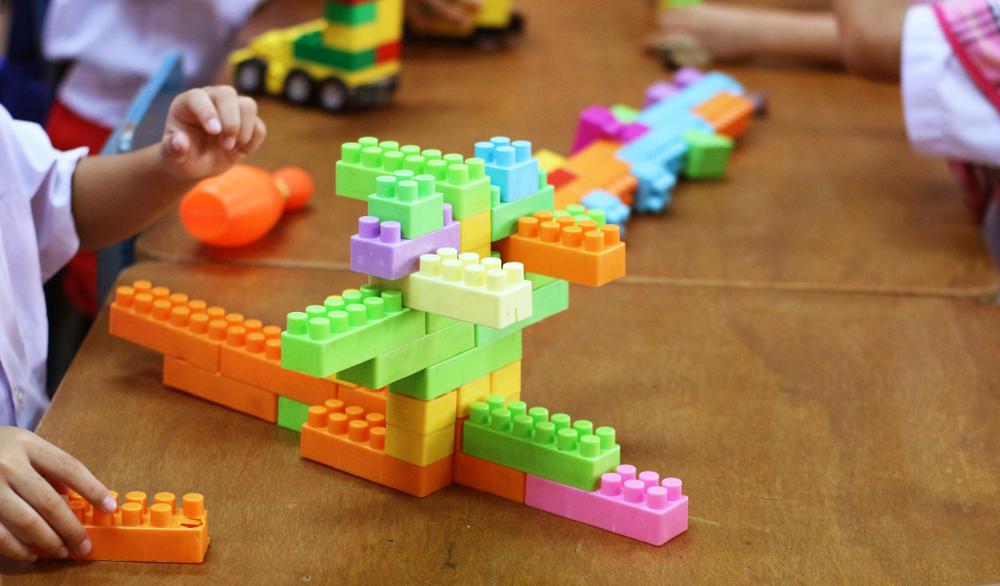


Introducing multiplication practice to children aged 3-8 is crucial for foundational development in mathematics. At this age, the brain is highly adaptable and capable of absorbing new information at an impressive rate. Engaging in multiplication practice promotes numerical fluency, reinforcing key mathematical concepts such as addition, subtraction, and understanding of number relationships. This foundational knowledge is essential for more advanced math topics in later school years.
Additionally, early math skills are linked to higher academic achievement across the board. Studies have shown that children who excel in early math are more likely to succeed in a range of subjects because mathematical thinking helps develop problem-solving skills, logical reasoning, and critical thinking. Multiplication practice also introduces children to patterns and structures, fostering a greater appreciation and understanding of the world around them.
For parents and teachers, incorporating multiplication into daily routines can be made fun through games, songs, and hands-on activities like counting objects or using manipulatives. These engaging methods keep children interested and make learning an enjoyable experience. Fostering a positive early experience with math can help remove any fear or anxiety around the subject, setting up children for long-term success and a lifelong love of learning.








