Musical instruments recognition Worksheets for Ages 3-8
3 filtered results
-
From - To
Introduce your young learners to the enchanting world of music with our "Musical Instruments Recognition Worksheets for Ages 3-8." These engaging worksheets are designed to help children identify and understand various musical instruments while developing their cognitive and listening skills. Each activity is crafted to be both educational and entertaining, featuring colorful illustrations and interactive exercises. From pianos to drums, these worksheets make learning about instruments a joyful experience. Ideal for both classroom and at-home use, they are the perfect tool to spark a lifelong love for music in your child. Discover more at Kids Academy!
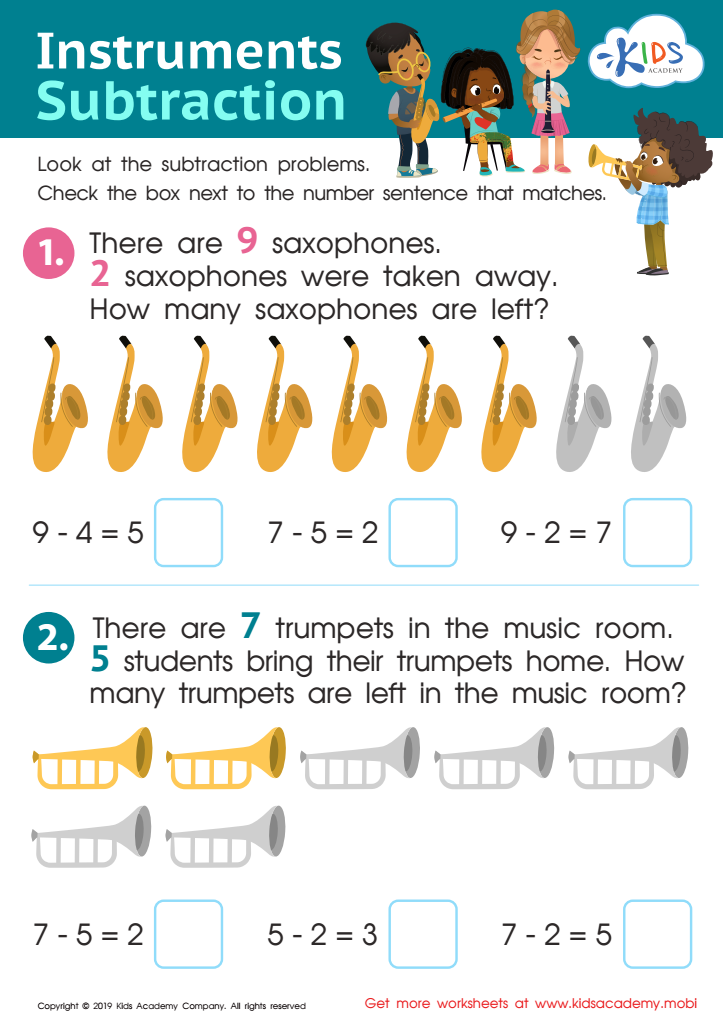
Instrument Subtraction Worksheet
 Assign to My Students
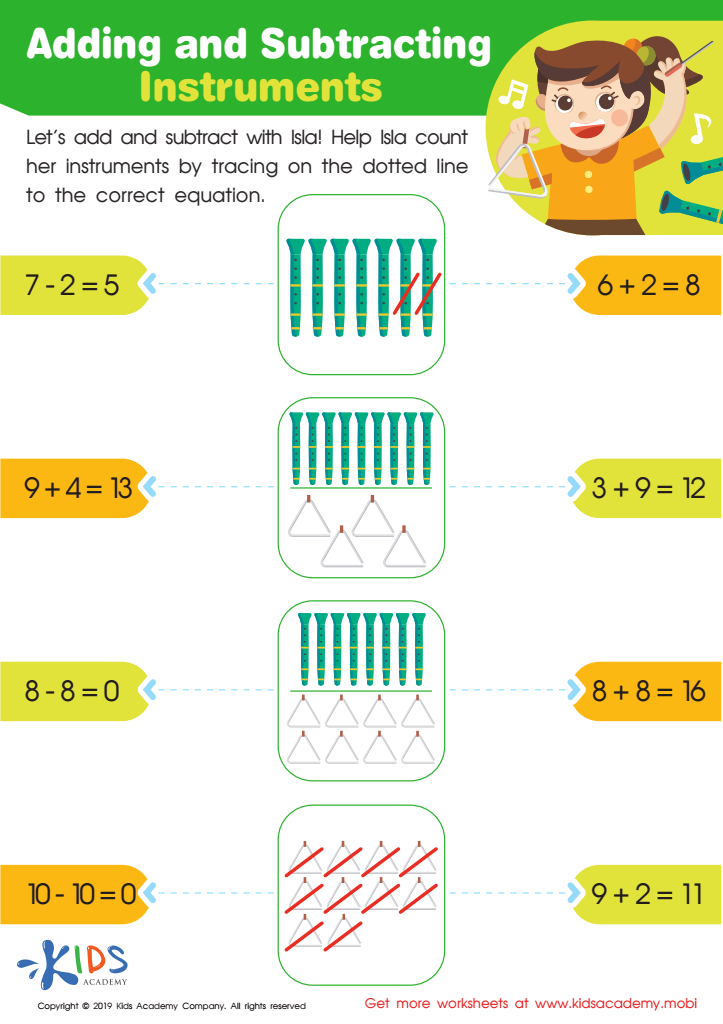
Adding and Subtracting: Instruments Worksheet
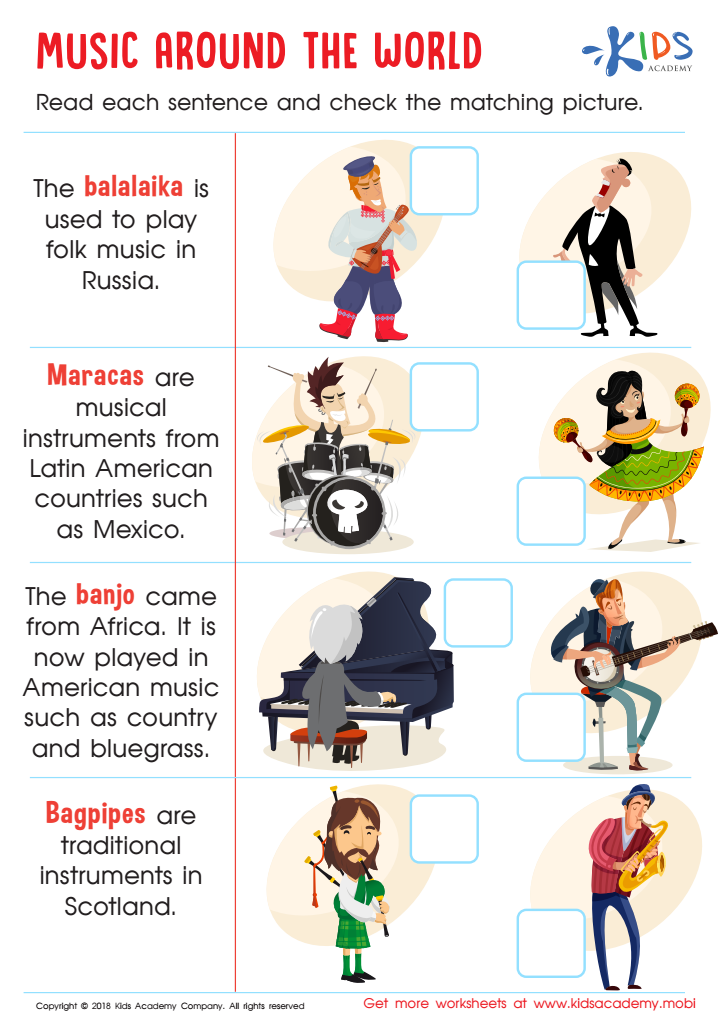
Music Around the World Worksheet




Musical instrument recognition for ages 3-8 plays a vital role in early childhood development, promoting intellectual, emotional, and social growth. Parents and teachers should pay attention to this because:
-
Cognitive Development: Recognizing different musical instruments enhances children’s auditory discrimination skills. Differentiating sounds can boost their language development and improve reading and phonemic awareness skills, bridging connections in the brain critical for academic success.
-
Motor Skills: Identifying and playing instruments can advance fine motor skills. Handling instruments like drums, xylophones, or small stringed instruments encourages hand-eye coordination and dexterity.
-
Cultural Awareness: Exposure to diverse musical instruments broadens a child’s cultural horizons. They gain an appreciation for various musical genres and traditions, fostering open-mindedness and global awareness.
-
Emotional Expression: Music enables children to express feelings they might not yet have the words to convey. Understanding different sounds from various instruments helps them connect pieces of music to emotions, aiding in emotional articulation and empathy.
-
Social Skills: Group music activities encourage cooperation, sharing, and patience. Playing or recognizing instruments in an ensemble helps them understand teamwork and nurtures social interaction skills.
In summary, instrument recognition is a multifaceted tool that supports comprehensive development, making it a cornerstone for effective early childhood education.








