Phonemic awareness Worksheets for Ages 3-8
3 filtered results
-
From - To
Enhance your child's reading skills with our engaging phonemic awareness worksheets for ages 3-8! Designed to support early literacy development, these fun and interactive worksheets focus on essential phonemic concepts such as sound recognition, blending, and segmenting. Use our carefully crafted activities to encourage your child's ability to hear, identify, and manipulate sounds in spoken language, laying the foundation for successful reading and writing. Accessible for home or classroom use, our resources are perfect for educators and parents alike. Start your child's educational journey today with our colorful worksheets that make learning sound fun and exciting!
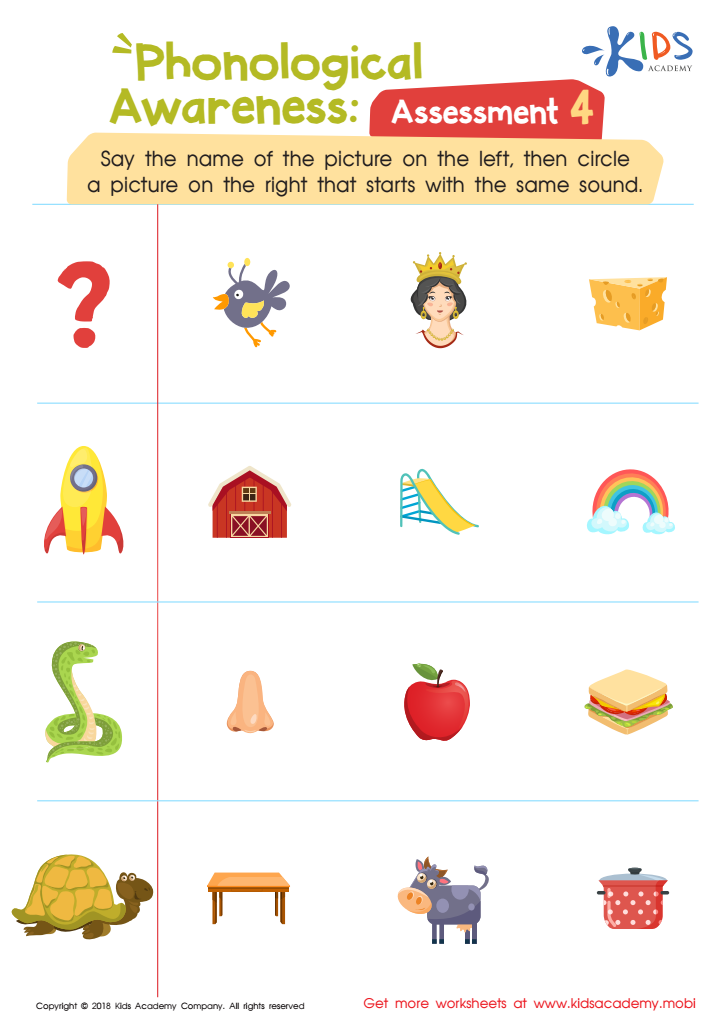
Phonological Awareness: Assessment 4 Worksheet
 Assign to My Students
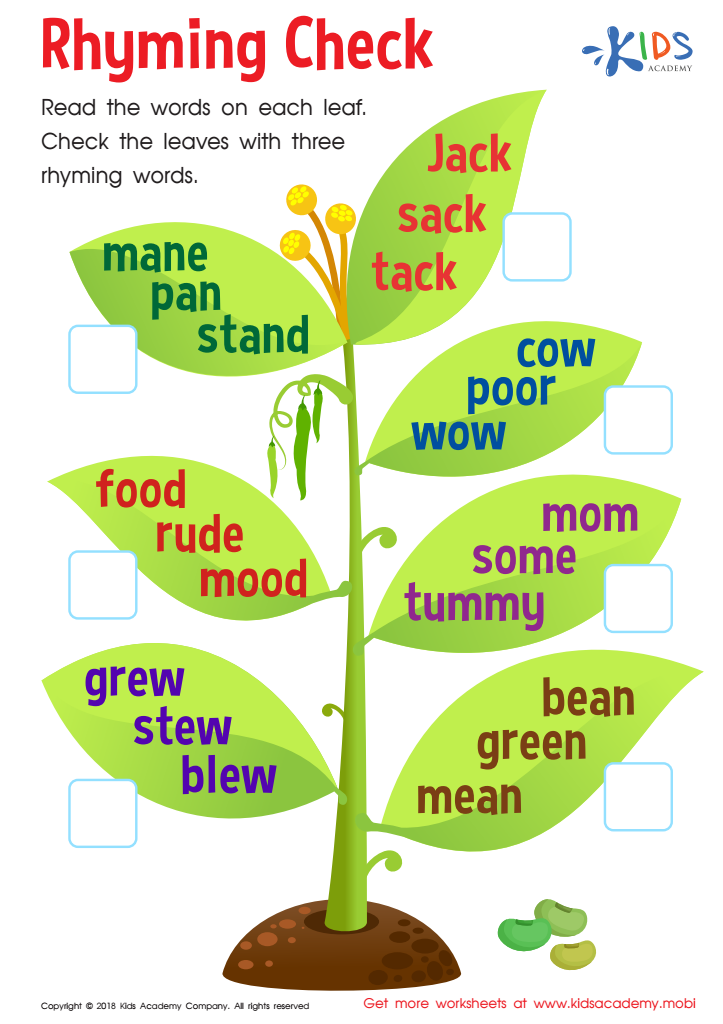
Rhyming Check Worksheet
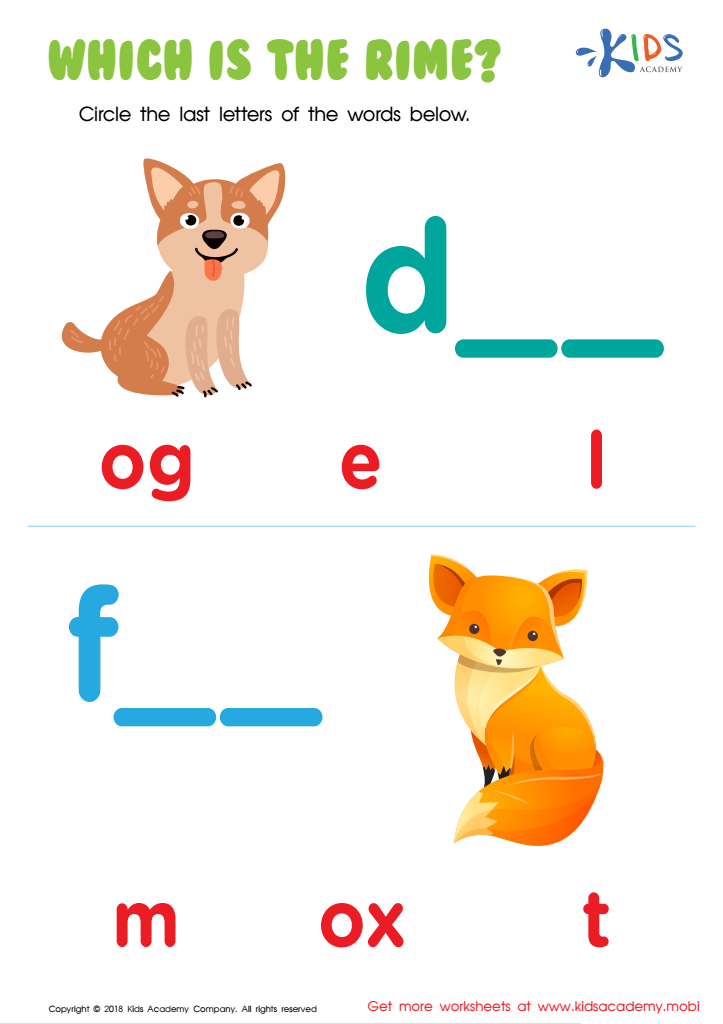
Which Is the Rime? Worksheet







Phonemic awareness is a critical skill for young learners, particularly those aged 3 to 8, as it lays the foundation for reading and writing development. It involves the ability to recognize, manipulate, and work with individual sounds in spoken words. Children with strong phonemic awareness can better understand how sounds correlate with letters, leading to improved decoding and spelling skills.
Parents and teachers should care about phonemic awareness because it directly influences a child's literacy success. Research has shown that early phonemic awareness correlated with later reading achievement. Without this skill, children struggle with phonics, making it challenging to read fluently and comprehend texts.
In a world increasingly driven by literacy, fostering phonemic awareness enhances a child’s confidence and joy in reading—from storytelling to educational activities. Engaging in phonemic exercises, like rhyming games and sound sorting, makes learning fun and interactive.
Moreover, by emphasizing phonemic awareness, educators and parents can identify early literacy challenges and address them promptly, ensuring that each child has the necessary skills to become proficient readers. Overall, prioritizing phonemic awareness equips children with the essential tools for lifelong learning and broader academic success.








