Practice counting Worksheets for Ages 3-8
6 filtered results
-
From - To
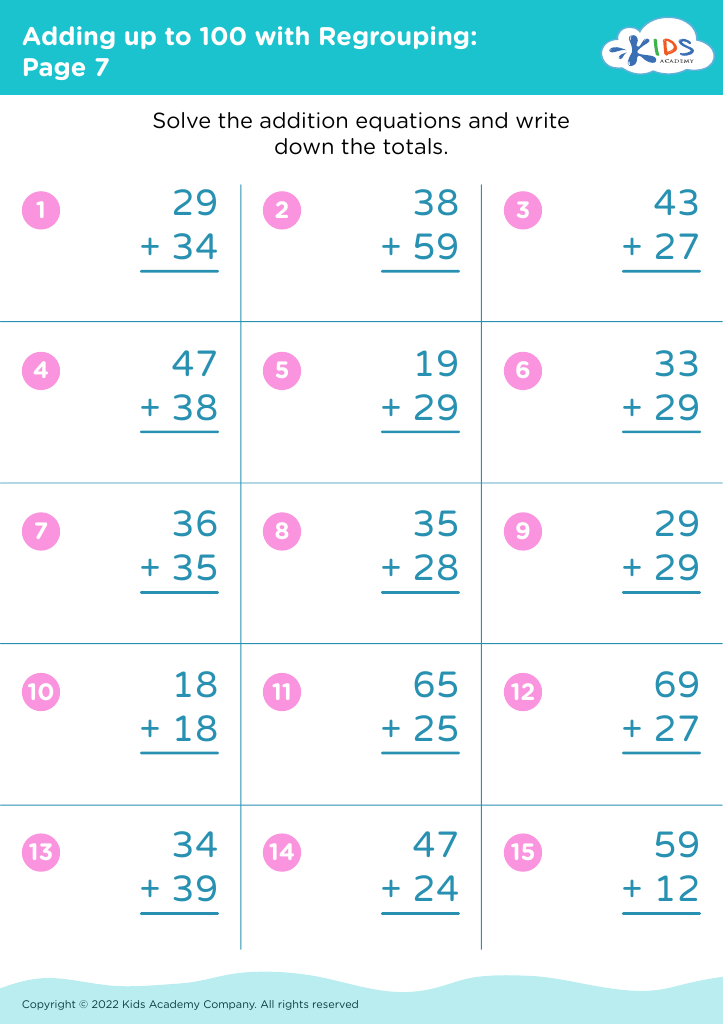
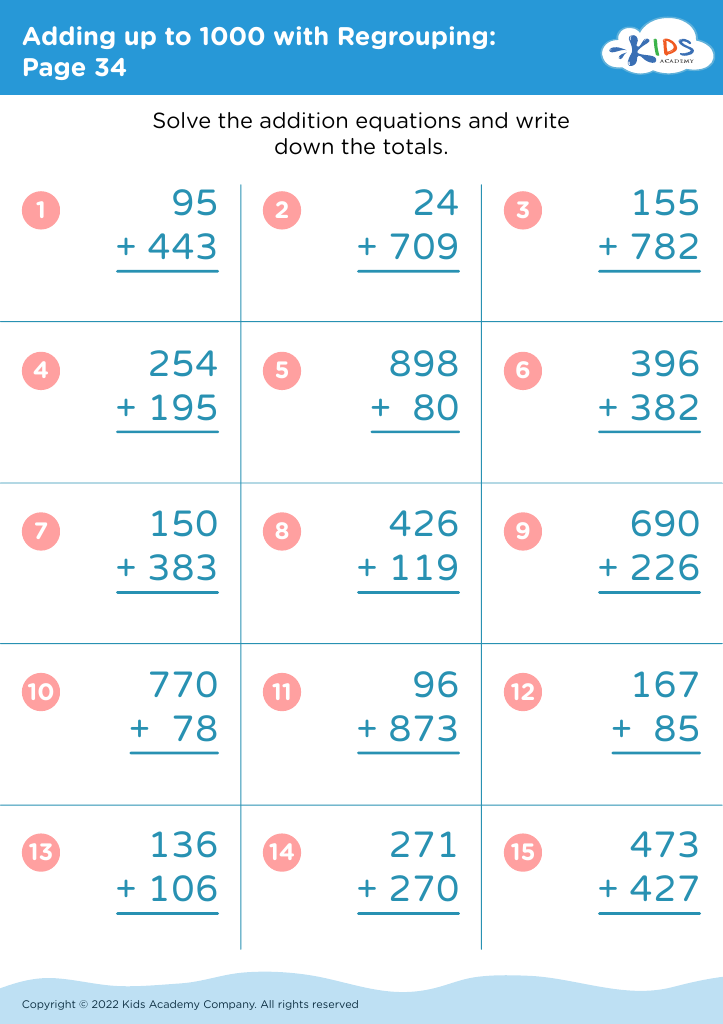
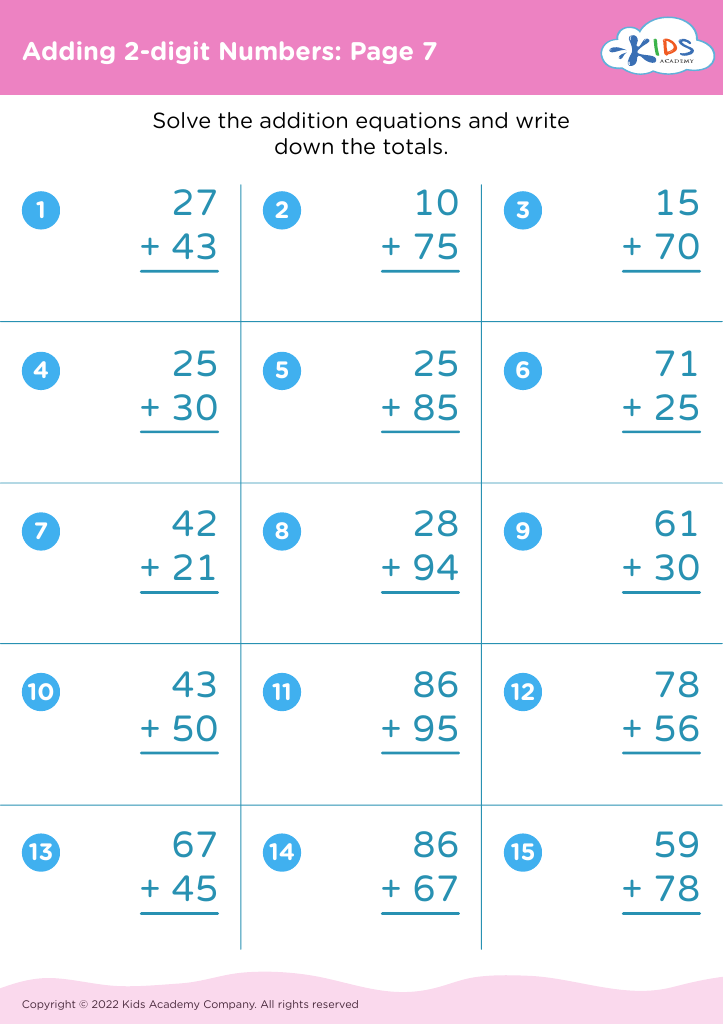
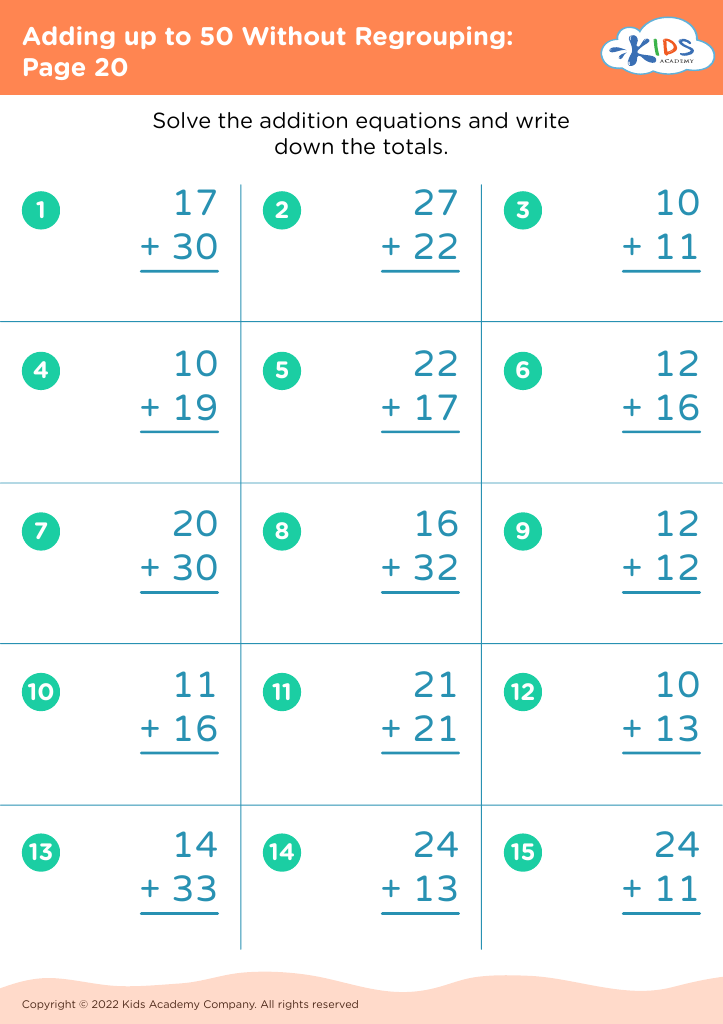
Welcome to our "Practice Counting Worksheets for Ages 3-8!" Designed to make learning fun, these interactive worksheets cater to early learners while building essential counting skills. Children will enjoy various engaging activities that promote number recognition, counting sequences, and basic math concepts. Each worksheet is crafted to accommodate different skill levels, ensuring that your child progresses at their own pace. With vivid illustrations and hands-on challenges, these resources captivate young minds and make practice enjoyable. Perfect for homeschooling or supplementary learning, our counting worksheets provide the foundation needed for future academic success. Explore our collection and inspire a love for numbers today!








Practice counting is a fundamental skill for children aged 3-8, as it lays the foundation for future math understanding and development. For parents and teachers, investing in counting practice is crucial for several reasons. First, counting enhances number sense, helping children understand how numbers work in relation to each other. This understanding is essential for more complex mathematical concepts, such as addition, subtraction, and eventually multiplication and division.
Second, counting fosters cognitive development. It encourages children to think critically and recognize patterns, enhancing their problem-solving skills. Additionally, counting activities improve fine motor skills when children engage in hands-on counting tasks with objects like blocks or buttons.
Moreover, counting can integrate language development as children learn to verbalize numbers and describe quantities. This aspect promotes literacy along with numeracy. Engaging in counting helps children gain confidence in their abilities, laying the groundwork for a positive attitude toward learning.
Finally, counting can be a fun and interactive experience, making it more likely that children will engage with math enthusiastically. Thus, prioritizing counting practice is essential for preparing children for academic success and providing them with skills they will use throughout their lives.








