
Practice problem-solving Worksheets for Ages 3-8
5 filtered results
Difficulty Level
Grade
Age
-
From - To
Subject
Activity
Standards
Explore our engaging practice problem-solving worksheets designed for children ages 3 to 8! These worksheets foster critical thinking and help young learners develop essential cognitive skills through fun and interactive activities. Each worksheet is tailored to spark curiosity and encourage creativity, allowing kids to practice identifying problems, brainstorming solutions, and applying their knowledge in various scenarios. Our resources are perfect for home or classroom use, providing educators and parents with valuable tools to nurture problem-solving abilities. Start your child’s journey towards becoming a confident thinker today with our beautifully designed worksheets that make learning enjoyable!
Favorites
With answer key
Interactive
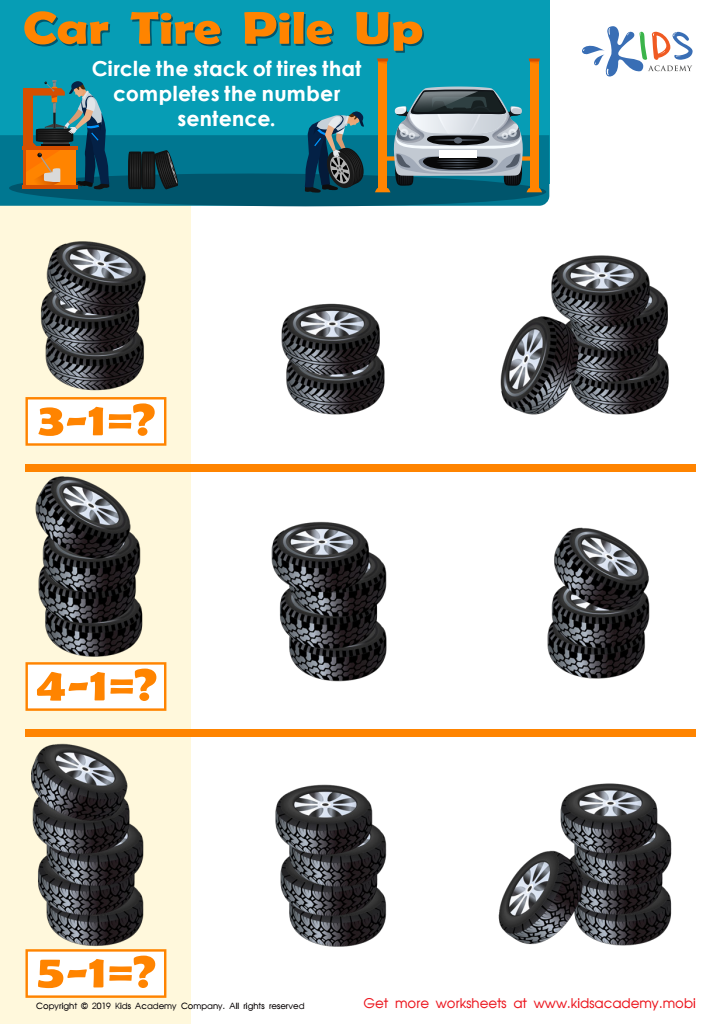
Car Tire Pile Up Worksheet
Examine the pic with your kids. Can they recognize the items piled up? The tires are organized in different quantities. Equations are on the left. Have your children work out the equations, counting the tire stacks to identify the correct answer.
 Assign to My Students
Car Tire Pile Up Worksheet
Worksheet
Join Kids Academy for Free
Who is primarily going to use this learning content?








Practicing problem-solving is crucial for children aged 3-8, as it lays the foundation for critical thinking, independence, and resilience. During these formative years, children are naturally curious and eager to explore their surroundings. Engaging in problem-solving activities fosters their cognitive development, encouraging them to think creatively and assess situations from multiple perspectives.
This skill helps children learn to approach challenges with a positive mindset, developing strategies to overcome obstacles. As they confront problems—whether in play, academic tasks, or social interactions—they build confidence, understand cause-and-effect relationships, and enhance their decision-making abilities.
Moreover, these skills are essential for academic success later on. By nurturing problem-solving skills, parents and teachers create opportunities for children to engage in hands-on learning experiences that promote collaboration and communication. This also prepares them for real-world scenarios, establishing habits that will serve them throughout their lives.
In summary, fostering problem-solving skills during early childhood is vital for cognitive and emotional development. Parents and teachers play a key role in creating enriching environments that support these essential skills, ultimately empowering children to navigate challenges with confidence and creativity.








