Practicing mental arithmetic Worksheets for Ages 3-8
3 filtered results
-
From - To
Enhance your child's math skills with our engaging Practicing Mental Arithmetic Worksheets designed for ages 3-8! These printable worksheets make learning fun, encouraging young learners to solve addition, subtraction, and simple multiplication problems while stimulating their critical thinking. Perfect for beginners and advanced learners alike, these activities foster confidence and improve mental agility. Teachers and parents will find them ideal for classroom use or at-home practice. By building a strong foundation in mental arithmetic, children can develop a love for math that lasts a lifetime. Explore our diverse collection today and watch your child thrive in their mathematical journey!
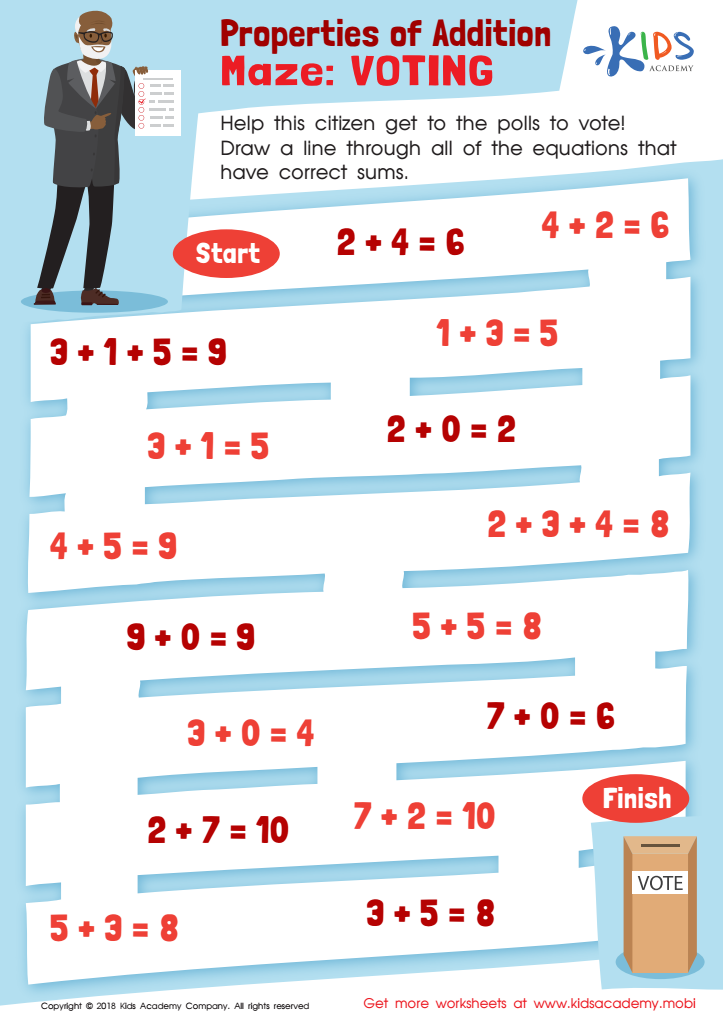
Properties of Addition Maze: Voting Worksheet
 Assign to My Students
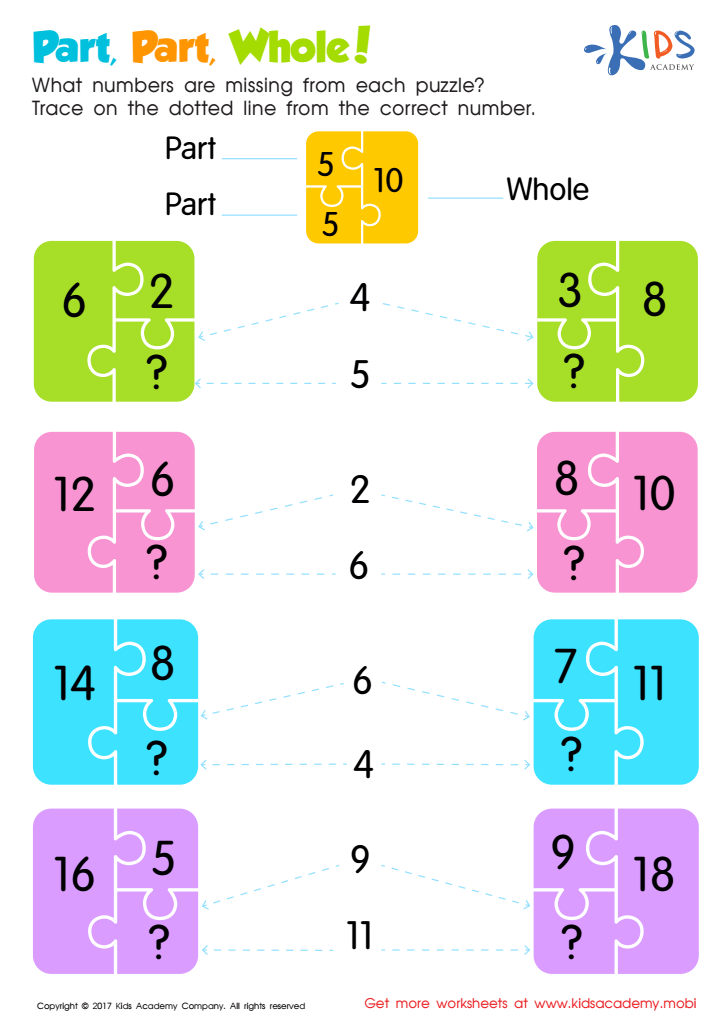
Part, Part, Whole Worksheet






.jpg)
Practicing mental arithmetic for children aged 3-8 is essential for several reasons. First, it fosters a strong foundation in mathematics, which is critical for mastering more complex concepts later in life. Early math skills play a significant role in overall academic success and are directly linked to future achievement in subjects like science and engineering.
Second, mental arithmetic helps develop critical thinking and problem-solving skills. By encouraging children to conduct calculations mentally, they learn to analyze problems, enhance their focus, and build confidence in their abilities. This cognitive development lays the groundwork for lifelong learning and adaptability.
Additionally, mental arithmetic can boost children's self-esteem. Mastering calculations can provide a sense of accomplishment and encourage resilience, helping children learn the value of persistence. Furthermore, incorporating fun activities like games or real-life scenarios can make math enjoyable, helping to cultivate a positive attitude towards the subject.
Lastly, encouraging mental math promotes familial engagement and collaboration. Parents and teachers can bond with children through enjoyable math activities, creating a supportive learning environment. Ultimately, prioritizing mental arithmetic can lead to well-rounded, confident learners prepared for future academic challenges.








