
Sound identification Worksheets for Ages 3-8
5 filtered results
Difficulty Level
Grade
Age
-
From - To
Subject
Activity
Standards
Our Sound Identification Worksheets for Ages 3-8 offer engaging, expertly designed activities to enhance auditory discrimination and phonemic awareness. Ideal for preschool to early elementary students, these worksheets help children recognize and differentiate sounds, a crucial foundational skill for reading. Through fun and interactive exercises, kids practice identifying letter sounds, matching them to pictures, and distinguishing similar sounds. Perfect for at-home learning or classroom use, these resources align with educational standards ensuring effective learning. Boost your child’s auditory skills with our vibrant, easy-to-use sound identification worksheets and set the stage for reading success!
Favorites
With answer key
Interactive
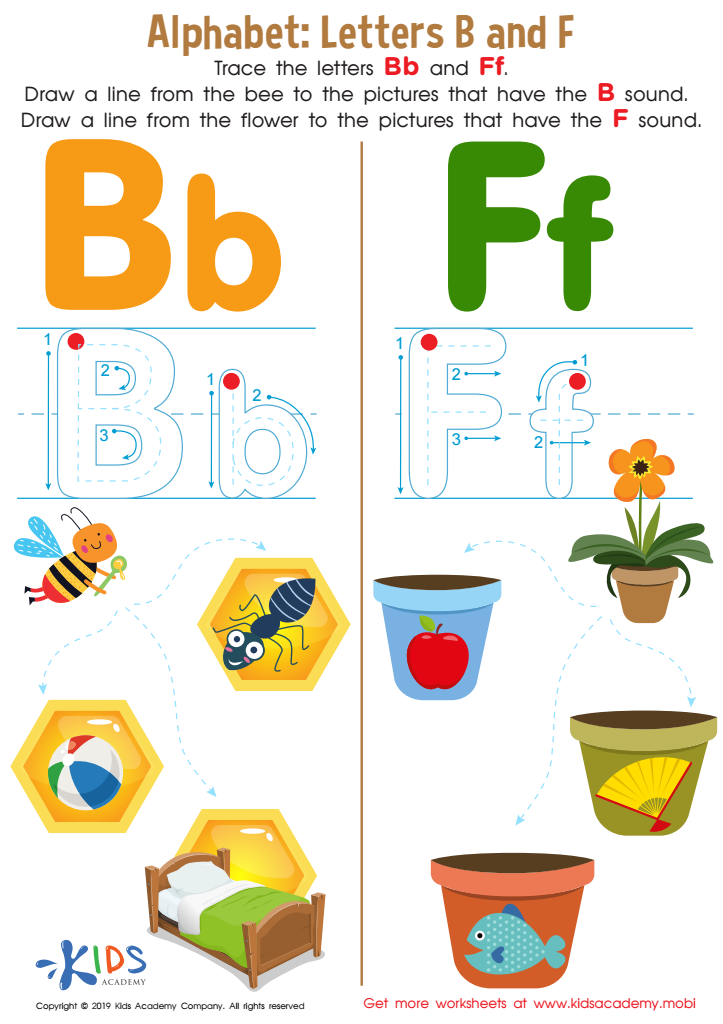
Letters B and F Tracing Worksheet
Does your kid know the letters B and F? This tracing sheet helps them practice by tracing each letter, then drawing a line from a bee and a flower to related words. Recognizing words with pictures develops a great skill, and students will master it in no time!
 Assign to My Students
Letters B and F Tracing Worksheet
Worksheet
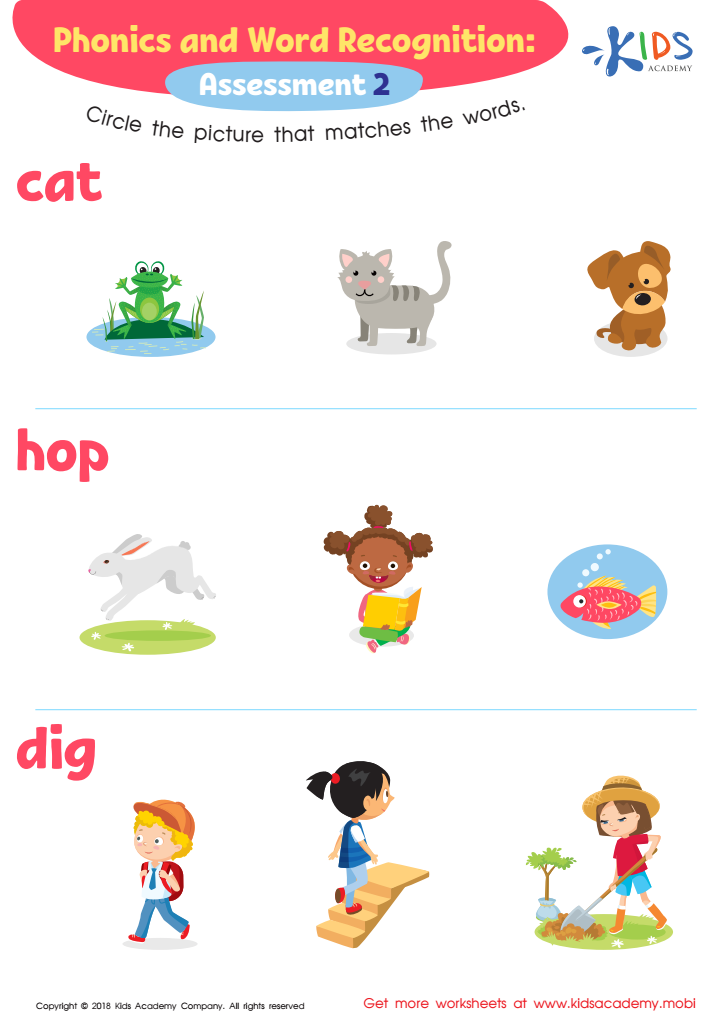
Phonological Awareness: Assessment 2 ELA Worksheet
This free worksheet assesses your emerging reader's ability to decode and match closed-syllable high-frequency words to the appropriate picture. The pictures are cheery and easy to identify, so your child will have fun and find success with decoding and matching.
Phonological Awareness: Assessment 2 ELA Worksheet
Worksheet
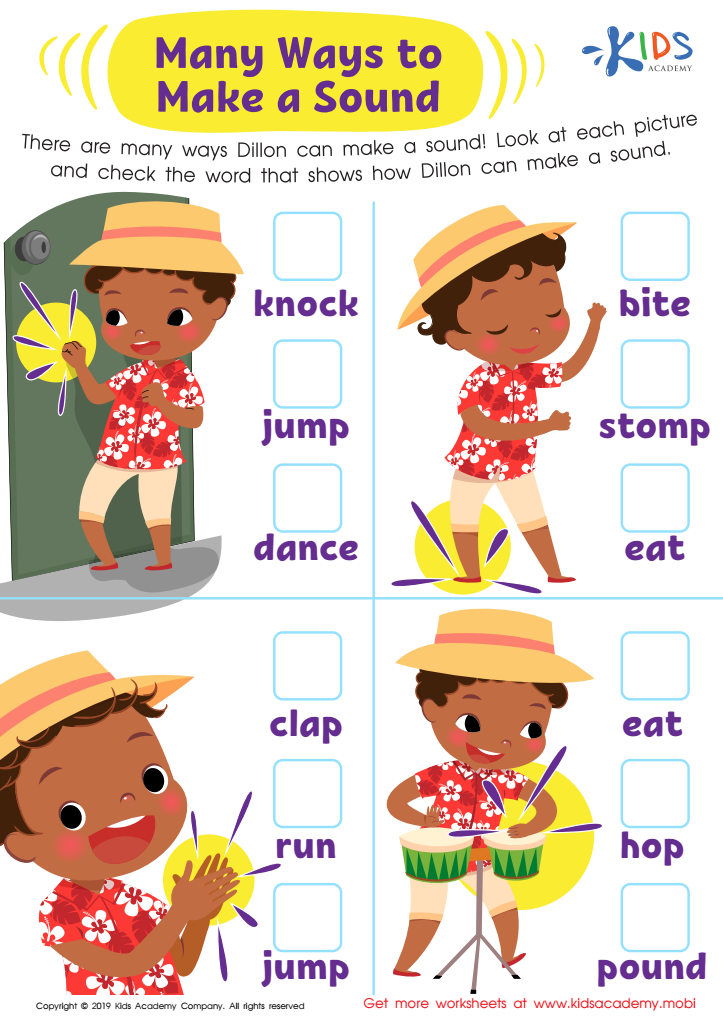
Many Ways to Make a Sound Worksheet
This interactive worksheet encourages creativity and imagination as kids use picture clues to match sound words. It helps them identify the sound methodology and build fine motor skills. Plus, with learning through play, they'll develop stronger vocabularies without even knowing it!
Many Ways to Make a Sound Worksheet
Worksheet
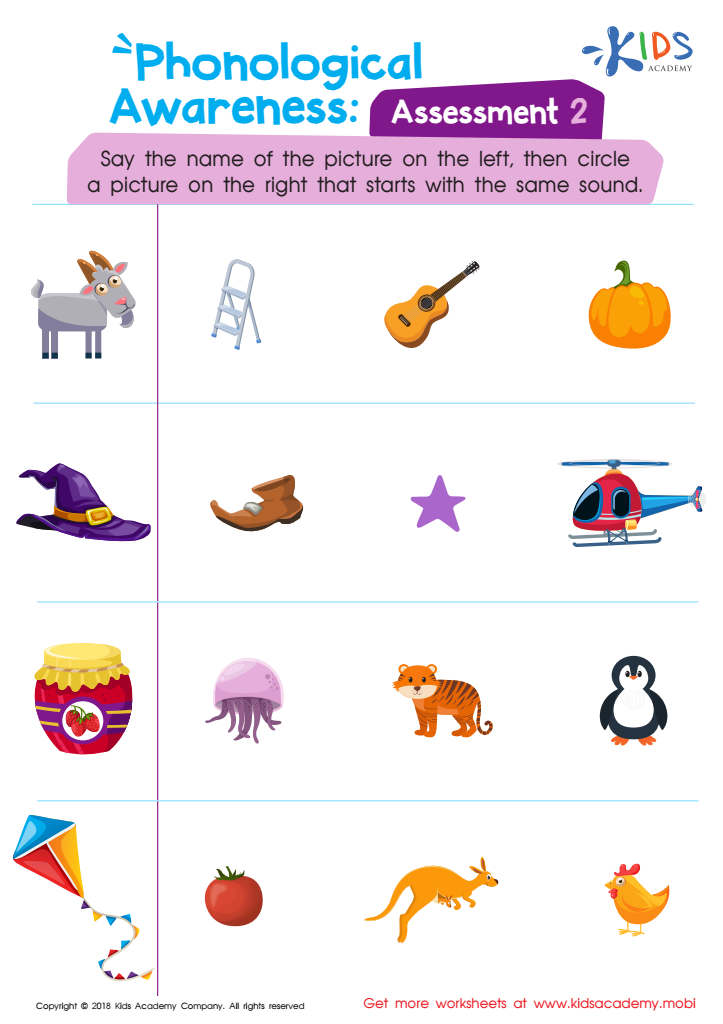
Phonological Awareness: Assessment 2 Worksheet
Test your child’s phonological awareness and reading readiness with this charming worksheet! Perfect for K-1, it assesses if they can name a picture aloud, listening for the starting sound and matching it to another word. Watch as they think deeply and listen to the sounds as they name each picture. Determine if your child is ready to sound out words or needs more phonics practice.
Phonological Awareness: Assessment 2 Worksheet
Worksheet
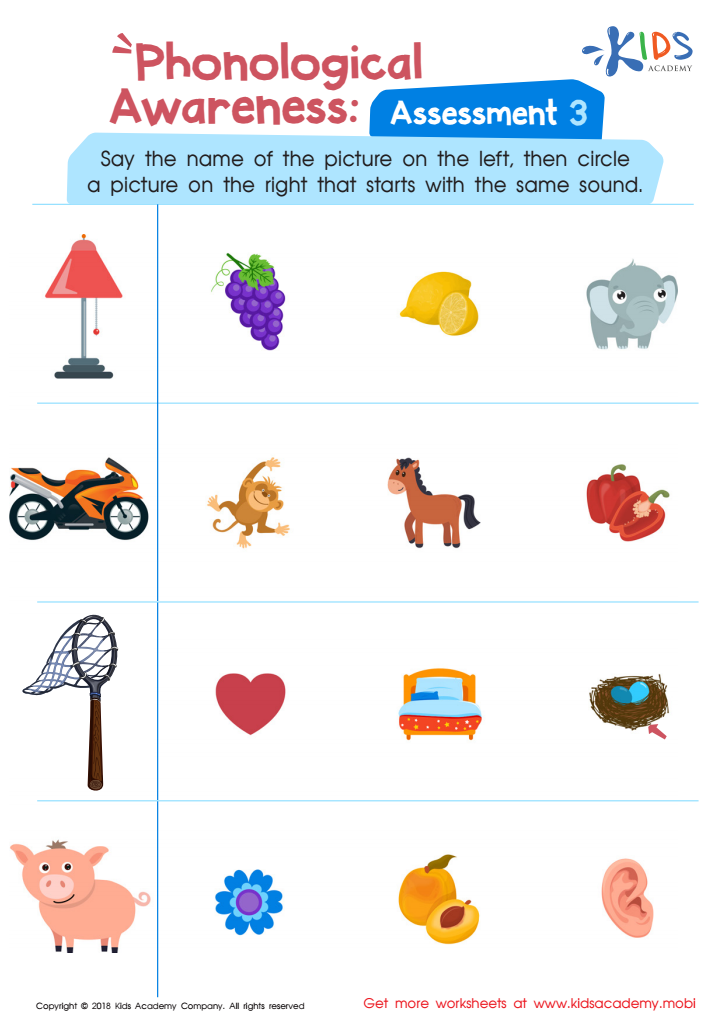
Phonological Awareness: Assessment 3 Worksheet
Test kids' reading readiness with a phonological awareness worksheet! With this PDF exercise, encourage children to name each picture aloud and match left to right. Help them learn to recognize word sounds at the start, middle and end of words. They'll be sure to remember that lamp doesn't sound like elephant!
Phonological Awareness: Assessment 3 Worksheet
Worksheet
Join Kids Academy for Free
Who is primarily going to use this learning content?







Sound identification, or phonemic awareness, is a critical early literacy skill for children aged 3-8. This period is crucial as young brains are particularly receptive to language acquisition. Parents and teachers should prioritize phonemic awareness because it forms the foundation for reading and writing.
Firstly, understanding sounds helps children decode words when reading. Recognizing individual sounds supports their ability to blend them into words, which enhances reading fluency and comprehension. For instance, identifying the sounds /c/, /a/, and /t/ in 'cat' enables a child to decode the word and understand its meaning.
Secondly, strong phonemic awareness directly correlates with improved spelling. When children can segment words into individual sounds, they are better equipped to spell words correctly. This skill reduces the likelihood of developing reading difficulties later on, setting children up for long-term academic success.
Thirdly, phonemic awareness supports vocabulary growth. Exposure to sounds allows children to hear differences in words and understand their meanings, enriching their language skills.
Lastly, early sound identification practices encourage a love for reading. When children feel confident in their ability to decode words, they are more likely to enjoy reading activities, fostering a lifelong interest in literacy. By nurturing phonemic awareness early, parents and teachers ensure children are well-prepared for their educational journey.








