Spatial awareness development Worksheets for Ages 3-8
3 filtered results
-
From - To
Unlock your child's potential with our expertly designed Spatial Awareness Development Worksheets for ages 3-8. These engaging printables aim to enhance visual perception, motor skills, and cognitive development through fun activities. Discover puzzles, pattern recognition exercises, and interactive tasks that make learning enjoyable and effective. Crafted with love and expertise, our worksheets cater to various skill levels, ensuring gradual improvement in spatial understanding. Foster your child's confidence and creativity with tools that inspire and educate. Download today and watch them thrive both academically and in everyday tasks!
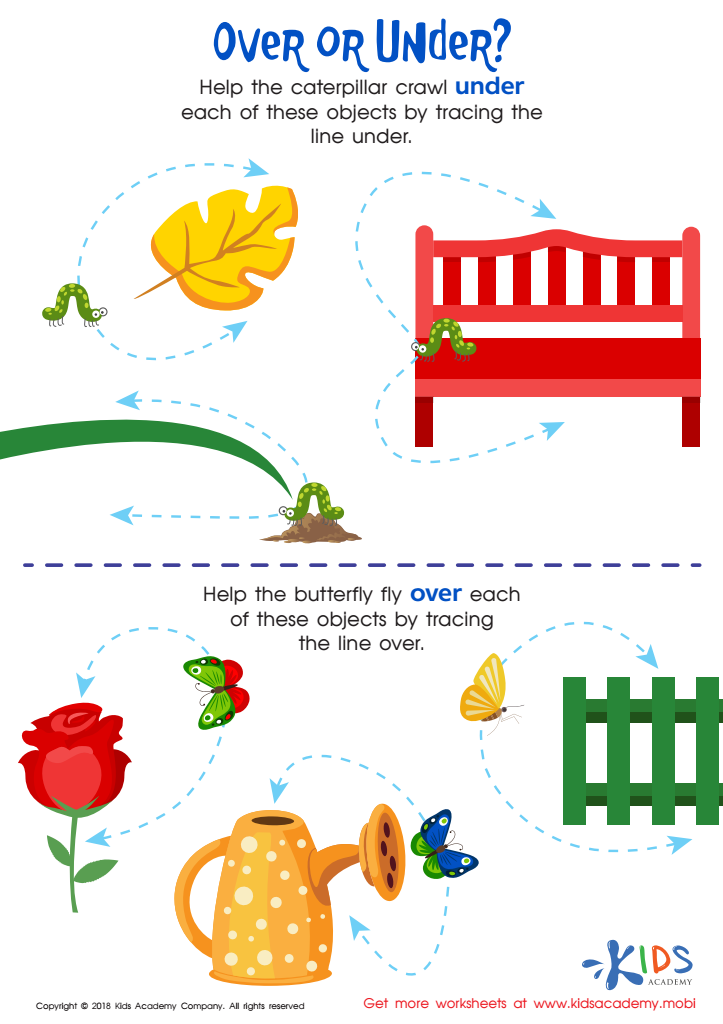
Over or Under? Worksheet
 Assign to My Students
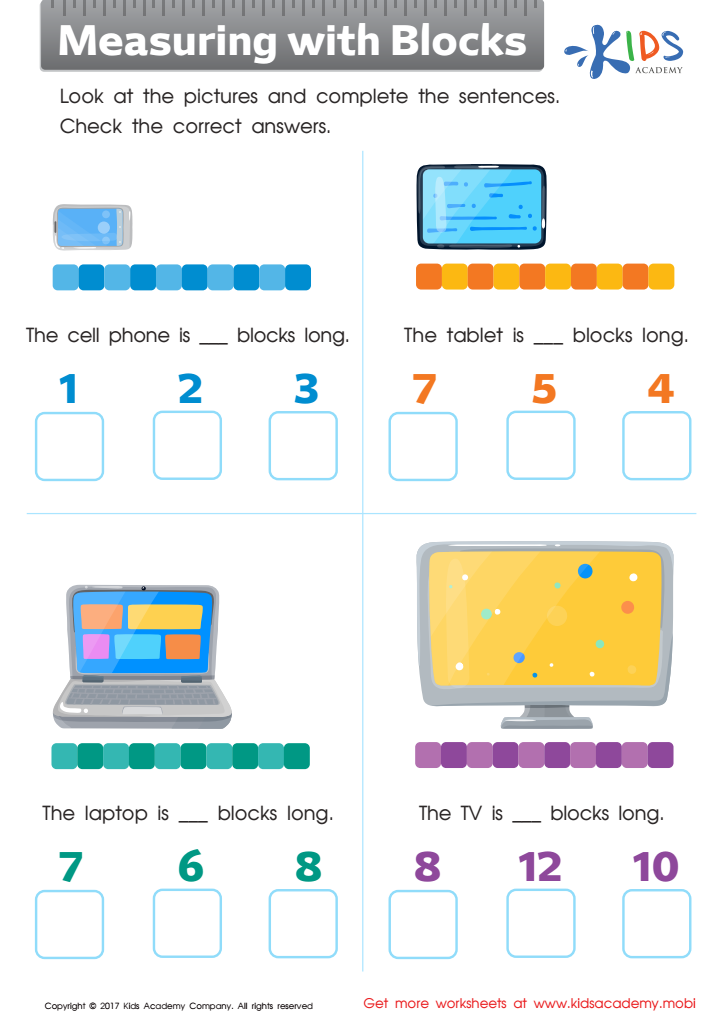
Measuring with Blocks Worksheet
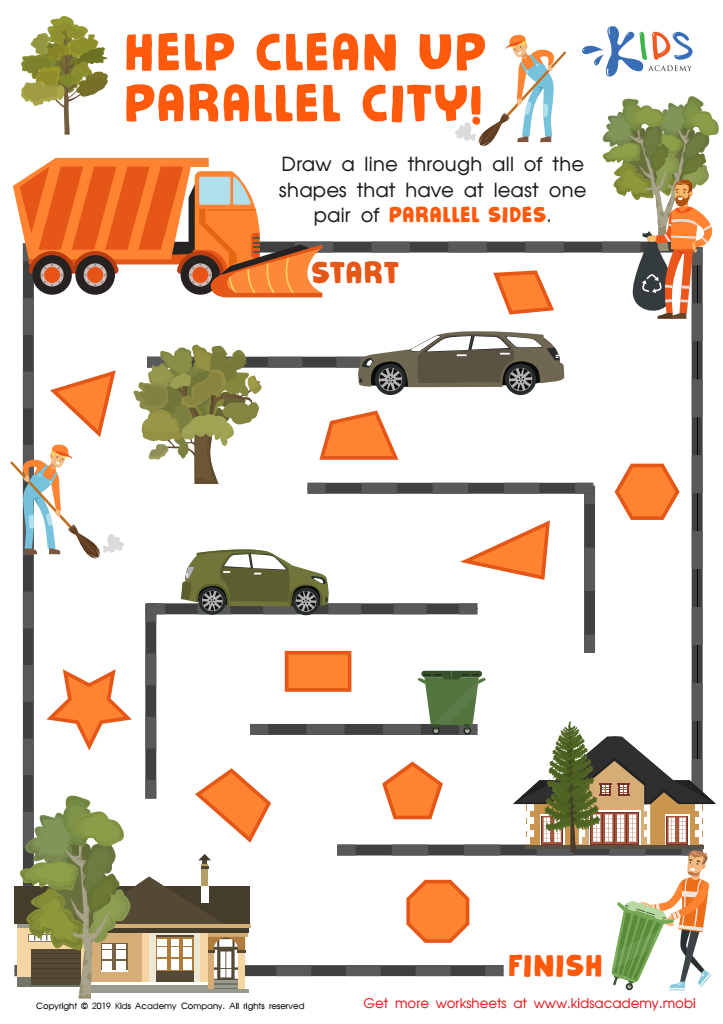
Help Clean Up Parallel City Worksheet








Spatial awareness is the ability to understand and interact with the environment in relation to the position of objects and oneself. For children aged 3-8, developing spatial awareness is crucial for several reasons.
First, it supports physical development. When children engage in activities like climbing, running, or playing with blocks, they're learning to judge distance, balance, and body control, which are essential for everyday tasks and sports.
Second, spatial awareness enhances cognitive skills. It lays the foundation for competencies in math, reading, and writing. Understanding concepts such as "above," "below," "near," and "far" helps kids grasp mathematical geometry and read maps. Cognitive mapping also aids reading skills as children learn to track text from left to right and understand the spacing between words and sentences.
Third, social development is also influenced by spatial skills. Playing games that require understanding of personal space fosters teamwork, cooperation, and respect for others' boundaries.
Lastly, spatial awareness is integral for problem-solving and creativity. Activities involving puzzles and building blocks encourage kids to experiment, predict outcomes, and think abstractly, skills that are useful throughout life.
In summary, by nurturing spatial awareness from ages 3-8, parents and teachers support comprehensive development, making it easier for children to navigate both academic challenges and everyday life efficiently and confidently.








