Spatial Orientation Worksheets for Ages 3-8
7 filtered results
-
From - To
Unlock essential spatial skills with our "Spatial Orientation Worksheets for Ages 3-8." Specially designed for young learners, these engaging printable worksheets boost cognitive development through fun and interactive activities. Kids will master directionality, understand spatial relationships, and enhance problem-solving skills. Perfect for at-home practice or classroom use, each worksheet enriches early education with colorful visuals and enjoyable exercises. Give your child a head start in math, reading, and life skills with resources crafted to captivate and educate. Help them explore the fascinating world of spatial orientation today on Kids Academy!
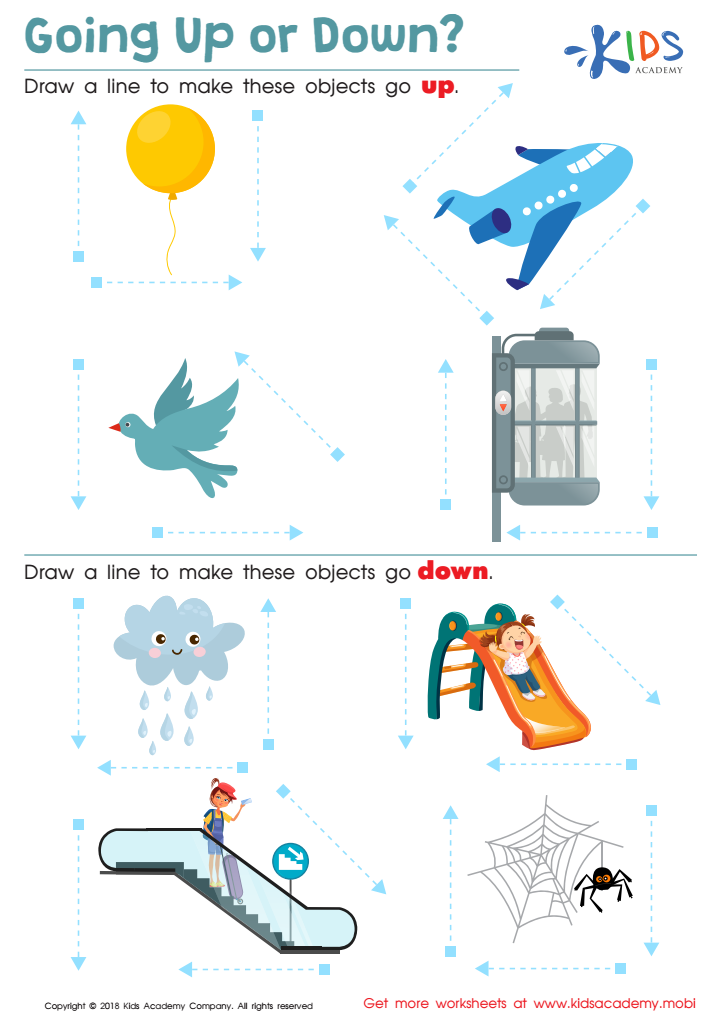
Going up or Down? Worksheet
 Assign to My Students
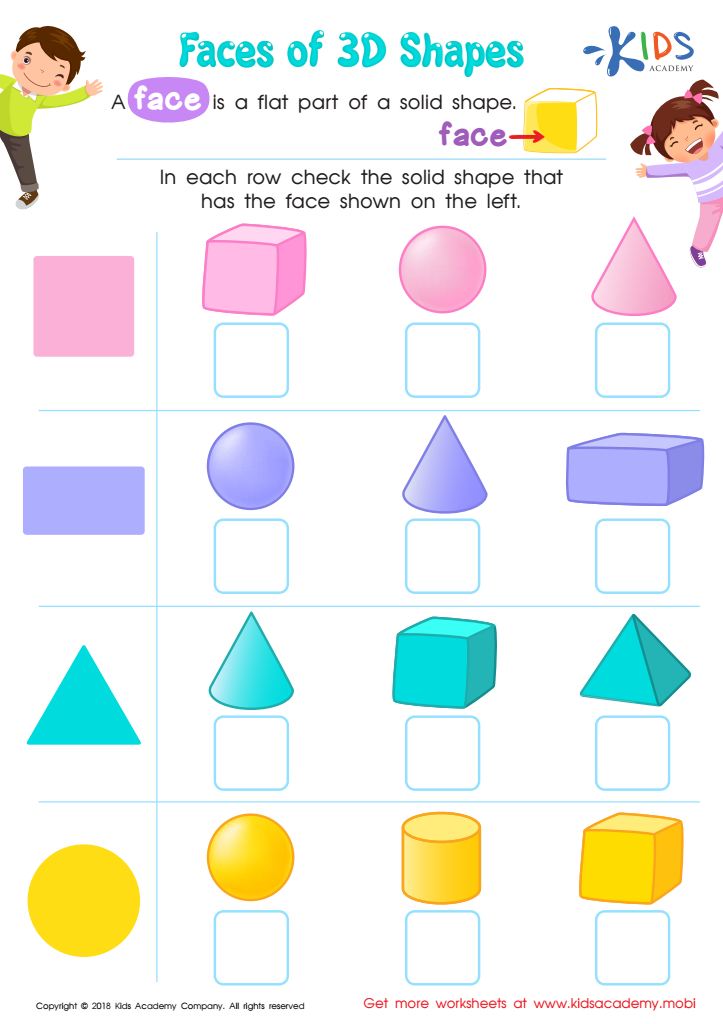
Faces of 3D Shapes Worksheet
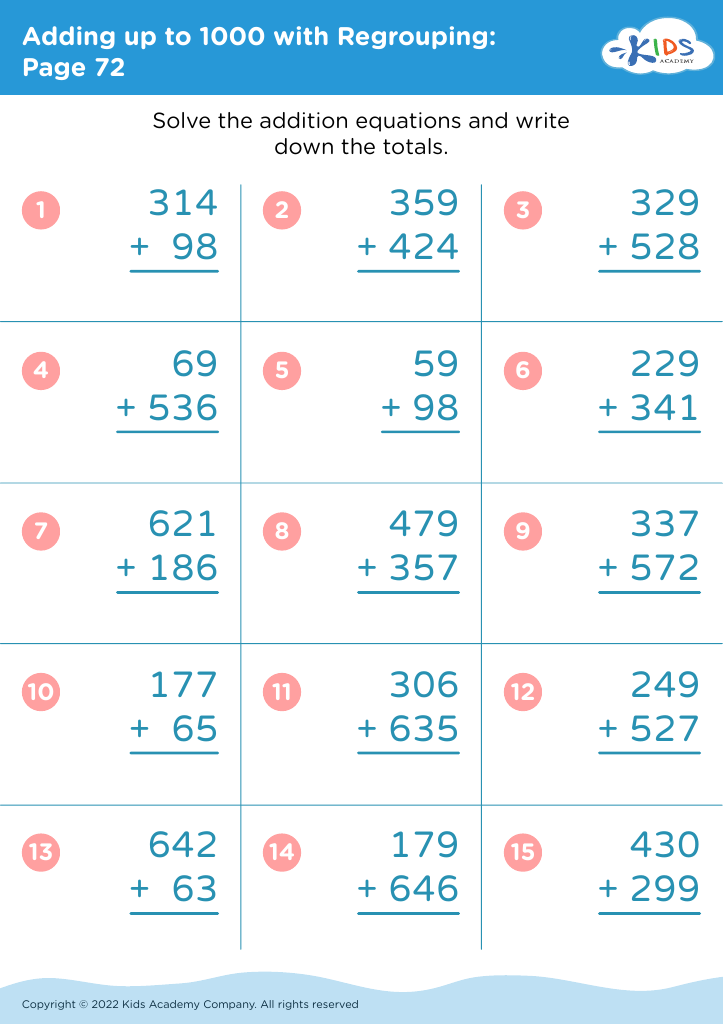
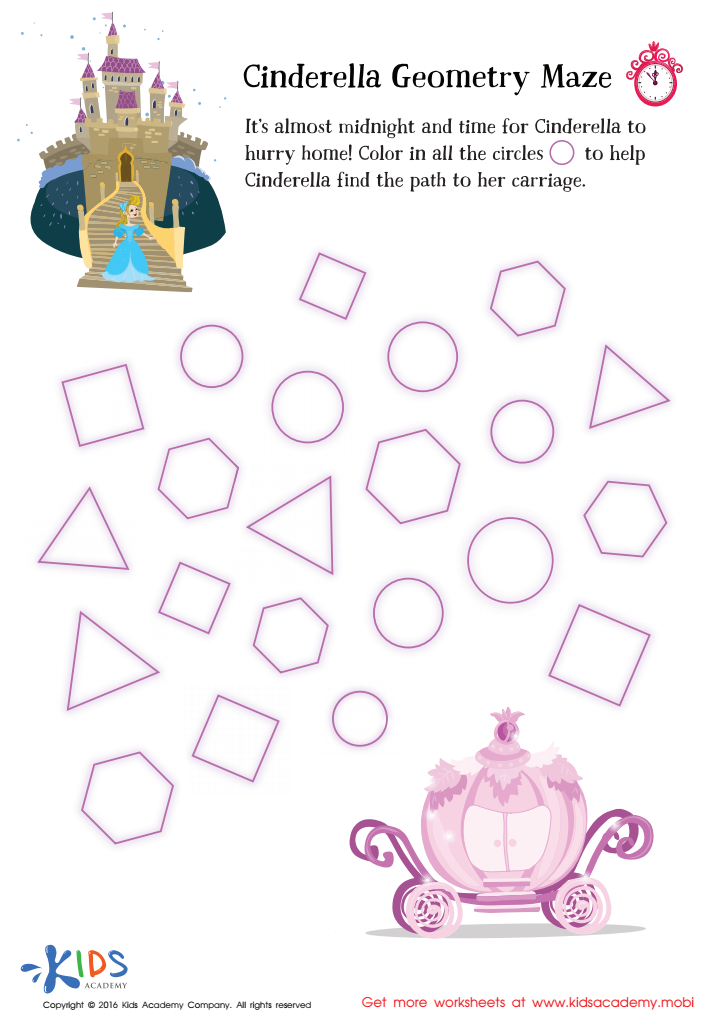
Cinderella Geometry Maze Worksheet
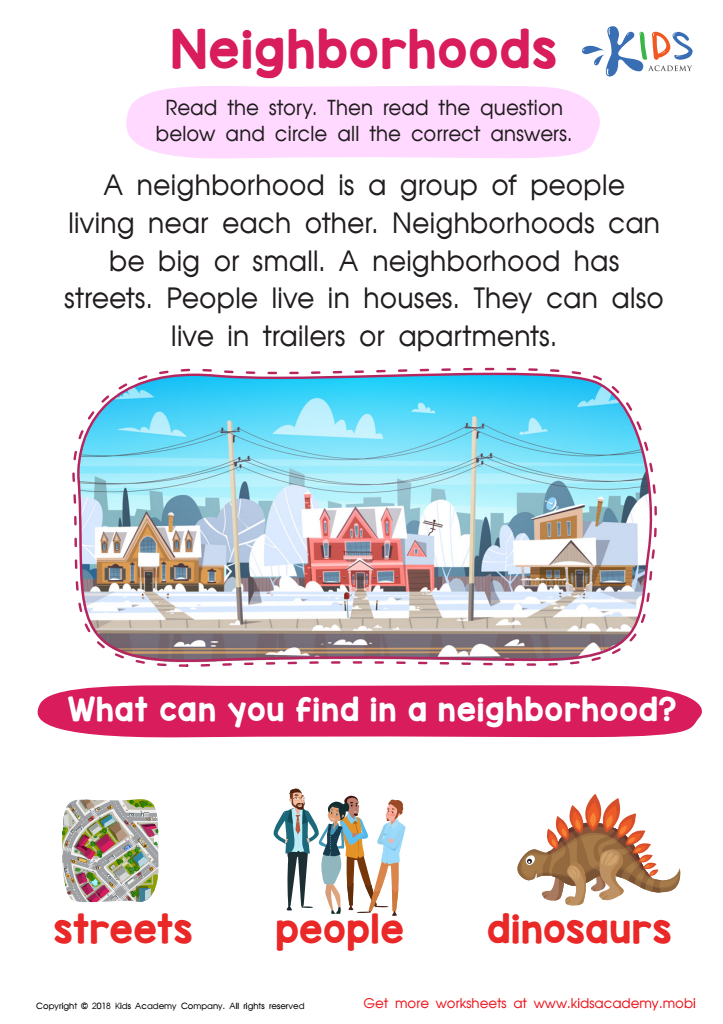
Neighborhoods Worksheet
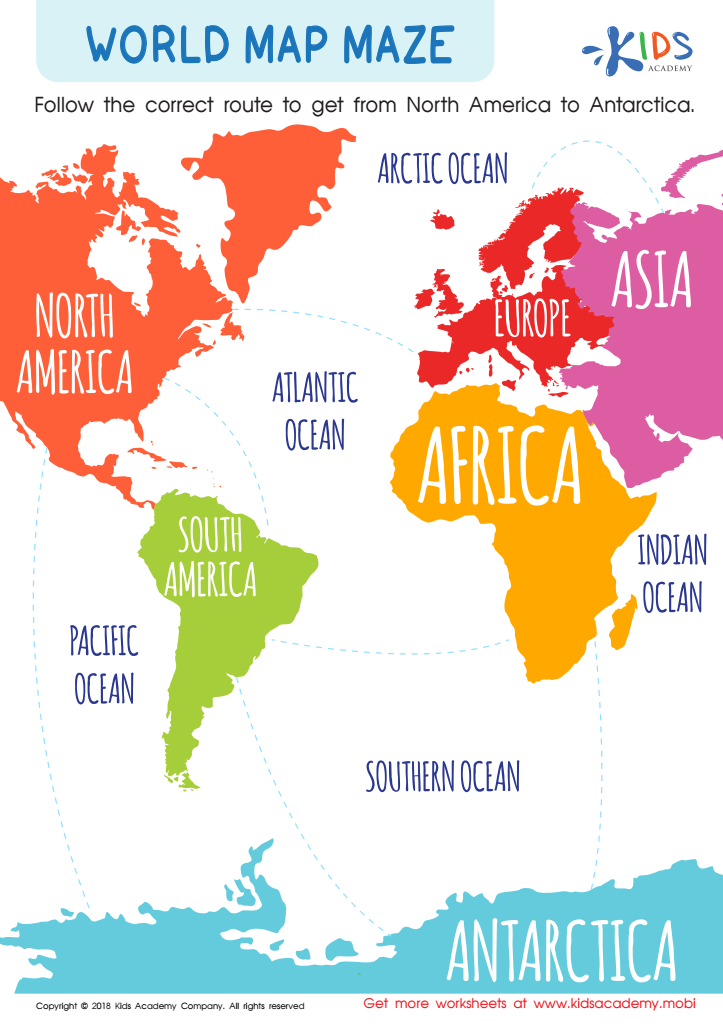
World Map Maze Worksheet
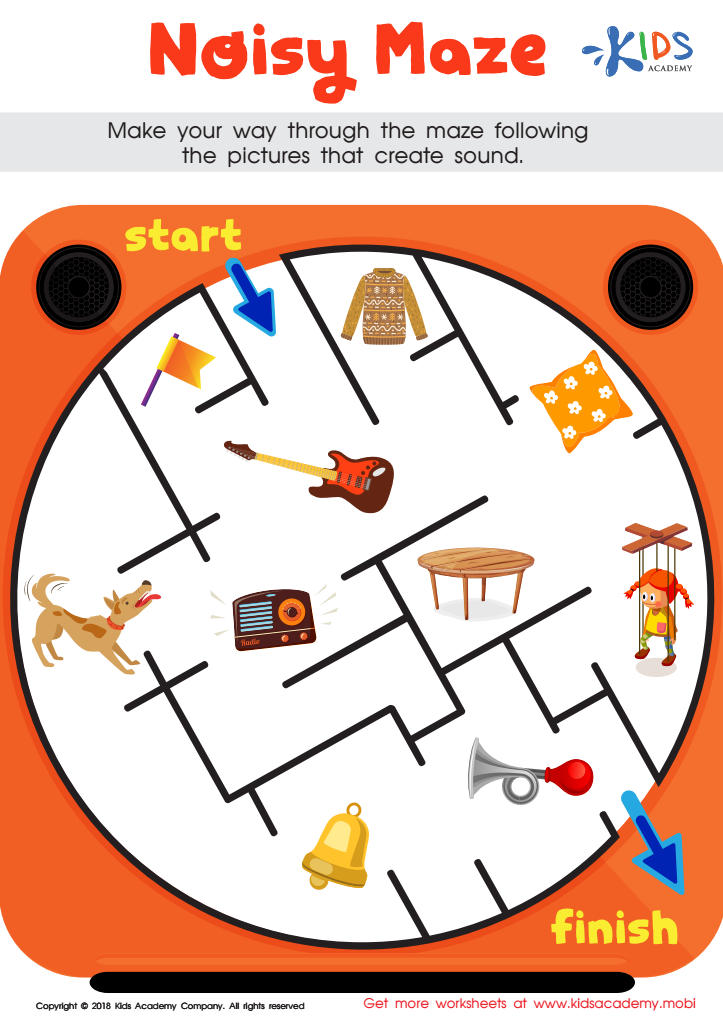
Noisy Maze Worksheet






Spatial orientation is a foundational skill critical for the developmental stages of children aged 3 to 8, significantly impacting their cognitive and physical capabilities. Parents and teachers should prioritize this aspect for several reasons. First, spatial awareness directly influences a child's ability to navigate their environment safely and efficiently. Understanding directions, distances, and the relationships between objects aids in tasks as simple as moving through a playground or classroom without bumping into things or getting lost.
Moreover, spatial orientation is intrinsically linked to academic subjects like math and science. Recognizing patterns, solving puzzles, and grasping geometric concepts are easier for those with good spatial skills. These abilities are the building blocks for higher-order thinking and abstract reasoning, fostering problem-solving skills and logical thinking.
It also enhances language development. Terms like “over,” “under,” “next to,” and “between” are more readily understood and used by children with keen spatial orientation.
Additionally, social interaction and teamwork also benefit as children with better spatial understanding find it easier to engage in group activities and sports, boosting their confidence and cooperative skills.
Early cultivation of spatial orientation skills lays a robust foundation for both academic success and day-to-day functional competence, underscoring its importance for holistic childhood development. Thus, integrating spatial awareness activities in educational and home settings is crucial.








