Spelling improvement Worksheets for Ages 3-8 - Page 2
26 filtered results
-
From - To
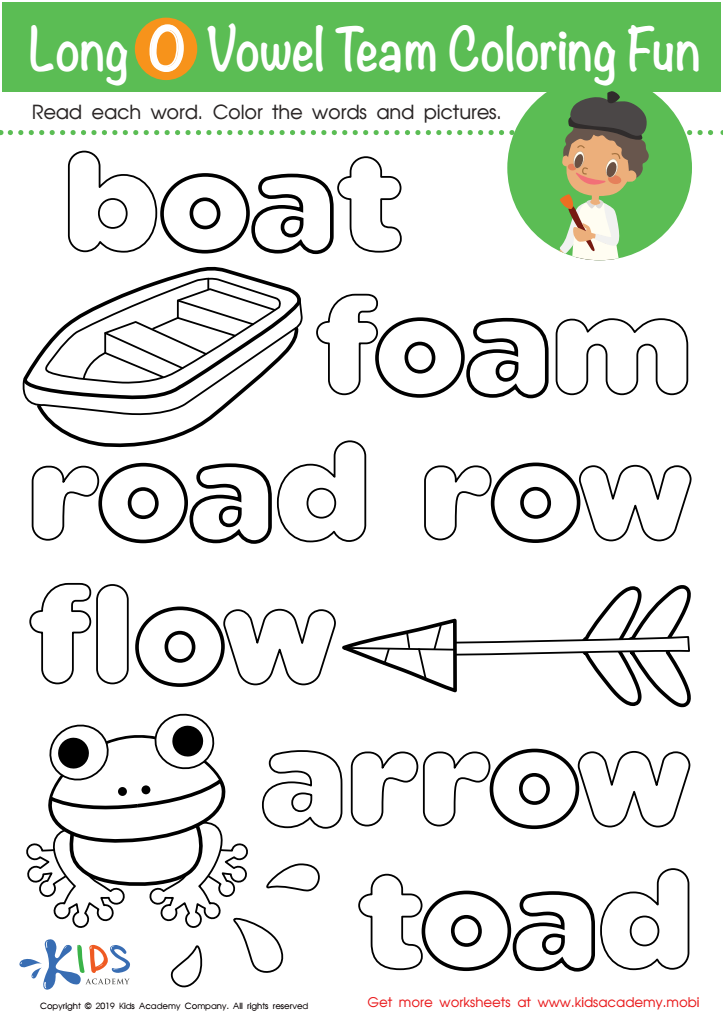
Long O Vowel Team Coloring Worksheet
 Assign to My Students
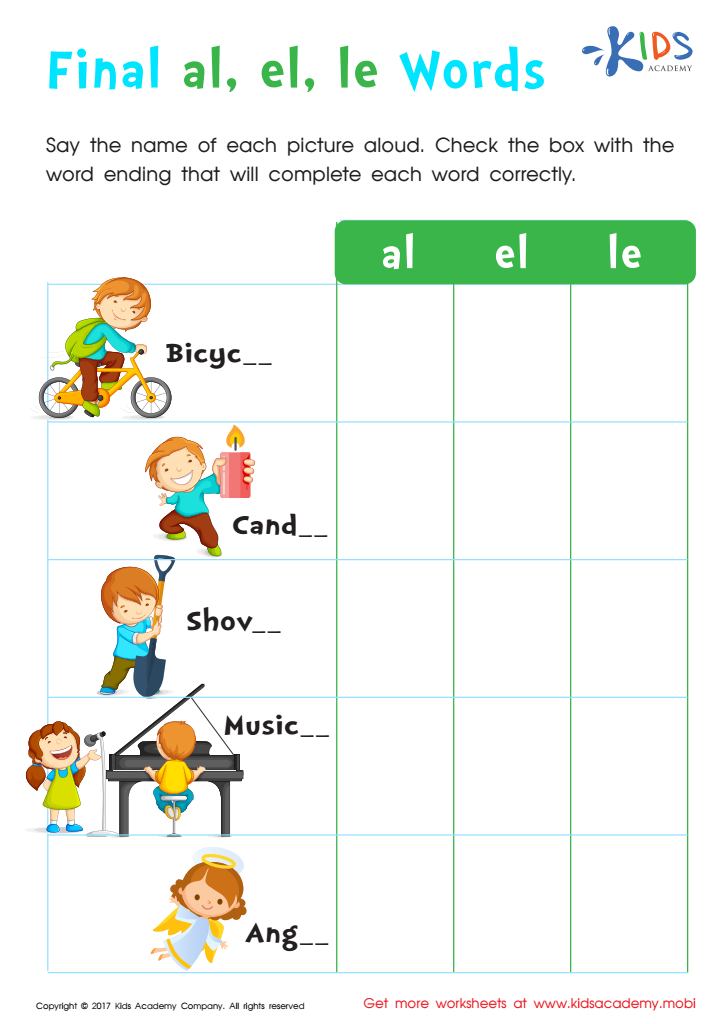
Spelling Words Ending with –le, –el and –al Worksheet







Spelling improvement is essential for children aged 3-8 as it lays the foundation for effective communication and literacy skills. During these formative years, children are developing their language abilities and cognitive skills. By focusing on spelling, parents and teachers can foster phonemic awareness, which is the understanding of individual sounds in words—a critical skill for reading and writing.
Enhanced spelling abilities boost children's confidence in their language skills. When kids spell correctly, they are more likely to express their thoughts clearly, facilitating better comprehension and engagement in discussions. Moreover, strong spelling skills are linked to improved reading fluency and comprehension, which are vital for academic success across all subjects.
Additionally, spelling improvement encourages a love for learning. By integrating fun activities—like spelling games or crafting stories—teachers and parents can make the learning process enjoyable, instilling curiosity and enthusiasm for language arts. Ultimately, when children develop these skills early on, they set a positive trajectory for their educational journey, equipping them with the tools they need for effective communication and future academic success. Investing in spelling at this age yields long-term benefits that extend beyond academics into overall life skills.








