
Story sequencing skills Worksheets for Ages 3-8
3 filtered results
Difficulty Level
Grade
Age
-
From - To
Subject
Activity
Standards
Enhance your child's storytelling abilities with our engaging Story Sequencing Skills Worksheets designed for ages 3-8! These worksheets provide a fun and interactive way for young learners to develop essential sequencing skills, critical for reading comprehension and cognitive growth. Kids will love organizing colorful images and narrating their stories, which boosts creativity and enhances their understanding of story structure. Our resources are committed to making learning enjoyable while fostering essential literacy skills. Perfect for home or classroom use, these worksheets empower your child to master the art of storytelling. Download now and inspire a love for stories in your little ones!
Favorites
With answer key
Interactive
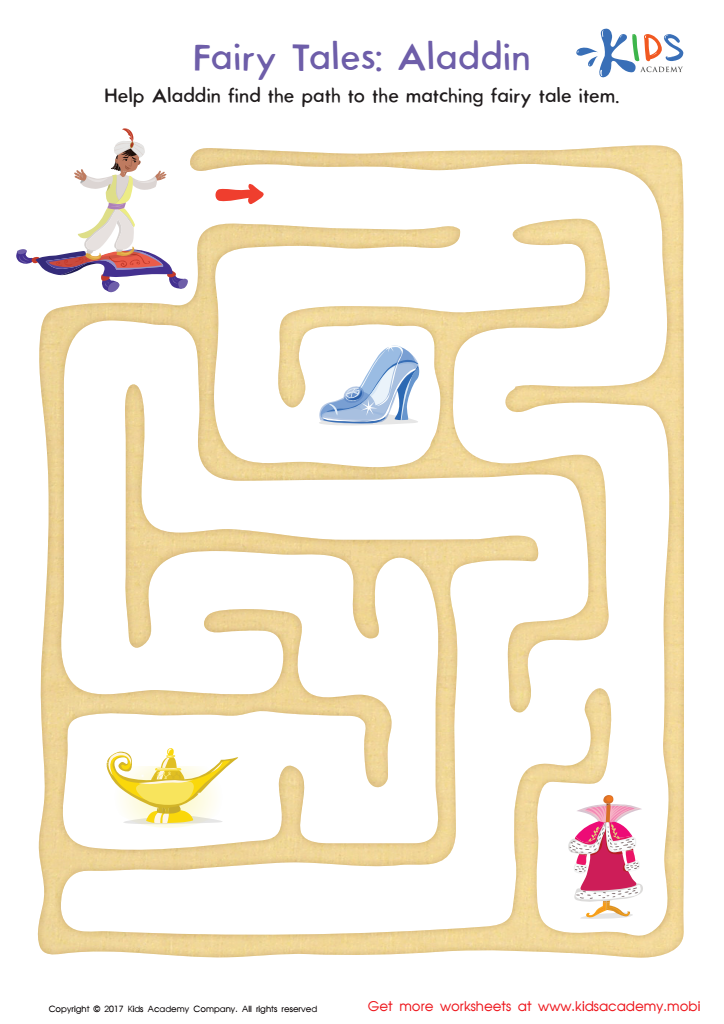
Fairy Tales Aladdin Printable
Test your child's reading recall with this challenge: the Aladdin maze worksheet! Guide your learner to identify objects linked to the story, then ask them to retell it afterwards. Hone those memory skills while having fun!
 Assign to My Students
Fairy Tales Aladdin Printable
Worksheet
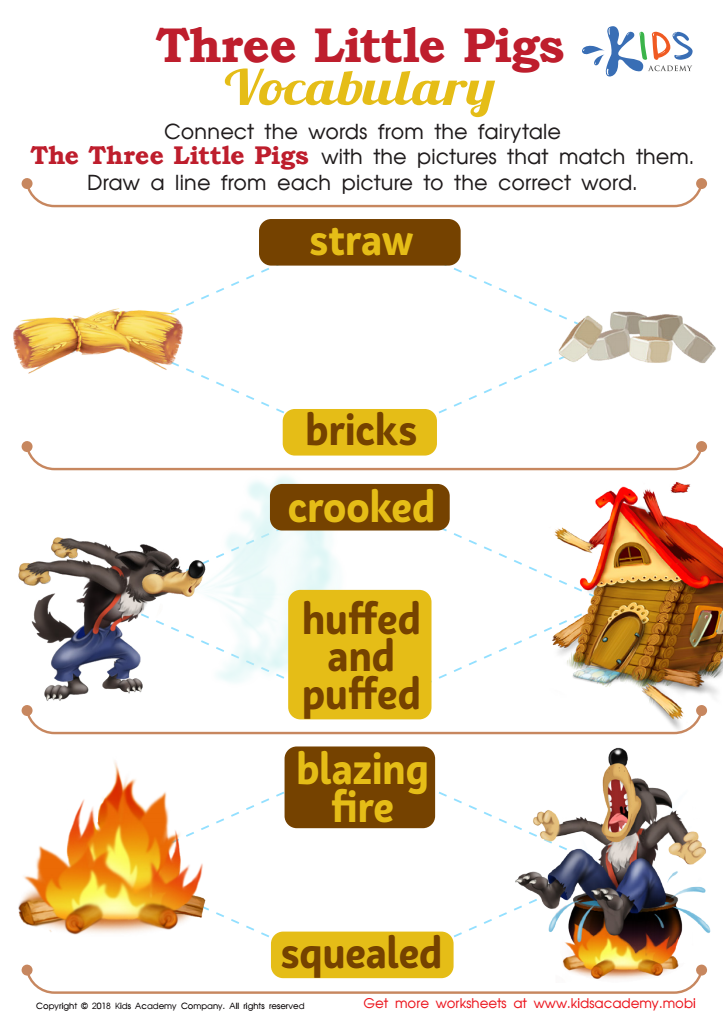
Three Little Pigs Vocabulary Worksheet
Read the Three Little Pigs to your children. Have them use the tracing sheet to connect the story words with the pictures. This is a fun and educational way to help them build their vocabulary.
Three Little Pigs Vocabulary Worksheet
Worksheet
Join Kids Academy for Free
Who is primarily going to use this learning content?








Story sequencing skills are crucial for children aged 3-8 as they lay the foundation for critical thinking, comprehension, and communication skills. During this developmental stage, children are learning to understand the structure of narratives—beginning, middle, and end. By mastering story sequencing, children improve their ability to recall and retell stories accurately, which enhances their memory and literacy skills.
Moreover, sequencing helps young learners make connections between events, fostering analytical thinking. This ability to discern the order of events encourages them to make predictions about what might happen next, promoting engagement and curiosity. As children learn to sequence stories, they also develop listening skills, as they practice attentive listening and interpretation.
In a broader sense, story sequencing nurtures emotional intelligence. Understanding a character's journey—why they act a certain way or the consequences of decisions—can help children relate to others’ feelings and experiences.
Overall, caregivers and educators should prioritize story sequencing, as it builds a strong platform for academic success and personal growth. Engaging in storytelling activities not only makes learning enjoyable but also provides children with essential tools they will use throughout their lives.








