Strategic thinking Worksheets for Ages 3-8
4 filtered results
-
From - To
Unlock your child's potential with our strategic thinking worksheets designed for ages 3-8. These engaging activities develop critical thinking, problem-solving, and decision-making skills through fun and challenging tasks. Perfect for preschool to second grade, our worksheets feature puzzles, mazes, and games that encourage kids to think ahead, plan their moves, and reflect on outcomes. Ideal for both classroom and home use, these resources provide a solid foundation for lifelong learning. Discover endless possibilities in strategic fun today with Kids Academy's expertly crafted worksheets, tailored to spark young minds and foster a love of learning.
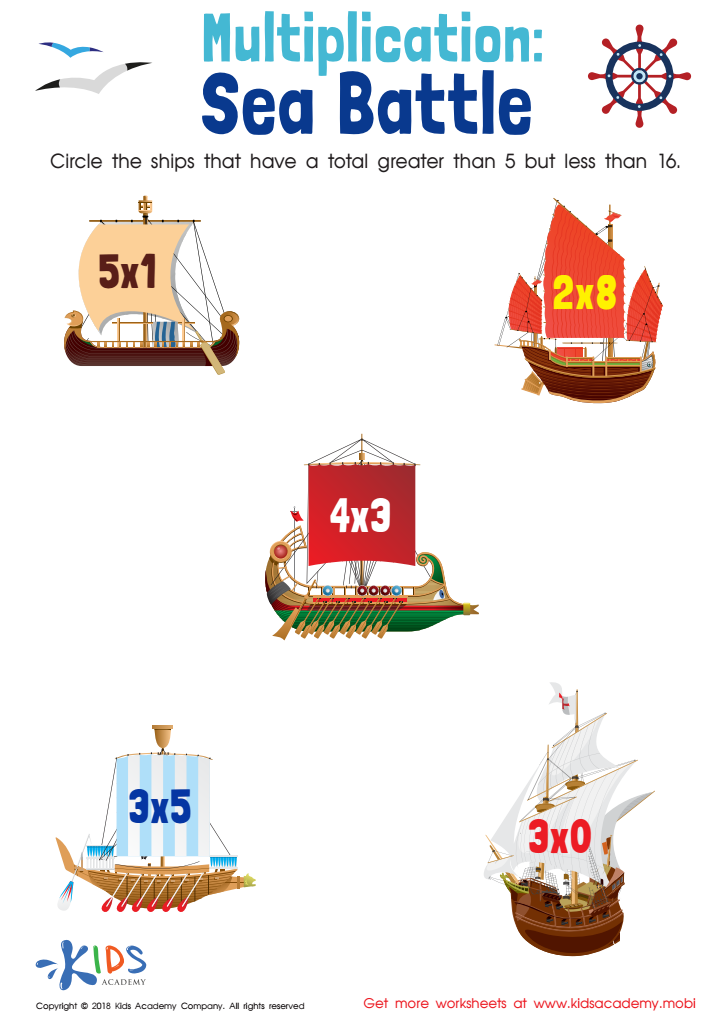
Sea Battle: Multiplication Worksheet
 Assign to My Students
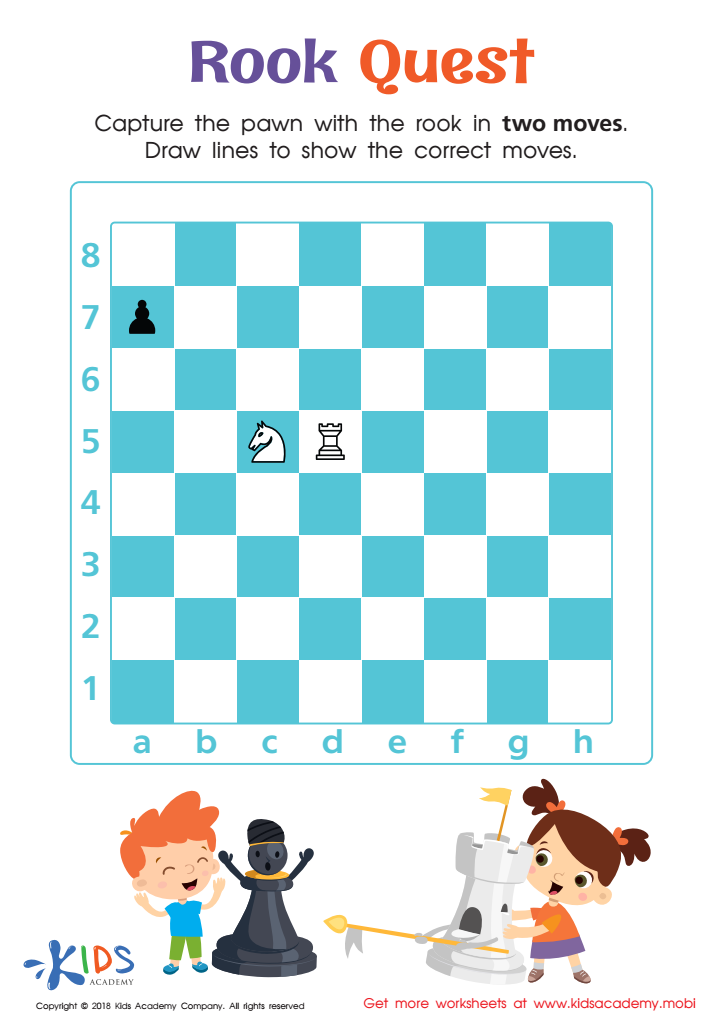
Rook Quest Worksheet
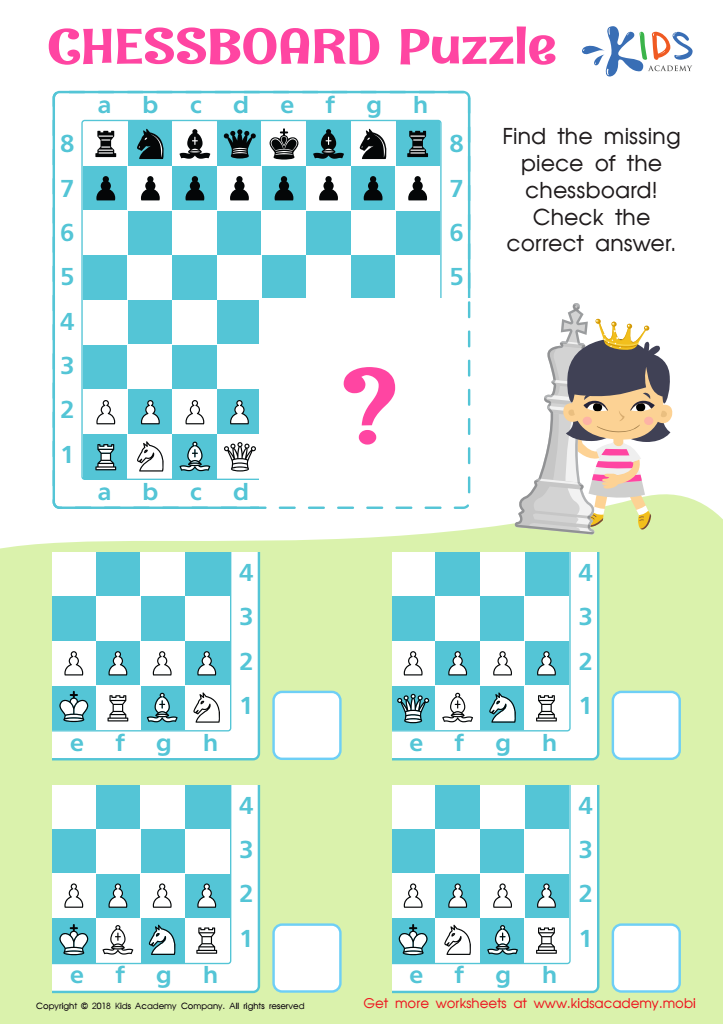
Chessboard Puzzle Worksheet
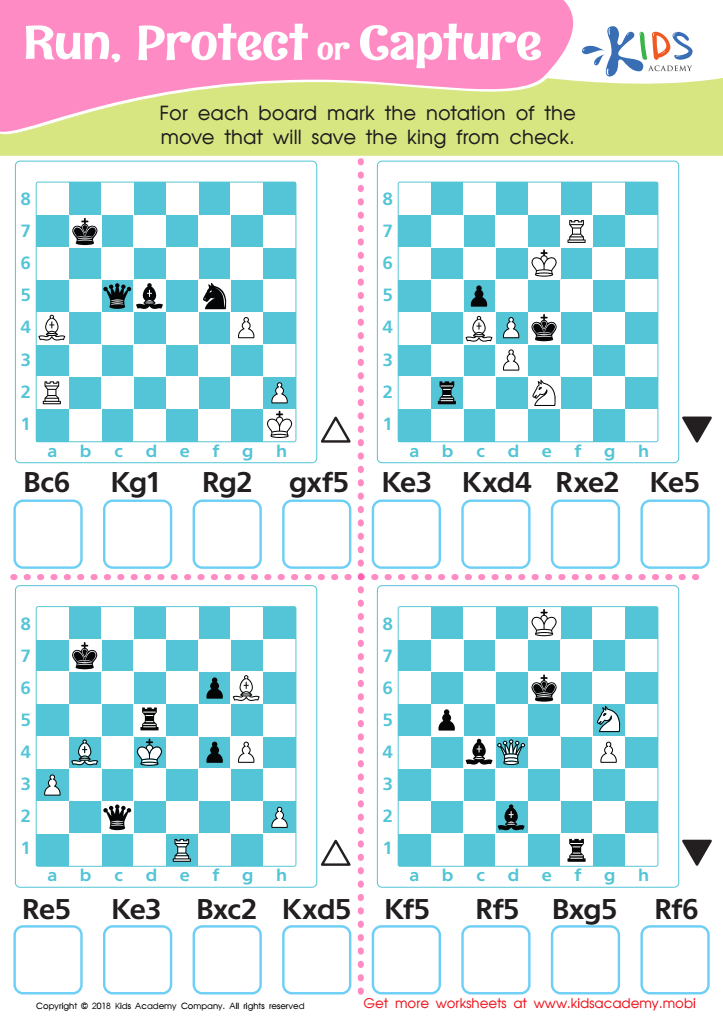
Run, Protect or Capture Worksheet






Parents and teachers should care about fostering strategic thinking in children aged 3-8 because it is critical for cognitive development, problem-solving skills, and future academic and life success. Strategic thinking is the ability to make decisions and solve problems based on anticipating consequences and planning ahead. At a young age, children’s brains are highly adaptable and capable of significant growth, making it an ideal period to develop these essential skills.
Encouraging strategic thinking helps children improve their attention span, memory, and capacity to analyze situations. By engaging in activities that require planning, such as puzzles, simple board games, or even play-based learning scenarios like building blocks, kids learn to set goals, evaluate options, and think several steps ahead. This nurtures their ability to handle complex tasks, enhances critical thinking, and boosts their confidence in executing decisions.
Moreover, strategic thinking lays the foundation for academic skills, particularly in subjects like mathematics, science, and reading comprehension, where logical progression and understanding consequences are crucial. Early exposure prepares children to approach learning tasks systematically and creatively.
Socially, strategic thinking promotes better interpersonal skills as children learn to cooperate, negotiate, and resolve conflicts with peers. By prioritizing this development from an early age, parents and teachers invest in holistic intellectual, social, and emotional growth, equipping children with invaluable skills for lifelong success.








