Understanding arrays Worksheets for Ages 3-8
3 filtered results
-
From - To
Welcome to our "Understanding Arrays Worksheets" designed specifically for children aged 3-8! These engaging and educational resources introduce young learners to the concept of arrays through fun activities and visuals. Our worksheets promote early math skills by helping kids recognize patterns, develop counting abilities, and enhance their problem-solving techniques. Ideal for homeschoolers or classroom use, these printable worksheets are tailored to suit various learning styles. Each worksheet provides an interactive way for children to explore arrays in a playful manner, laying a strong foundation for future mathematical understanding. Start your child's journey to mathematical confidence today with our vibrant and fun worksheets!
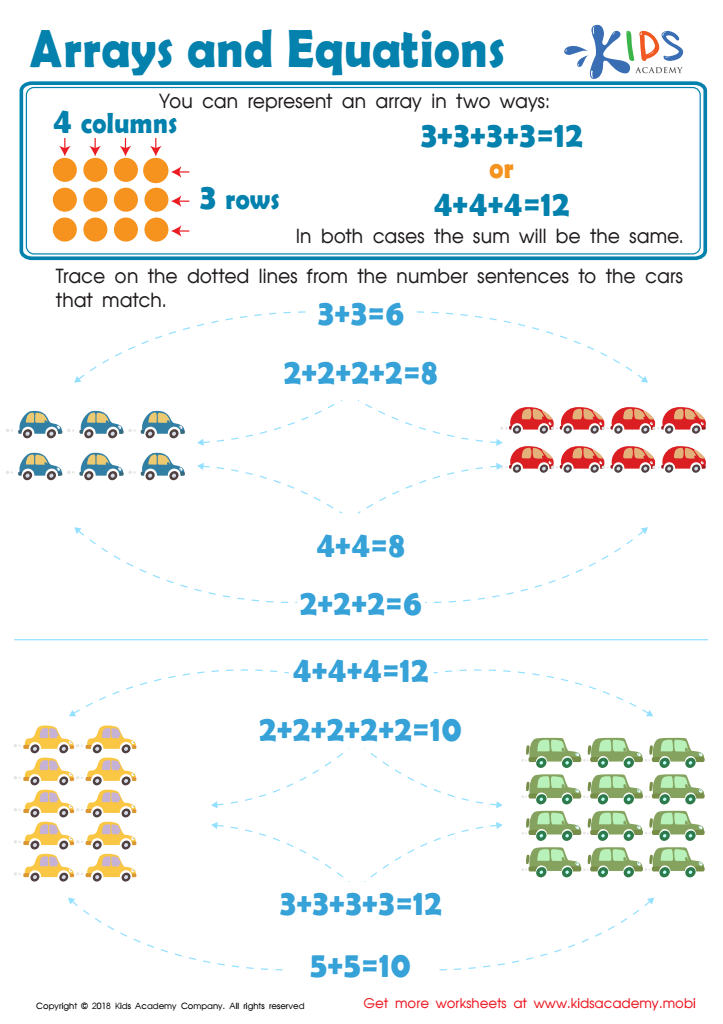
Arrays and Equations Worksheet
 Assign to My Students
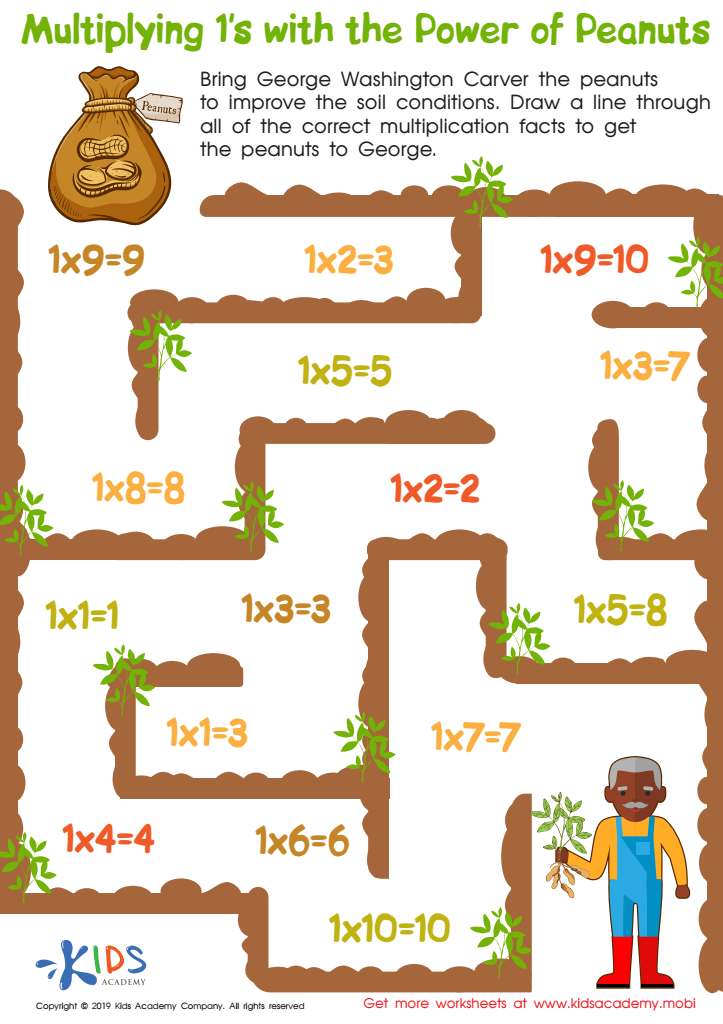
Multiplying 1’s With the Power of Peanuts Worksheet







Understanding arrays is fundamental for children aged 3-8 as it lays a strong foundation for mathematical skills and critical thinking. Arrays, which are organized groups of objects arranged in rows and columns, help children visualize mathematical concepts such as addition, multiplication, and even fractions. When parents and teachers introduce arrays at a young age, they cultivate number sense, allowing children to comprehend relationships between numbers more intuitively.
Furthermore, arrays encourage problem-solving and logical reasoning. By recognizing patterns and organizing objects systematically, children develop their ability to analyze and interpret data—skills essential for scientific thinking and everyday decision-making. Engaging with arrays can also foster collaboration and communication among peers as children discuss strategies for arranging and calculating with them.
Additionally, arrays enhance fine motor skills through hands-on activities, making learning more dynamic and interactive. As young learners encounter arrays in activities such as counting, sorting, and even crafting, they build a joyful association with mathematics that can last a lifetime. Ultimately, supporting children in understanding arrays equips them with essential tools for their academic journey, empowering them to approach learning with confidence and curiosity.








