
Understanding bar graphs Worksheets for Ages 3-8
8 filtered results
Difficulty Level
Grade
Age
-
From - To
Subject
Activity
Standards
Discover our "Understanding Bar Graphs Worksheets for Ages 3-8" designed to make learning fun and effective for your little ones. At Kids Academy, we prioritize educational excellence through engaging activities that help children grasp basic data interpretation skills. Our carefully crafted worksheets introduce young learners to bar graphs, teaching them how to compare quantities, understand simple data sets, and foster critical thinking. Perfect for both classroom and at-home learning, these printable resources offer a mix of vibrant visuals and interactive questions tailored to children’s developmental stages. Explore, learn, and build a solid foundation in math with Kids Academy today!
Favorites
With answer key
Interactive
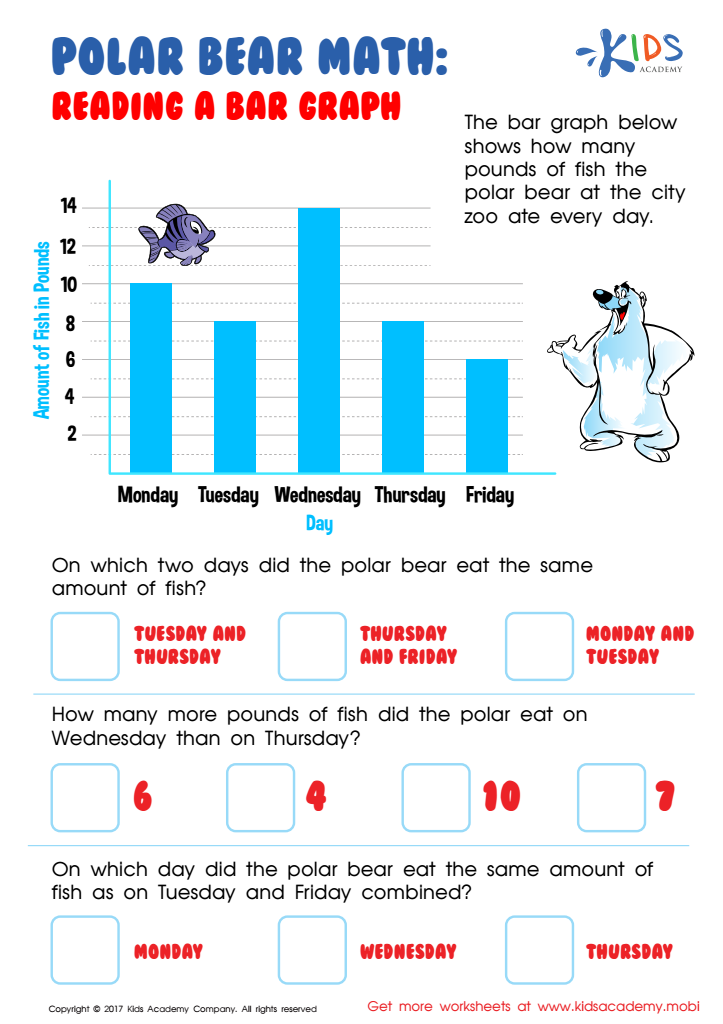
Reading Bar Graph Worksheet
Take your child north to practice data reading with a polar bear friend! This worksheet challenges 3rd graders to interpret data on a graph and solve related math problems.
 Assign to My Students
Reading Bar Graph Worksheet
Worksheet
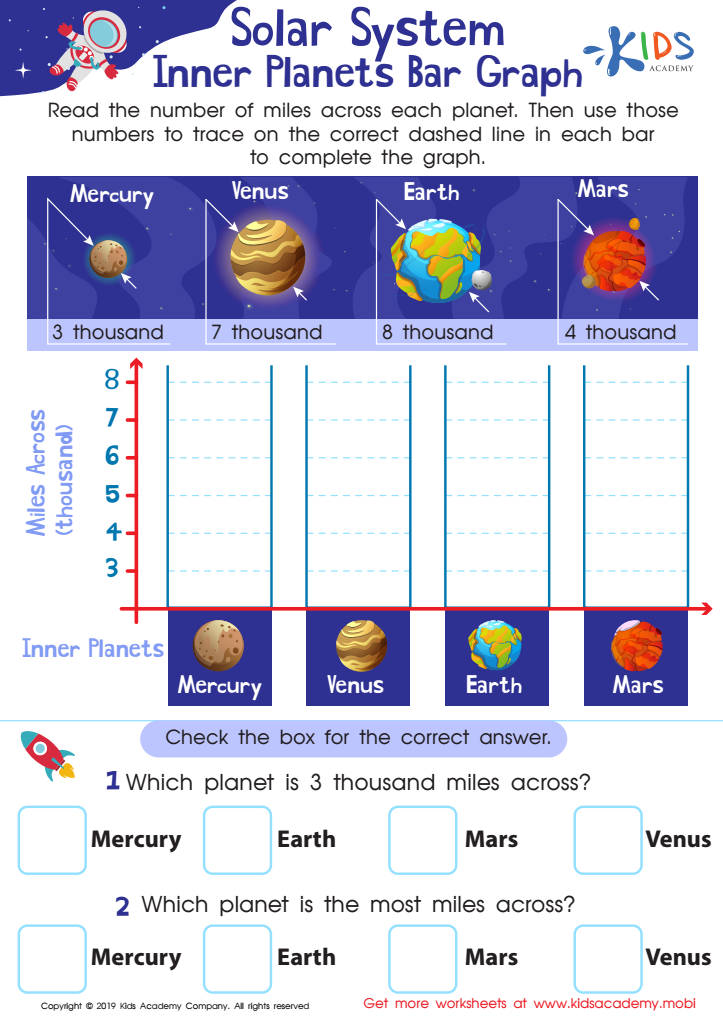
Planets Bar Graph Worksheet
With this fun, educational worksheet, kids can learn about bar graphs and the solar system simultaneously. Introduce them to the concept by reading out the number of miles for each planet, then help them trace the dashed lines in each bar to complete the graph.
Planets Bar Graph Worksheet
Worksheet
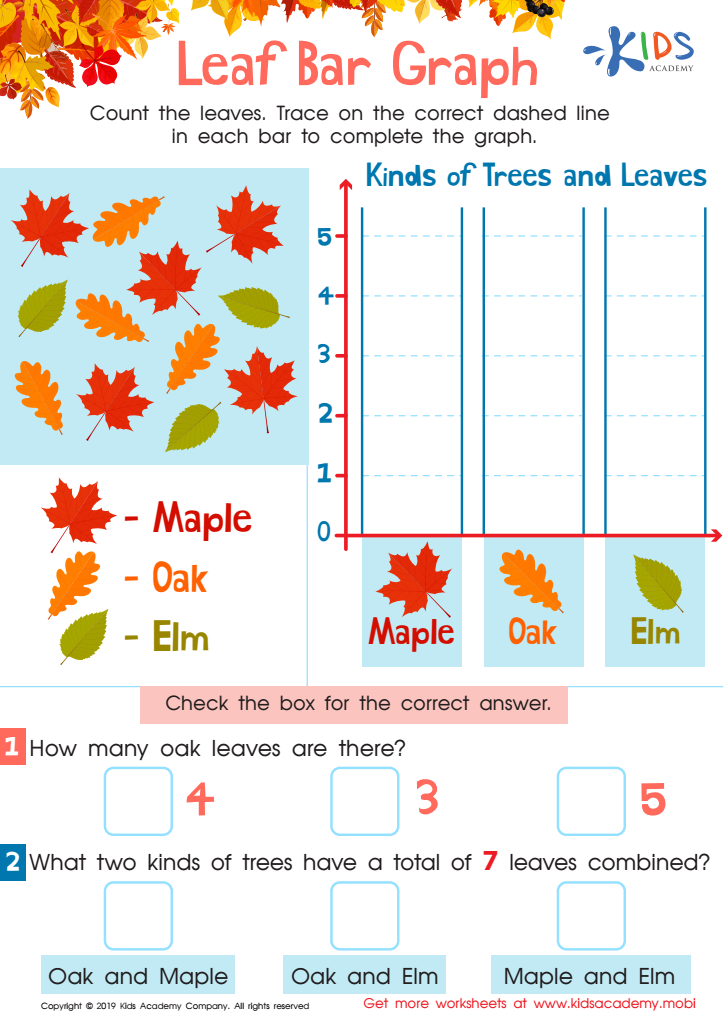
Leaf Bar Graph Worksheet
You can help your kids make learning easier and more enjoyable. While their teachers provide lessons and homework, you can take their education further. This worksheet can assist them in mastering bar charts. Count the leaves, then trace the correct line for each bar to complete the graph.
Leaf Bar Graph Worksheet
Worksheet
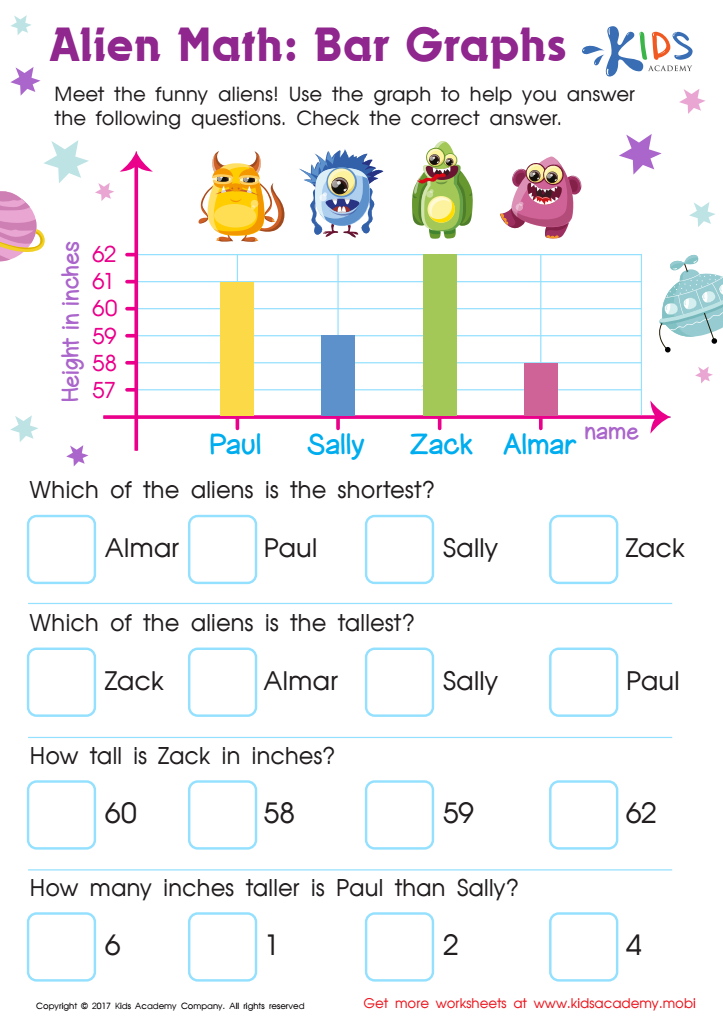
Bar Graphs Worksheet
Let's blast off to outer space and visit our funny alien friends with this bar graphs worksheet PDF! Kids gain valuable measurement and data analysis skills by comparing sizes of the aliens and working with bar graphs.
Bar Graphs Worksheet
Worksheet
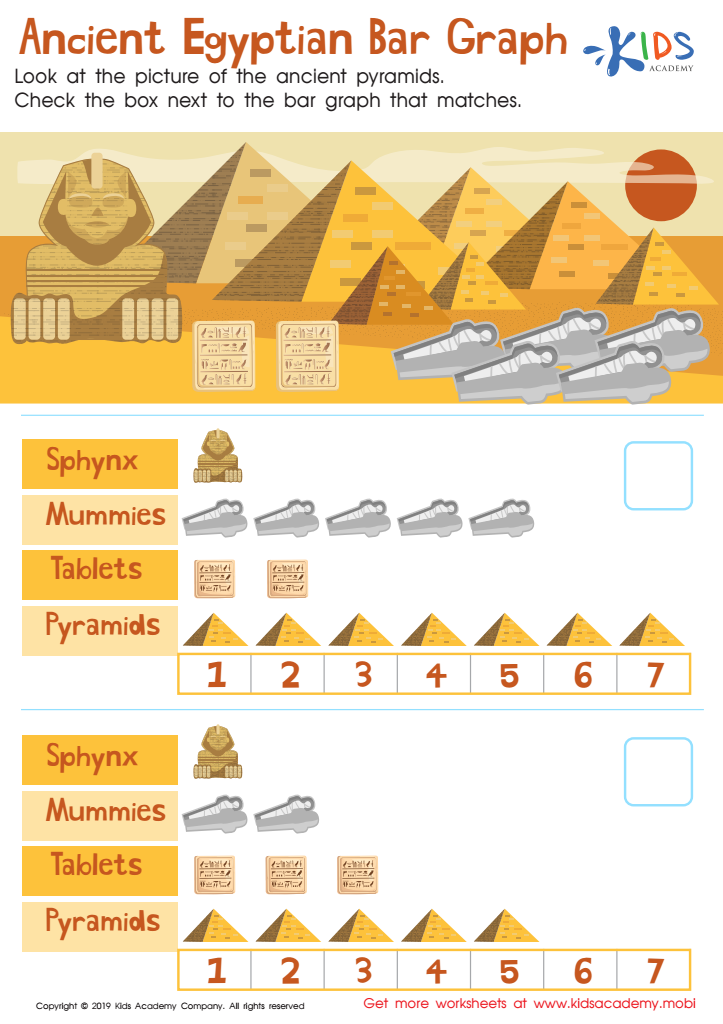
Egyptian Bar Graph Worksheet
Help your kids get a hang of bar graphs with this fun worksheet. Examine the picture of the ancient pyramids and help them match the bar graph to it. Check the box next to the correct bar graph and watch your little ones learn quickly!
Egyptian Bar Graph Worksheet
Worksheet
Join Kids Academy for Free
Who is primarily going to use this learning content?







Understanding bar graphs is crucial for children aged 3-8 because it helps build their foundational math skills and enhances their ability to analyze information. For parents and teachers, caring about this aspect of education is important for several reasons.
Firstly, bar graphs provide a visual way to see quantities and compare them easily. Children learn to organize and process information, making abstract numbers more concrete and understandable. This skill is essential not just in math, but across all subjects.
Secondly, learning to interpret bar graphs nurtures critical thinking and problem-solving skills. Kids begin to ask questions like "Which category has the most?" or "How many more are in this group compared to that one?" These questions stimulate inquiry and logical thinking.
Moreover, bar graphs improve a child’s ability to communicate information clearly. Whether working on group projects or discussing observations, children who understand bar graphs can convey their thoughts more effectively.
Early familiarity with bar graphs sets a strong foundation for future learning. As data literacy becomes increasingly important in our digital world, these early experiences with graphs will help children develop into capable, analytical adults. Therefore, parents and teachers should integrate such activities into early education to foster essential lifelong skills.








