Understanding clocks Worksheets for Ages 3-8
6 filtered results
-
From - To
Introduce young learners to the concept of time with our "Understanding Clocks Worksheets”. Tailored for children aged 3-8, these engaging activities make learning to tell time fun and interactive. Each worksheet is designed to support foundational skills, helping kids recognize both analog and digital clocks through vibrant illustrations and guided exercises. Perfect for teachers and parents, our printable materials enhance time-telling confidence and numerical skills in a playful, educational way. Foster a lifelong appreciation for punctuality and daily schedules by making time-related learning a stimulating experience for your child. Download and start exploring today!
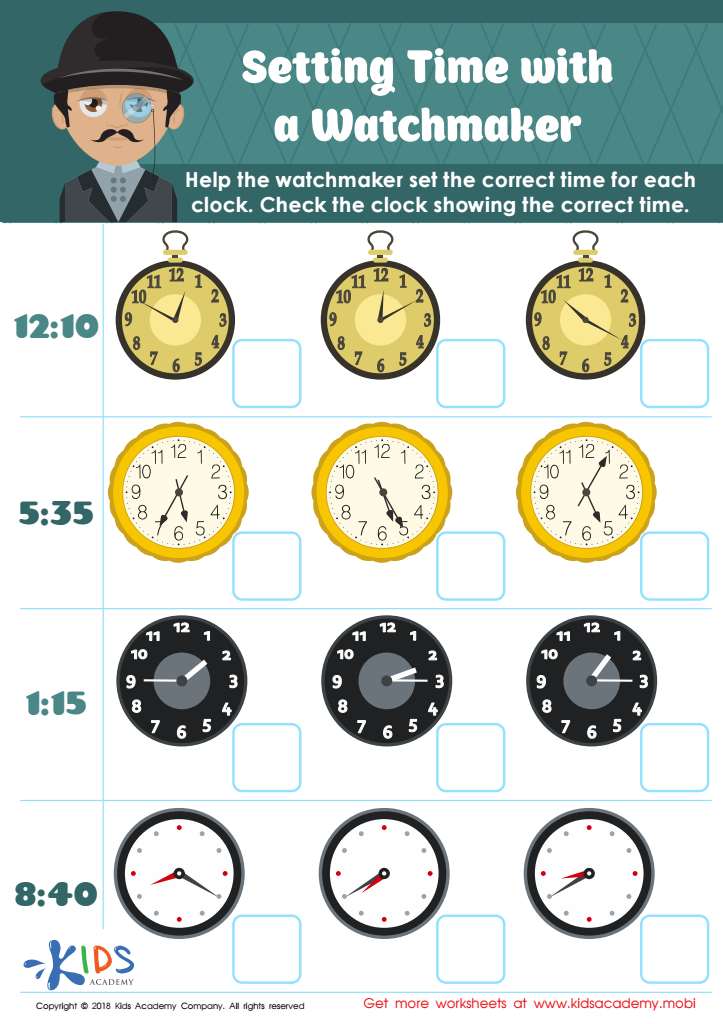
Setting Time with Watchmaker Worksheet
 Assign to My Students
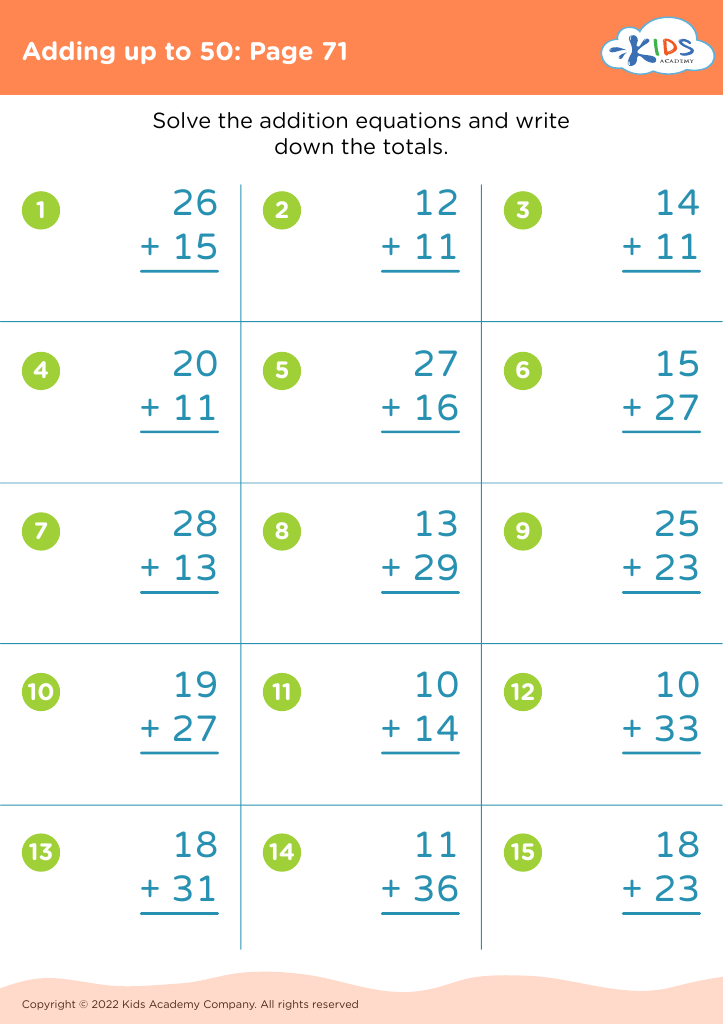
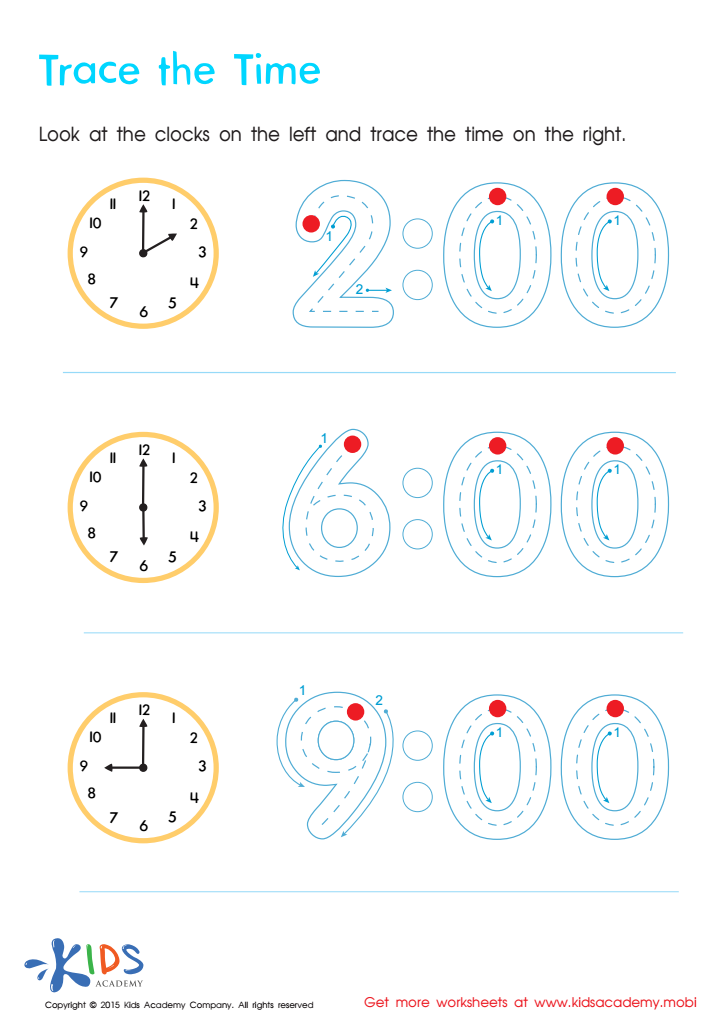
Telling The Time Worksheet: Part 2
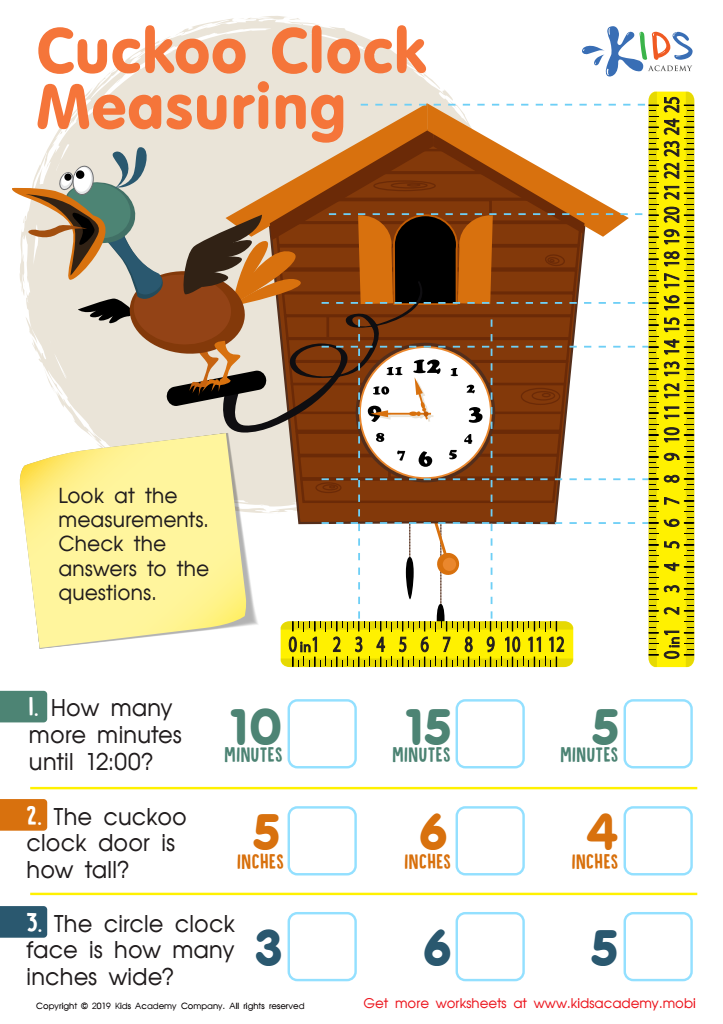
Cuckoo Clock Measuring Worksheet
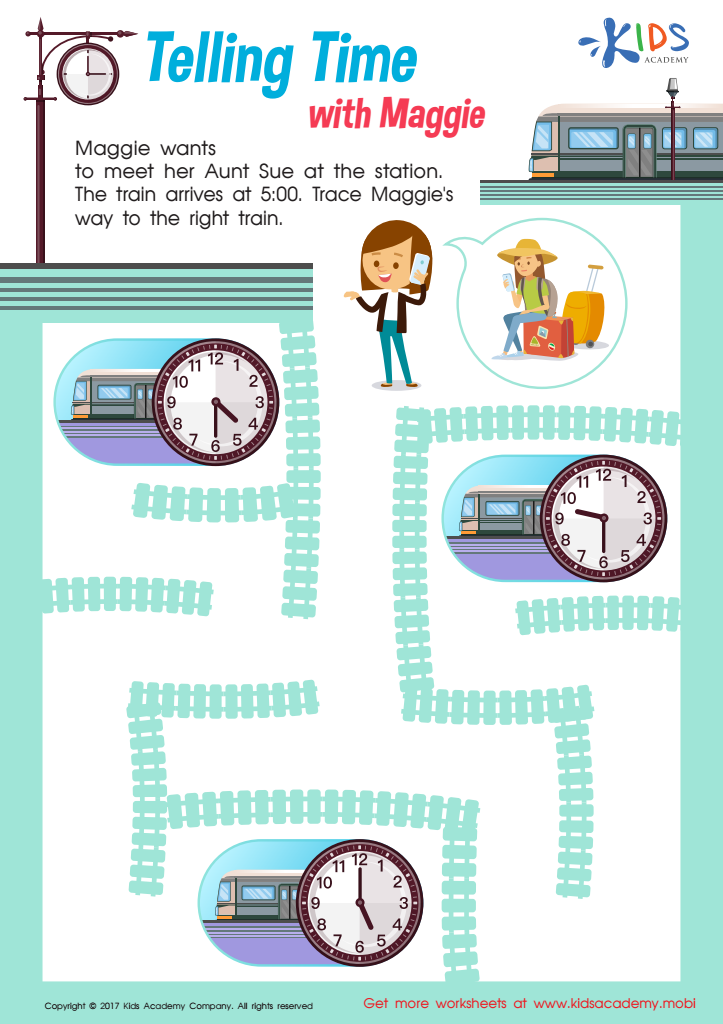
Telling Time With Maggie Time Worksheet







Understanding clocks is a crucial skill for children aged 3-8 as it forms the foundation for essential life skills and future learning. Firstly, learning to tell time helps children develop a sense of discipline and responsibility. They start to grasp the concept of daily routines, which is vital for time management skills that they will rely on throughout their lives.
Additionally, familiarity with clocks reinforces basic math concepts. Children practice counting, recognize number patterns, and learn the fundamentals of fractions as they differentiate between hours, minutes, and seconds. This numerical literacy is a building block for more advanced math topics they will encounter later on.
Moreover, understanding clocks fosters cognitive and analytical skills. Time-telling exercises engage children in problem-solving and help their capacity to concentrate and follow instructions. It also nurtures their ability to predict and anticipate daily events, reducing anxiety by providing a structured sense of their day's flow.
Socially, clock comprehension improves interactions. Being able to tell time helps children stick to punctuality for school, playdates, and family activities, thereby shaping their interpersonal reliability and respect for others' time.
Overall, both parents and teachers have a fundamental role in prioritizing time-telling skills to equip children with the tools necessary for academic success and everyday life.








