Understanding division Worksheets for Ages 3-8
9 filtered results
-
From - To
Unlock the world of math for your little learners with our "Understanding Division Worksheets for Ages 3-8." Designed specifically for young children, these engaging activities simplify the concept of division through fun and interactive exercises. Perfect for early grades, the worksheets blend colorful visuals with simple word problems, making learning both enjoyable and effective. Parents and teachers can trust in our well-crafted resources to build foundational math skills. Help your child or student grasp the basics of division today, fostering confidence and a love for learning that lasts a lifetime. Visit Kids Academy to get started!
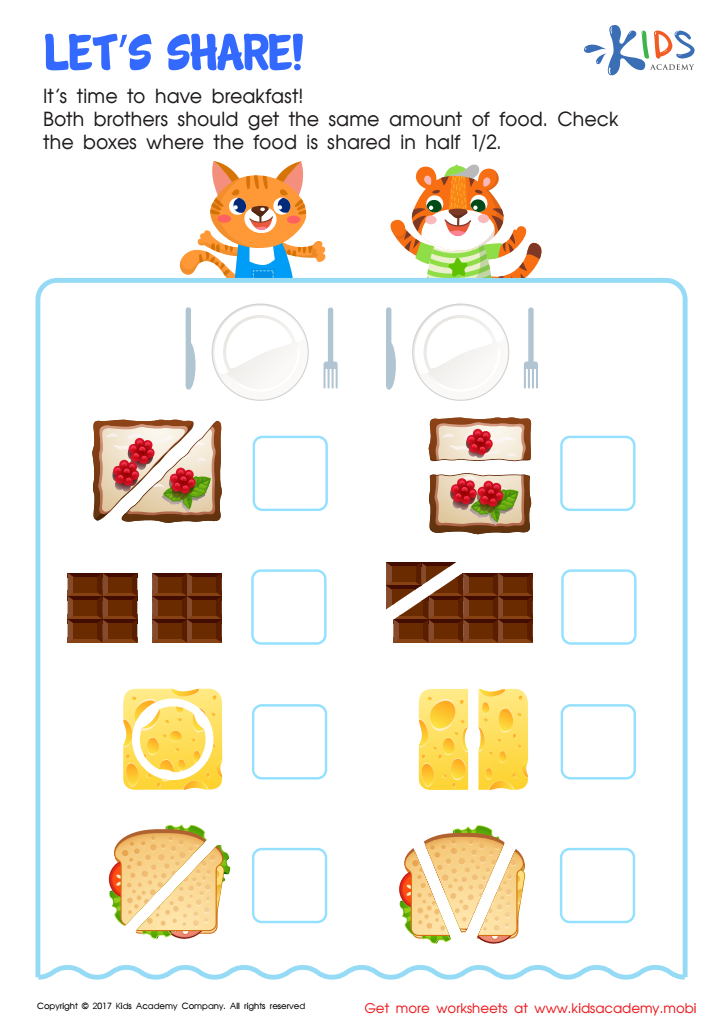
Let's Share Worksheet
 Assign to My Students
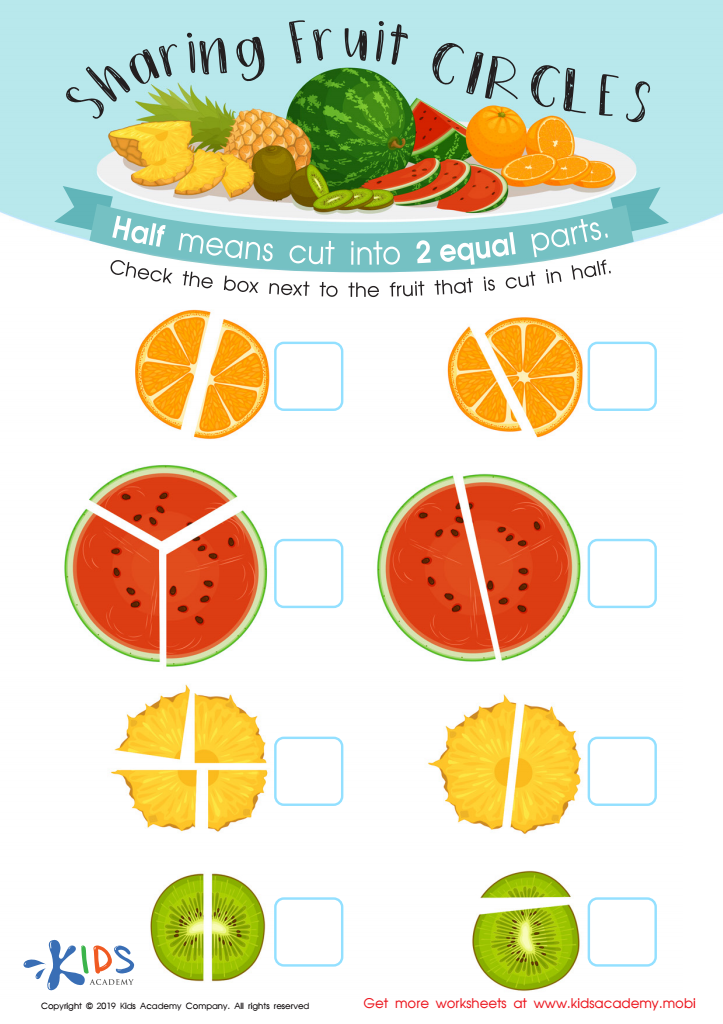
Sharing Fruit Circles Worksheet
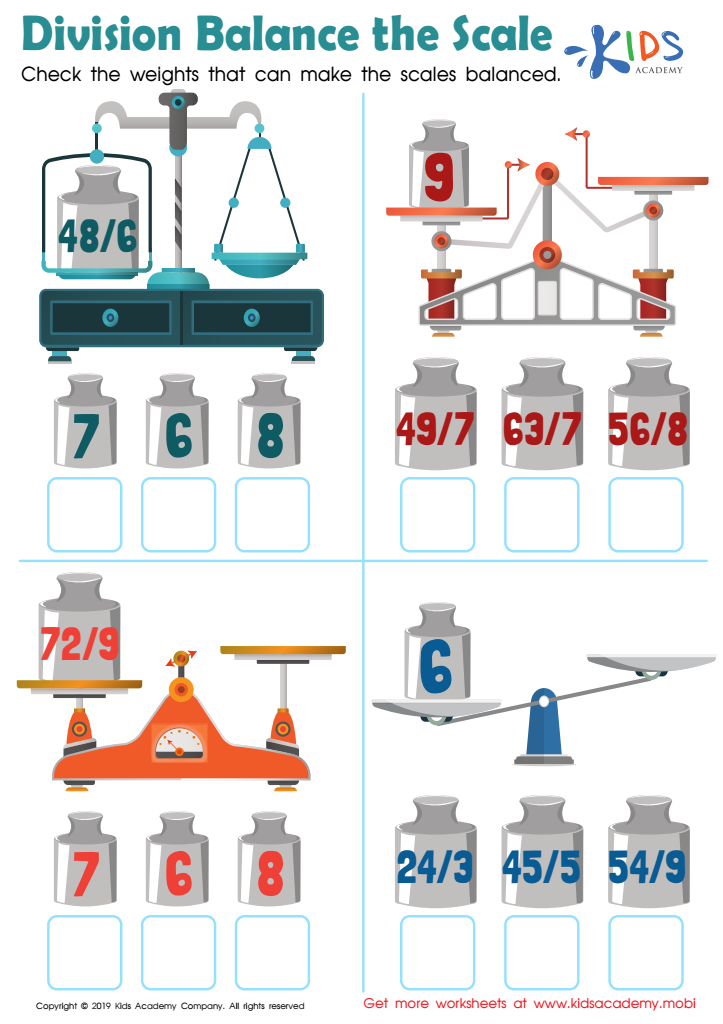
Division Balance the Scale Worksheet
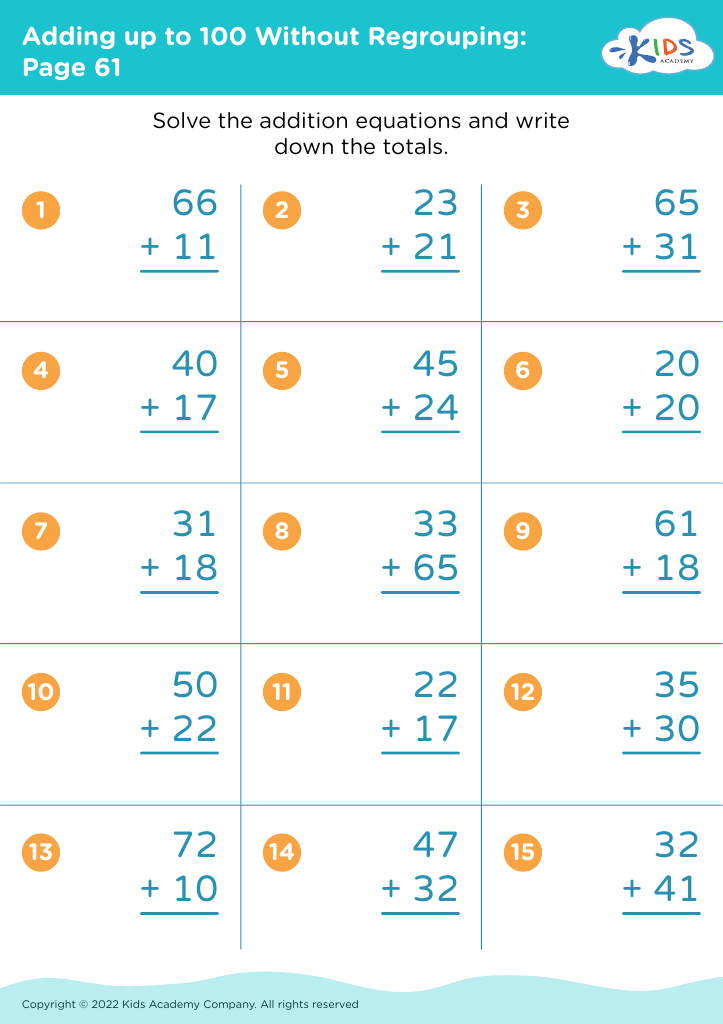
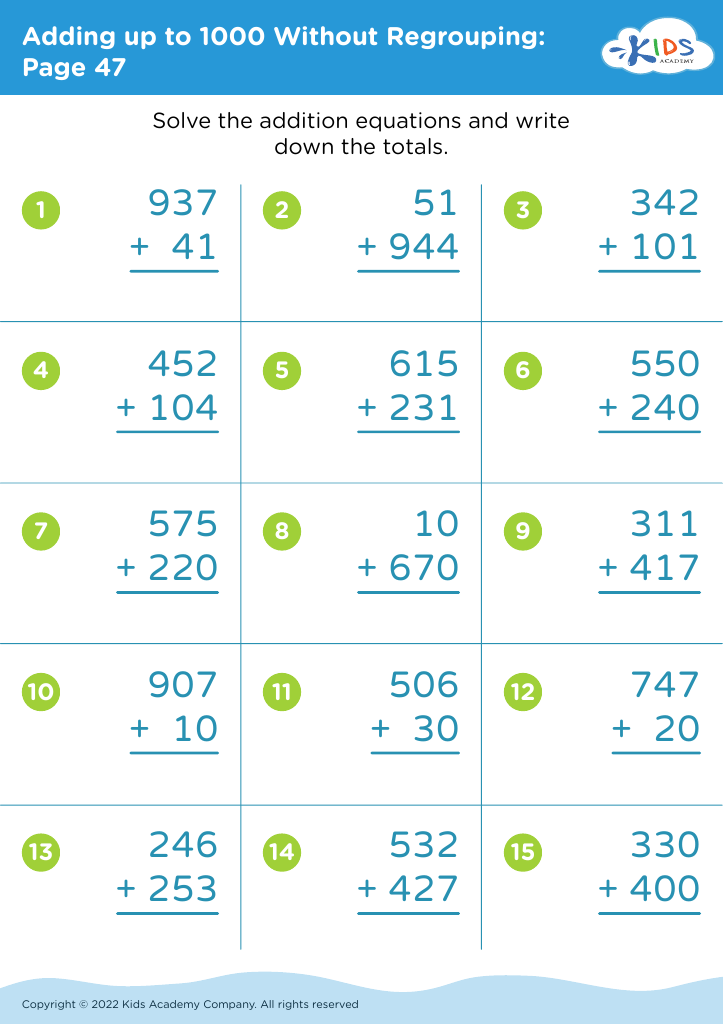
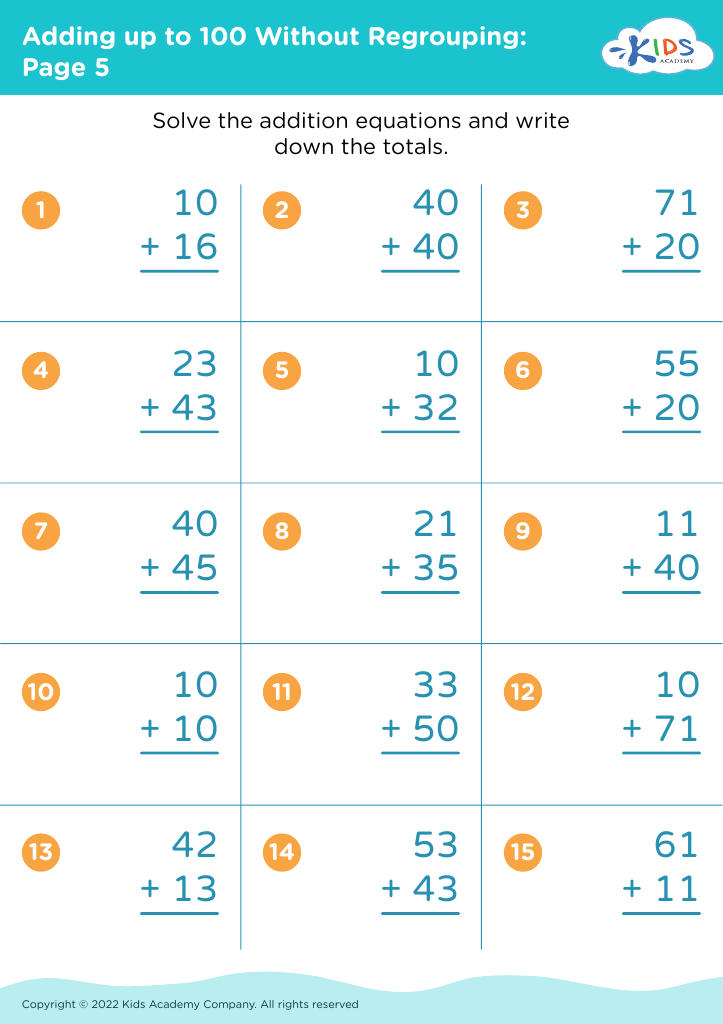
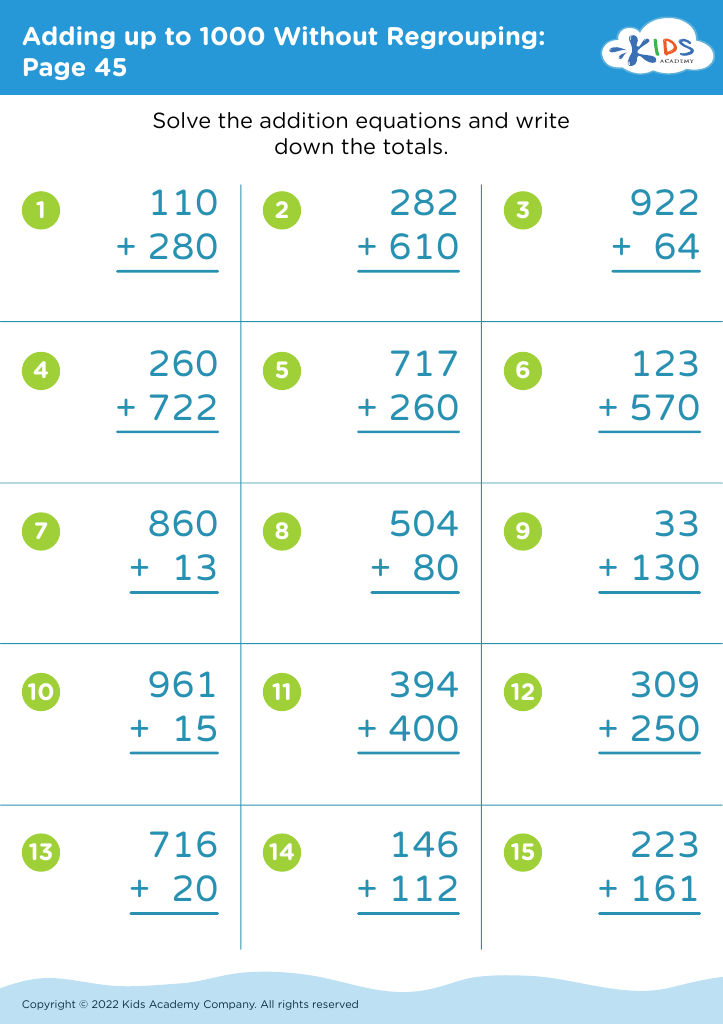






Understanding division, even at ages 3-8, equips children with important mathematical foundations that shape their cognitive development and problem-solving skills. Early exposure to this concept nurtures critical and logical thinking, promoting an enhanced grasp of more complex math in later years. It also bolsters the ability to discern patterns, develop concentration and boost confidence.
For parents and teachers, prioritizing division for young ones can turn this often-intimidatory subject into a fun, engaging activity. When integrated into daily experiences such as sharing snacks or toys equally, children understand the fairness and relevance of division, making it less abstract. Beyond academics, it fosters attributes like patience and perseverance, which are essential life skills.
Additionally, competence in division facilitates smoother transitions into school curricula, ensuring children are not left behind in their classes. A solid foundation in division from a young age thus lays the groundwork for future success in academics and everyday activities, empowering children with tools for an analytical and balanced life approach.
Lastly, by understanding division early on, children become active, curious learners who aren't afraid of mathematics. They see math as a natural and enjoyable part of their world, laying the groundwork for lifelong learning and a positive attitude towards challenges.








