Understanding graphs Worksheets for Ages 3-8
6 filtered results
-
From - To
Discover engaging and educational "Understanding Graphs Worksheets for Ages 3-8" designed to make learning fun and interactive! Perfect for young learners, these expertly crafted worksheets cover essential graphing concepts like bar graphs, pictographs, and line plots. Each worksheet is filled with colorful illustrations and exciting activities that help children grasp the fundamentals of data representation. Whether at home or in the classroom, kids will love exploring patterns, comparing quantities, and developing critical thinking skills. Start your child's educational journey with our enchanting worksheets today and watch them excel in understanding graphs while having loads of fun!
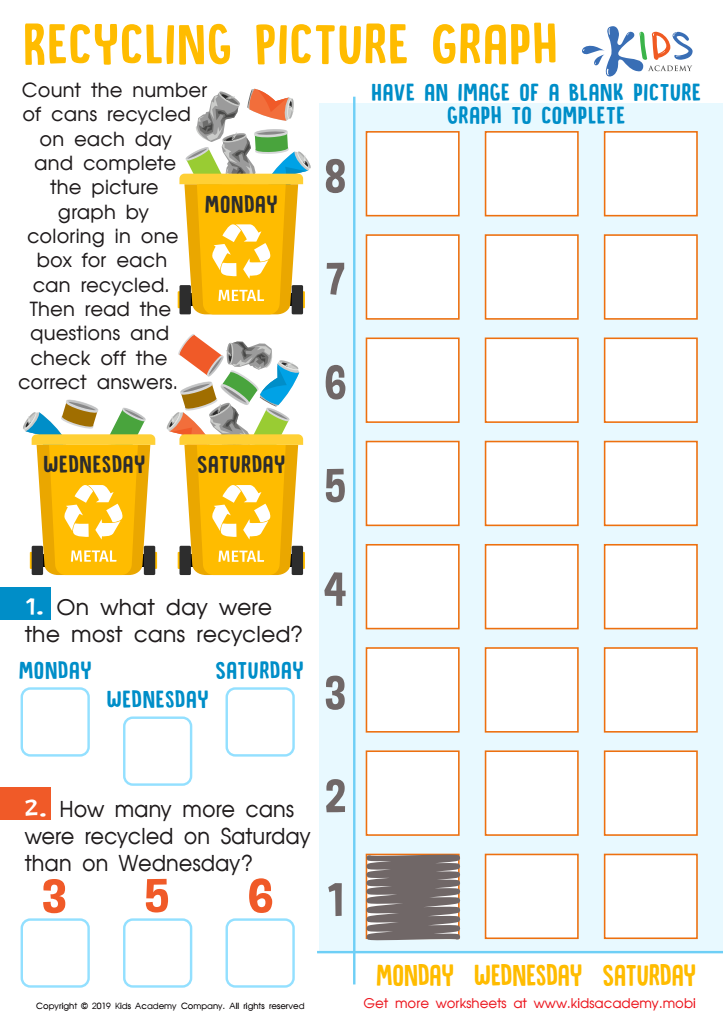
Recycling Picture Graph Worksheet
 Assign to My Students
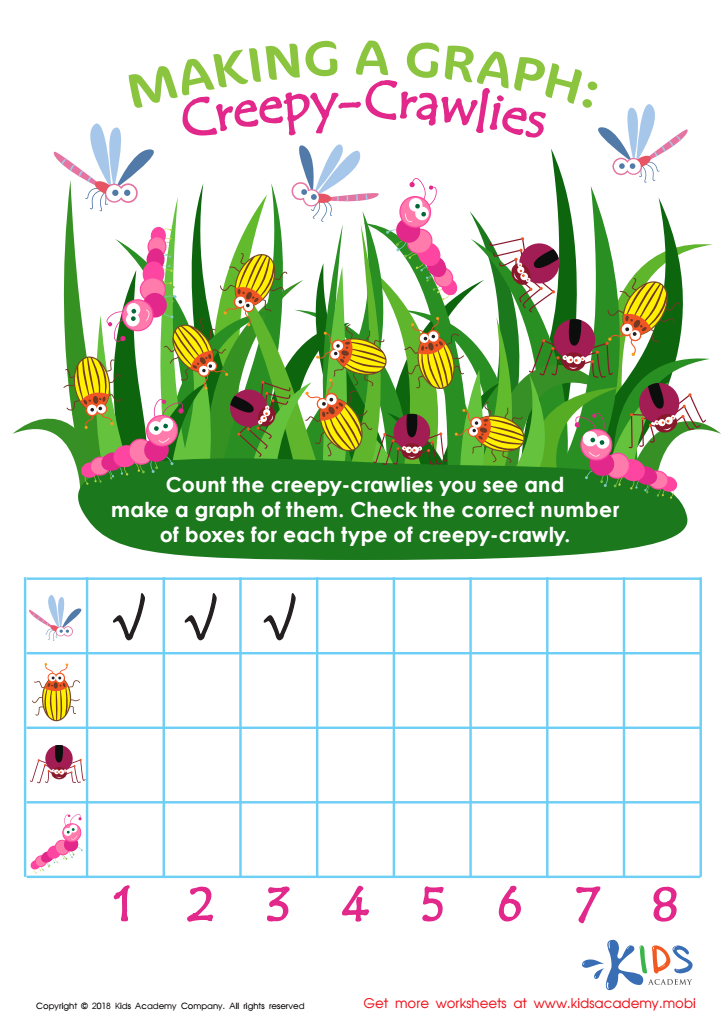
Making a Graph: Creepy Crawlies Worksheet
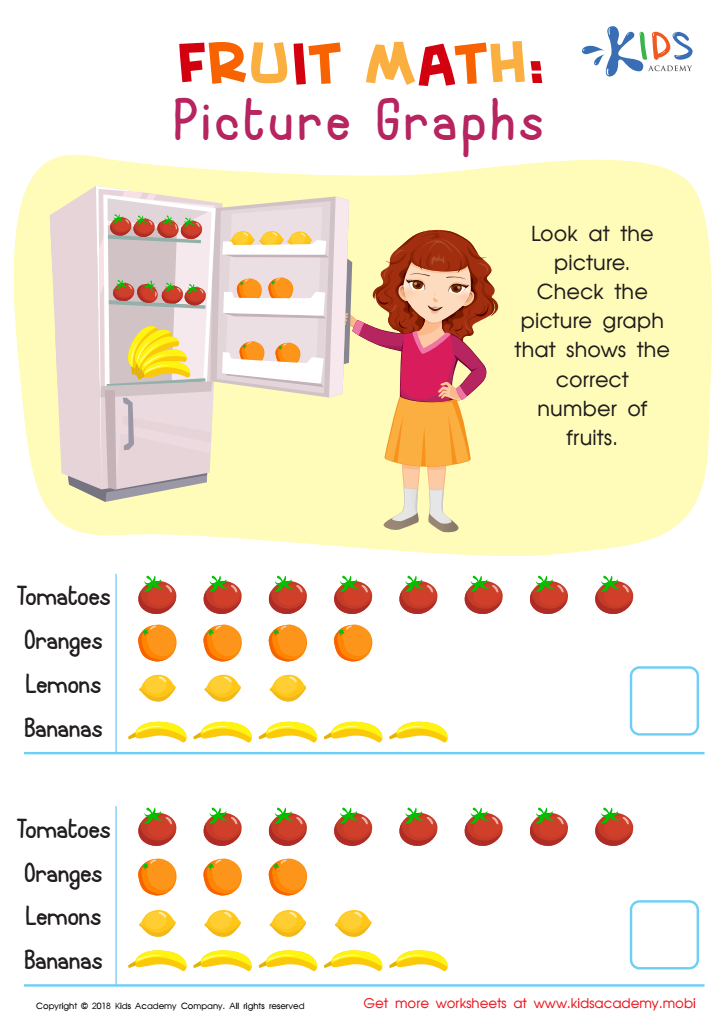
Fruit Math: Picture Graphs Worksheet
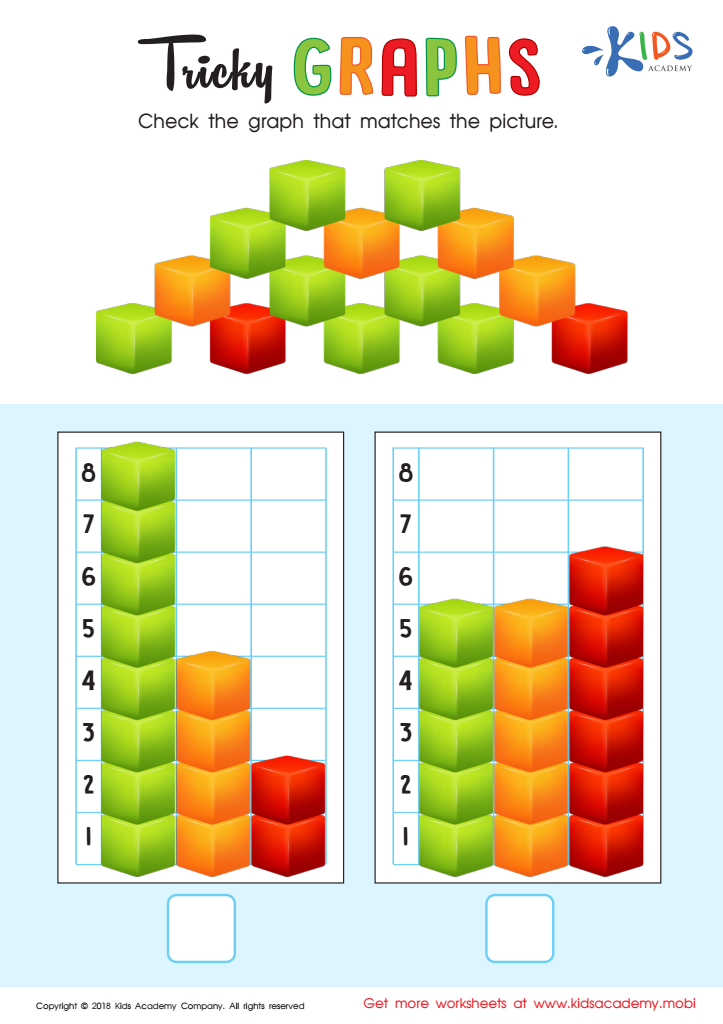
Tricky Graphs Worksheet
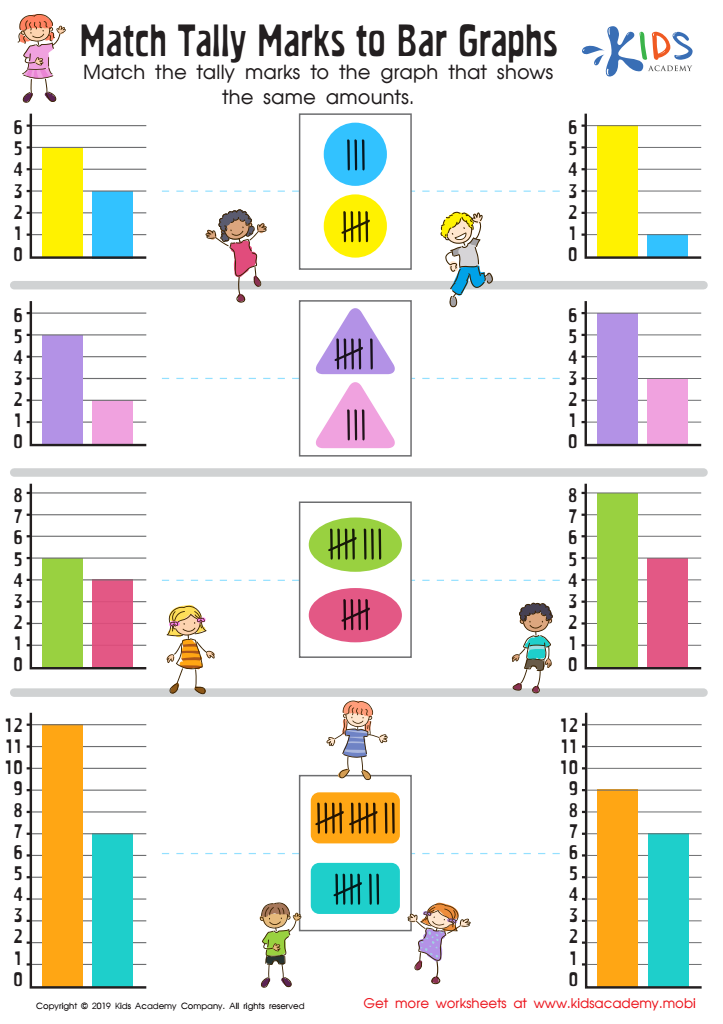
Match Tally Marks to Bar Graphs Worksheet
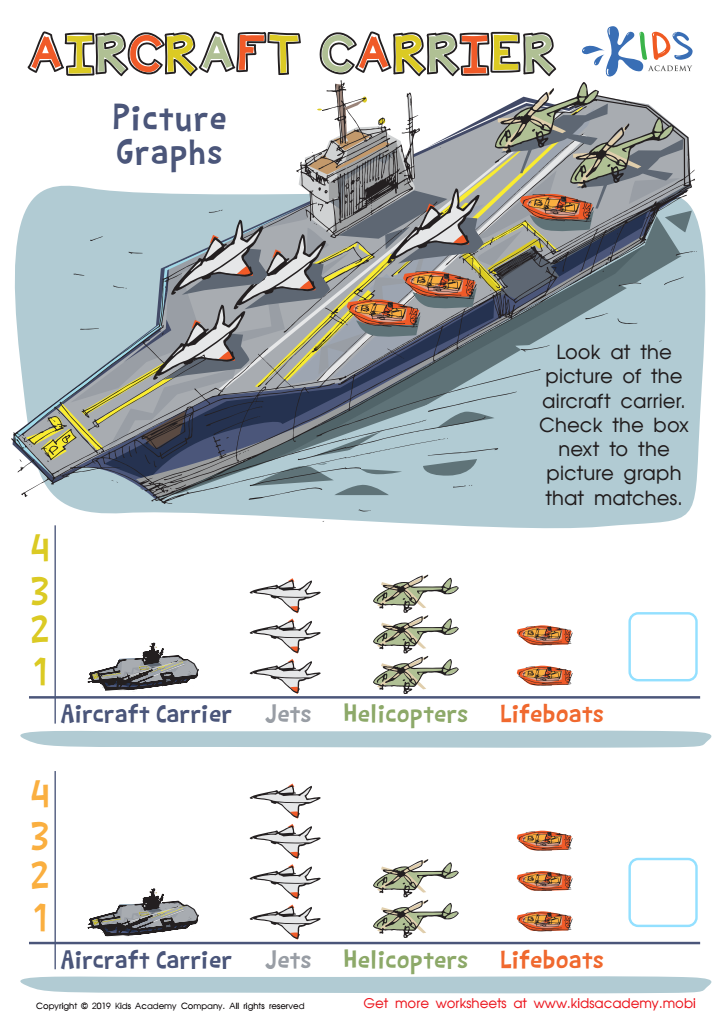
Aircraft Carrier Picture Graphs Worksheet


.jpg)





Understanding graphs from an early age is crucial for children aged 3-8, as it lays the foundation for essential cognitive and analytical skills. Graphs simplify complex information and present it visually, helping young children grasp concepts such as quantity, trends, and patterns. Introducing kids to graphs fosters numeracy skills, as they start to recognize numbers, compare quantities, and understand relationships between different sets of data.
Early exposure to graphs nurtures critical thinking. When children interpret simple bar charts or picture graphs, they engage in problem-solving and reasoning. This, in turn, enhances their ability to make decisions, justifying their choices based on data.
Moreover, graphs are a part of everyday life. From weather charts to classroom attendance records, being comfortable with graphical representation is part of being literate in today's data-driven world. Developing this skill early on ensures that children are not intimidated by data as they grow older, thereby supporting their academic success across various subjects including science, math, and social studies.
Teachers and parents should incorporate fun and interactive graphing activities into play and learning sessions. This engagement makes learning enjoyable and underscores the importance of graphical literacy. By prioritizing this skill, adults can equip youngsters with the tools they need for future academic pursuits and informed day-to-day decision-making.








