Understanding life cycles Worksheets for Ages 3-8
8 filtered results
-
From - To
Explore our fun and engaging "Understanding Life Cycles" worksheets designed for ages 3-8! Our expertly crafted resources help young learners grasp the fascinating stages of various life cycles, from plants to animals. Activities feature vibrant illustrations and interactive tasks to enhance comprehension and retention. Ideal for homeschooling and classroom use, these worksheets foster curiosity, scientific thinking, and essential literacy skills. Parents and educators can easily integrate these printable worksheets into their lesson plans, offering both learning and entertainment. Dive into the wonders of life cycles with your child today and lay the foundation for a lifelong love of science!
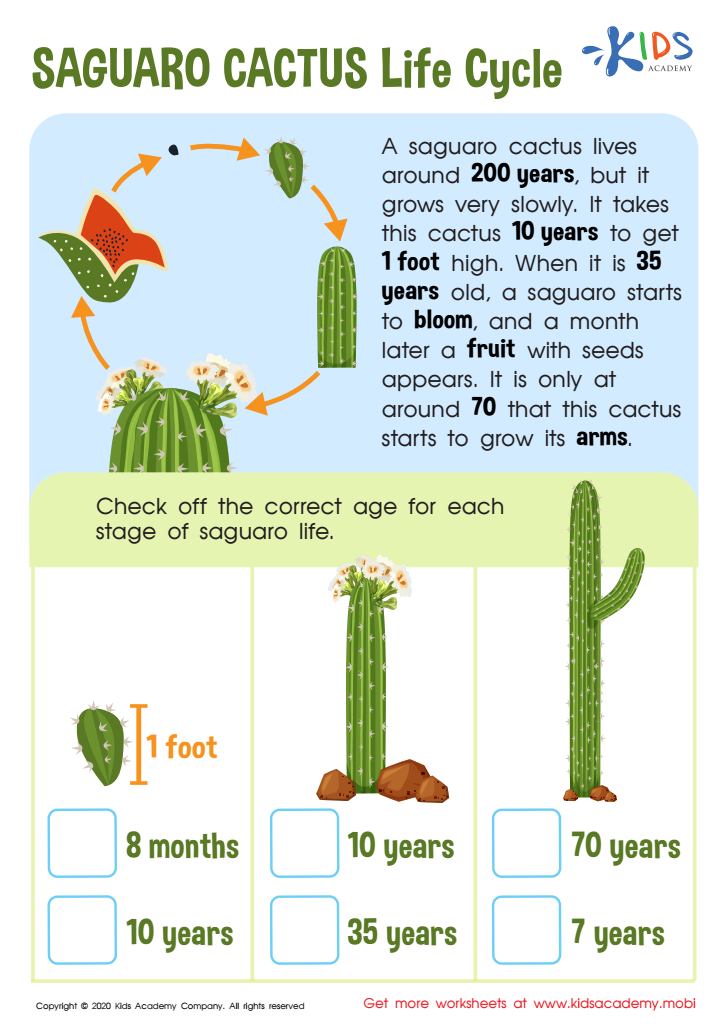
Saguaro Cactus Life Cycle Worksheet
 Assign to My Students
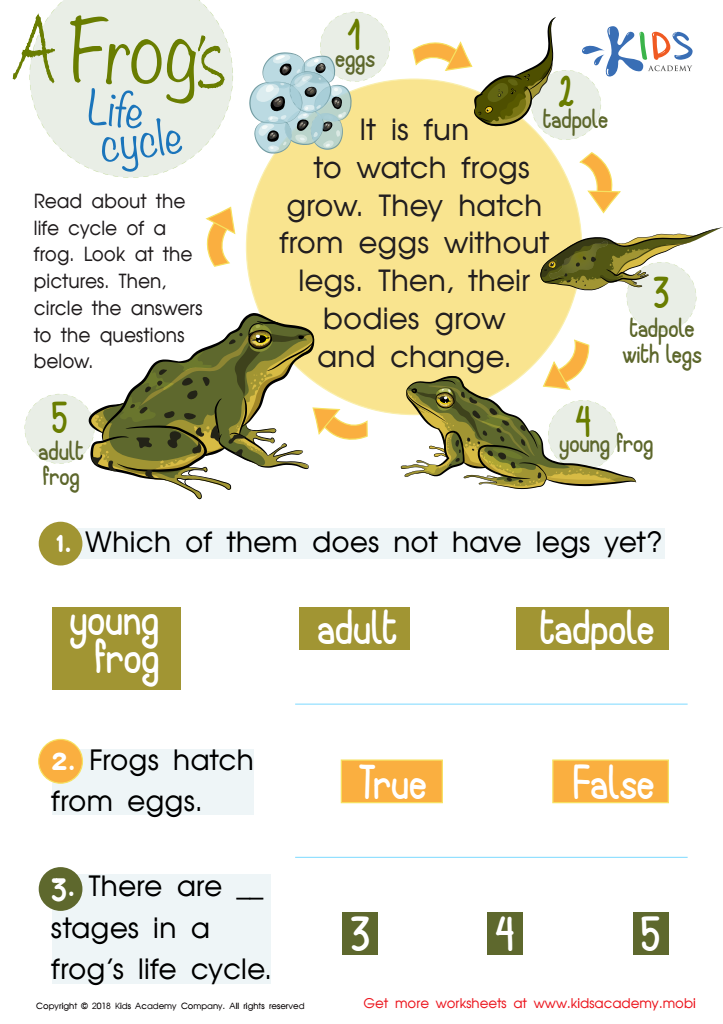
A Frog’s Life Cycle Worksheet
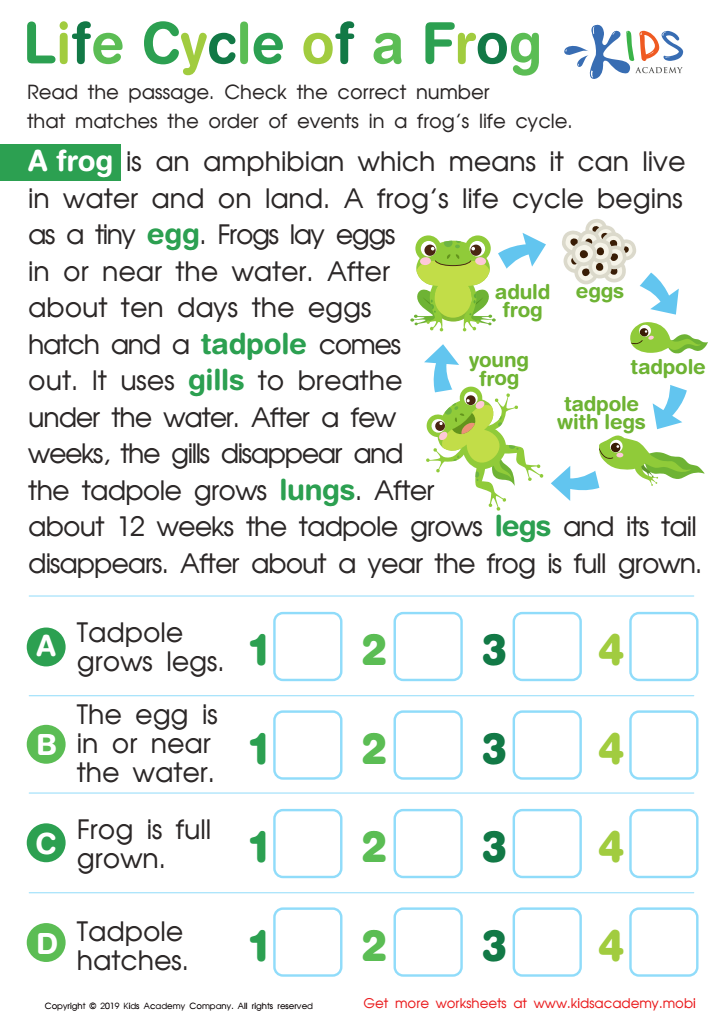
Life Cycle of a Frog Worksheet
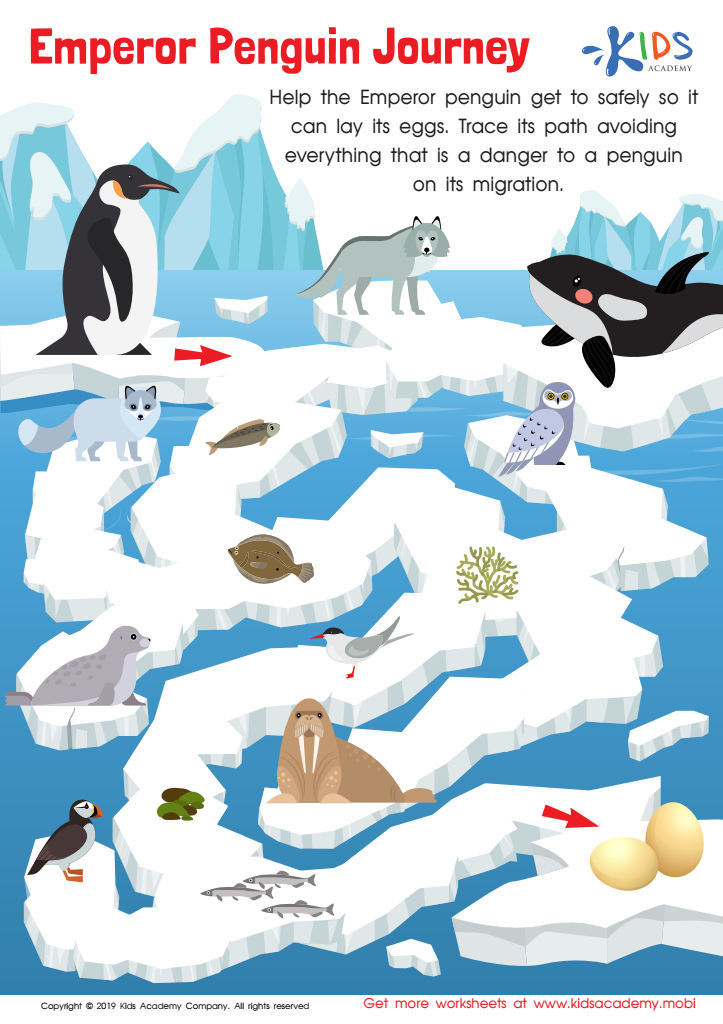
Emperor Penguin Journey Worksheet
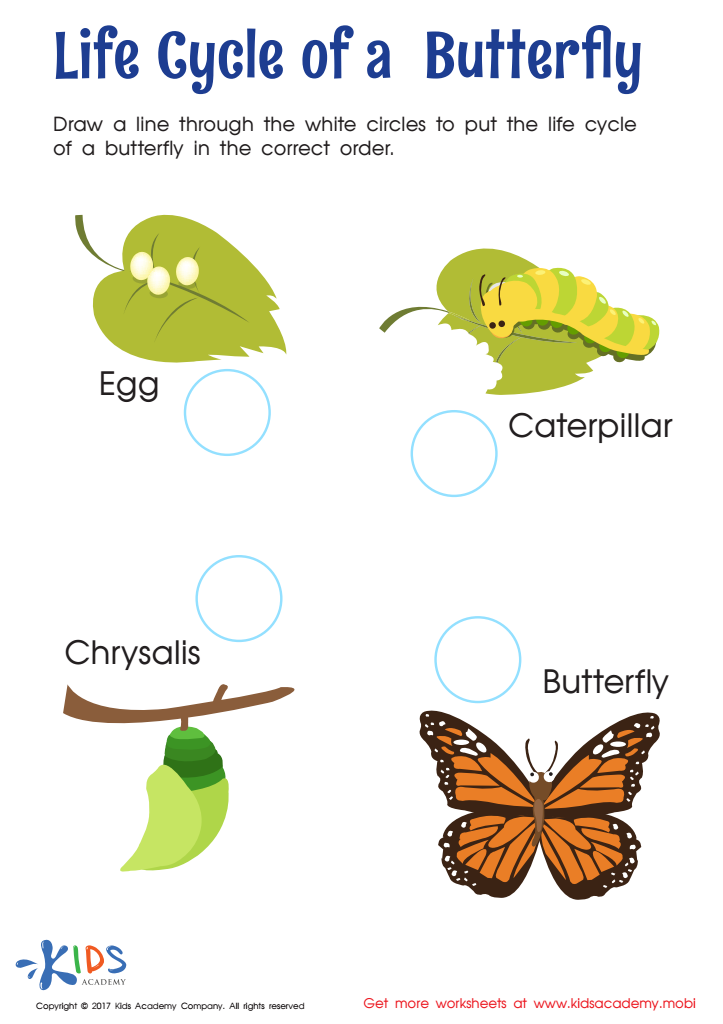
Life Cycle of Butterfly Worksheet
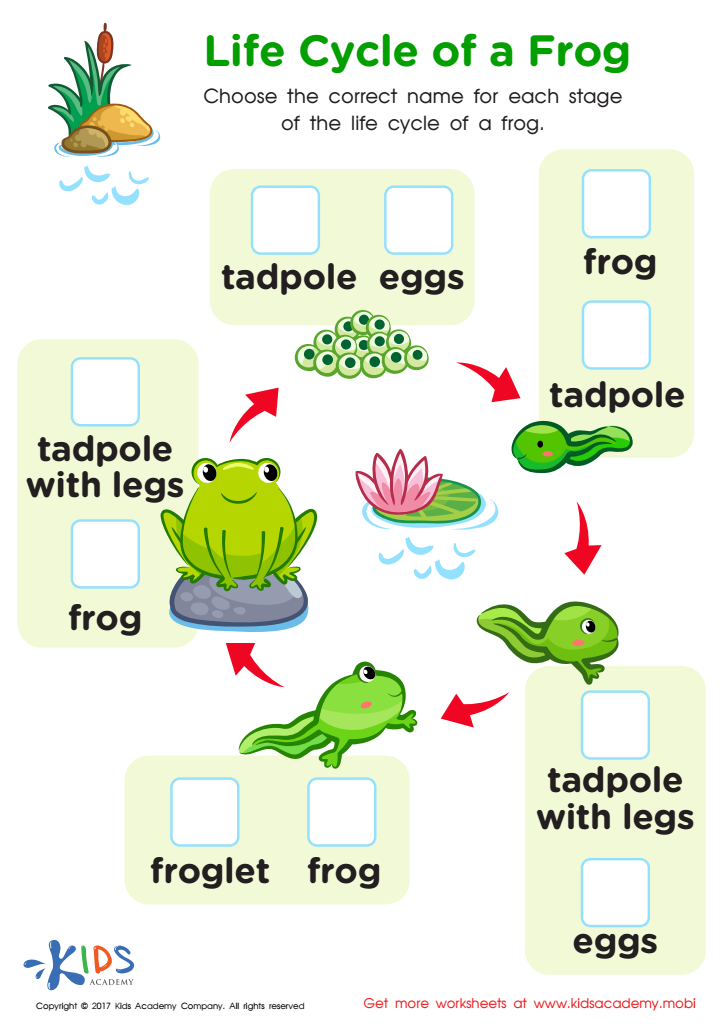
Life Cycle Frog Printable
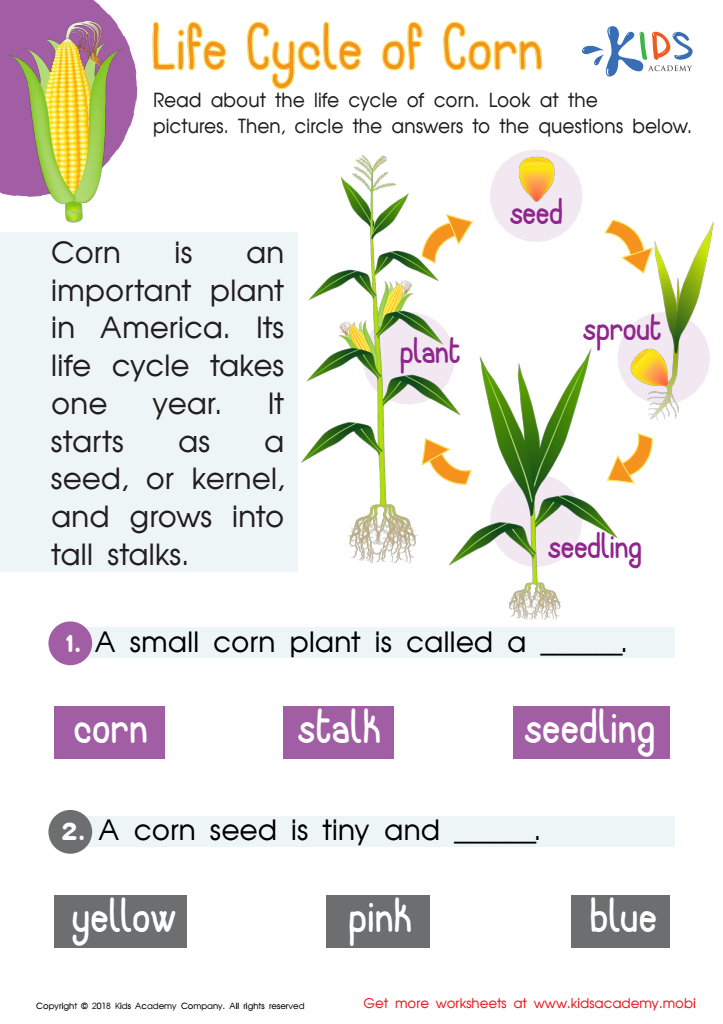
Life Cycle of Corn Worksheet
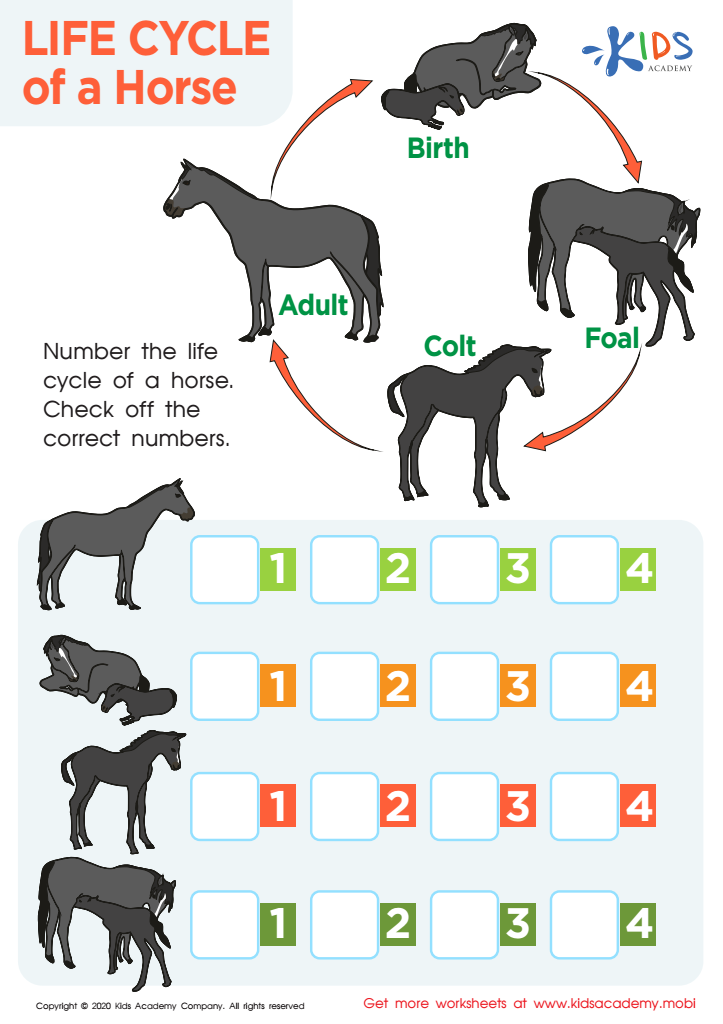
Life Cycle of a Horse Worksheet




.jpg)



Understanding life cycles for children aged 3-8 is fundamental for several significant reasons. Firstly, it fosters a sense of curiosity and appreciation for the natural world. Introducing the basic concepts of life cycles – such as those of plants, insects, and animals – helps children realize that life is a series of stages. This nurtures empathy and respect for living things, contributing to environmental stewardship from an early age.
Secondly, learning about life cycles can enhance scientific thinking and critical reasoning. By observing patterns, changes, and stages, children can develop their inquiry skills, learn to make predictions, and understand cause-and-effect relationships. This foundational knowledge can spark interest in biology and other sciences.
Additionally, connecting life cycle lessons to hands-on activities like planting seeds or watching caterpillars turn into butterflies can be engaging and memorable. These practical experiences encourage active participation and make learning enjoyable.
Moreover, discussing life cycles can support emotional development and resilience. Children learn that change and growth are natural parts of life, which can help them navigate their personal experiences of change, like starting school or moving homes.
In conclusion, parents and teachers should prioritize life cycle education to cultivate a well-rounded, scientifically curious, and emotionally resilient generation.








