Understanding number patterns Worksheets for Ages 3-8
6 filtered results
-
From - To
Unlock the world of numbers with our "Understanding Number Patterns Worksheets for Ages 3-8." Designed to captivate young minds, these worksheets offer a fun and engaging way to strengthen critical math skills. Through colorful and creative exercises, children will learn to identify, predict, and extend simple number patterns, laying a solid foundation for future mathematical learning. Perfect for preschoolers and early elementary students, these resources support cognitive development, logical thinking, and problem-solving abilities. Dive in today and watch your child’s confidence grow as they master the exciting world of number patterns. Explore our collection now!
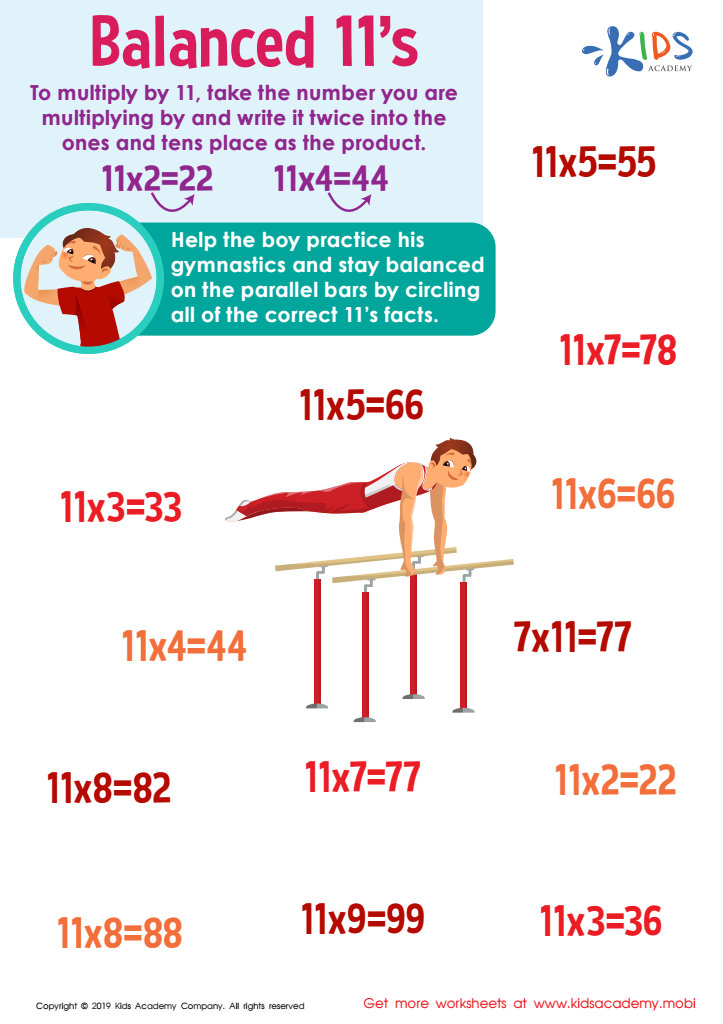
Balanced 11s Worksheet
 Assign to My Students
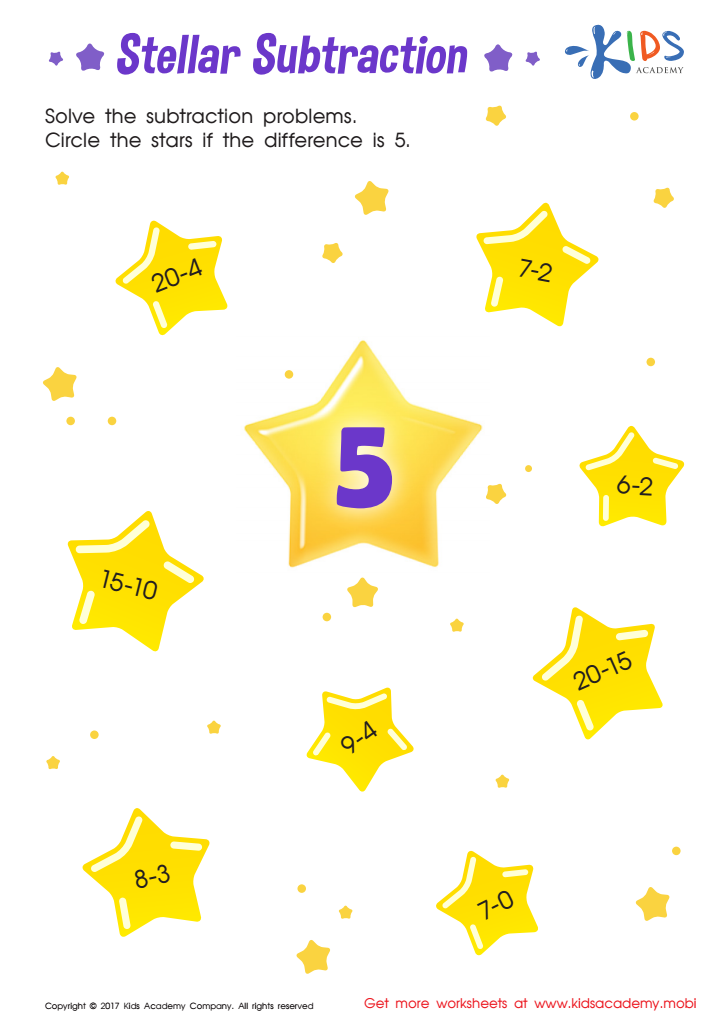
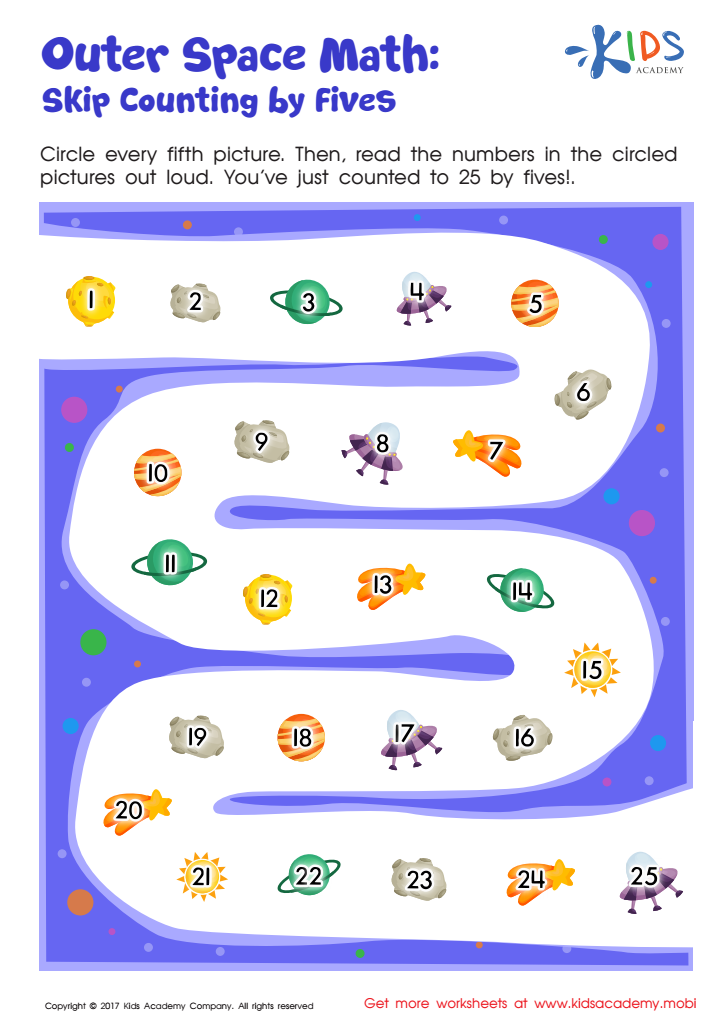
Skip Counting by 5s: Outer Space Math Printable
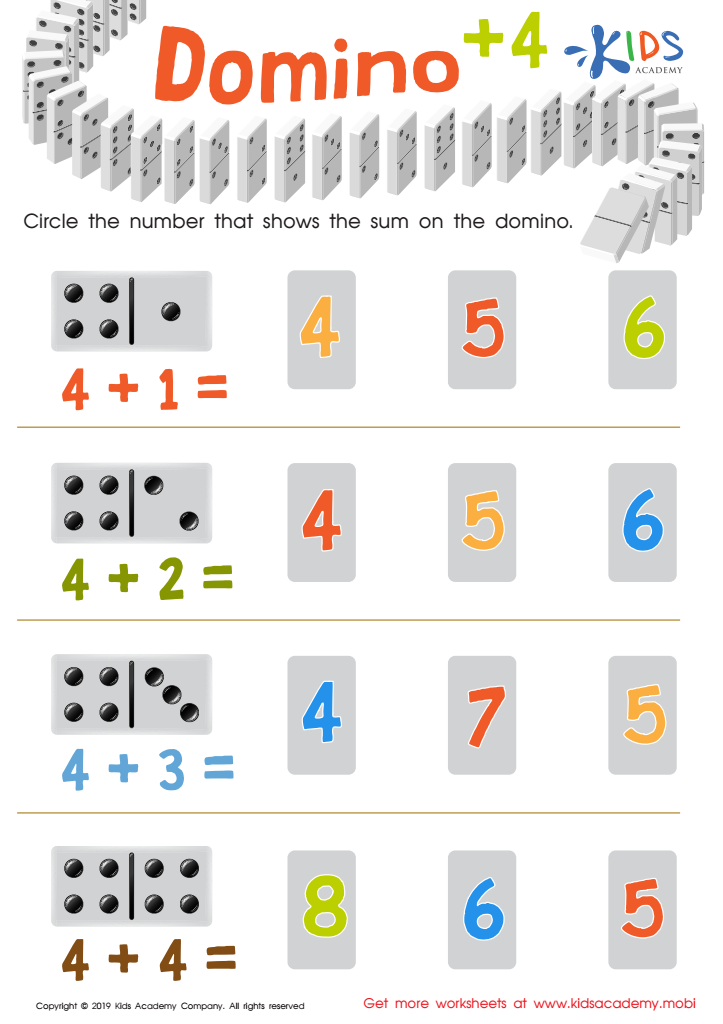
Domino +4 Worksheet
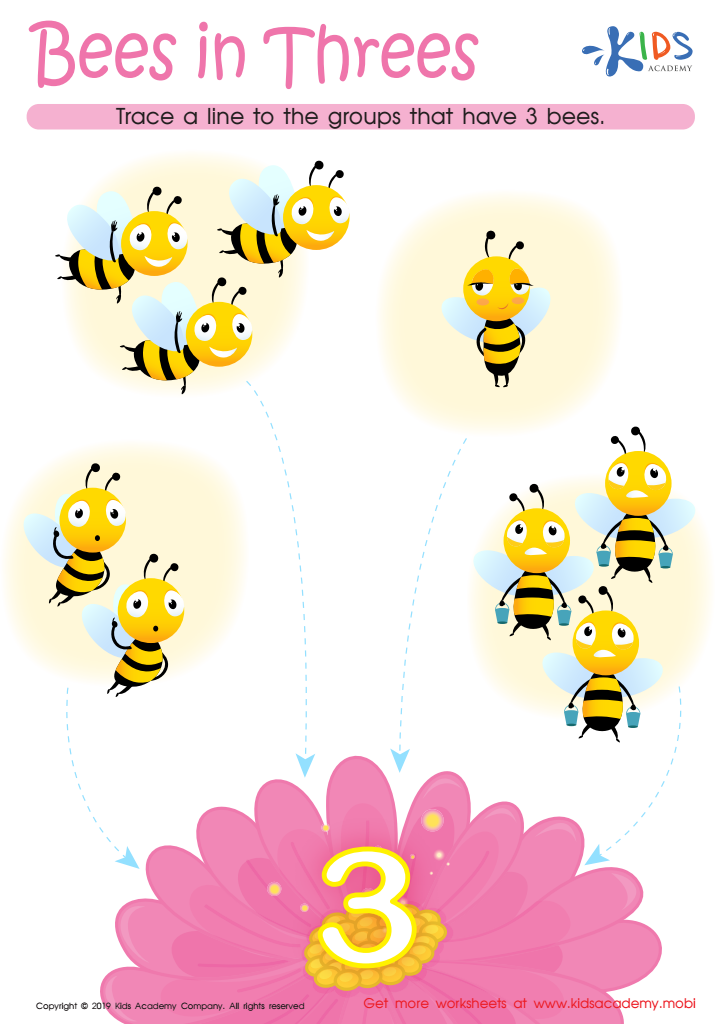
Bees in Threes Worksheet





.jpg)
Understanding number patterns is fundamental for young children, ages 3-8, as it lays the groundwork for mathematical proficiency and critical thinking skills. At this developmental stage, children are naturally inquisitive and capable of recognizing patterns in their environment. By cultivating this ability, parents and teachers can significantly enhance a child's cognitive development.
Number patterns help children grasp essential mathematical concepts such as arithmetic, algebra, and geometry. Recognizing sequences, for example, fosters their ability to predict and understand future numbers, a critical skill in solving math problems. This early exposure can prevent math anxiety, as children feel more confident and competent during problem-solving activities.
Beyond mathematics, pattern recognition strengthens a child's logical thinking and reasoning abilities. It encourages them to make connections, form hypotheses, and develop a structured approach to solving problems. These skills are transferable across various disciplines, including science, language arts, and even music, nurturing a well-rounded intellectual development.
Moreover, engaging with number patterns in a positive, supportive environment promotes a love for learning and instills perseverance. By integrating pattern-based activities into everyday learning, parents and teachers help children to not only master numeracy but also to build a strong foundation for lifelong academic success and critical thinking.








