Understanding number sequence Worksheets for Ages 3-8
8 filtered results
-
From - To
Boost your child’s numeracy with our "Understanding Number Sequence Worksheets for Ages 3-8". These specially designed worksheets from Kids Academy help young learners grasp counting, pattern recognition, and number order. Through vibrant, engaging activities, children develop essential math skills in a fun and interactive way. Perfect for preschool to early elementary students, our worksheets cater to varied learning paces, ensuring every child can confidently follow number sequences. Whether in classroom settings or homeschooling environments, our printable resources will inspire a love for numbers and build a solid mathematical foundation. Make learning number sequences enjoyable with Kids Academy!
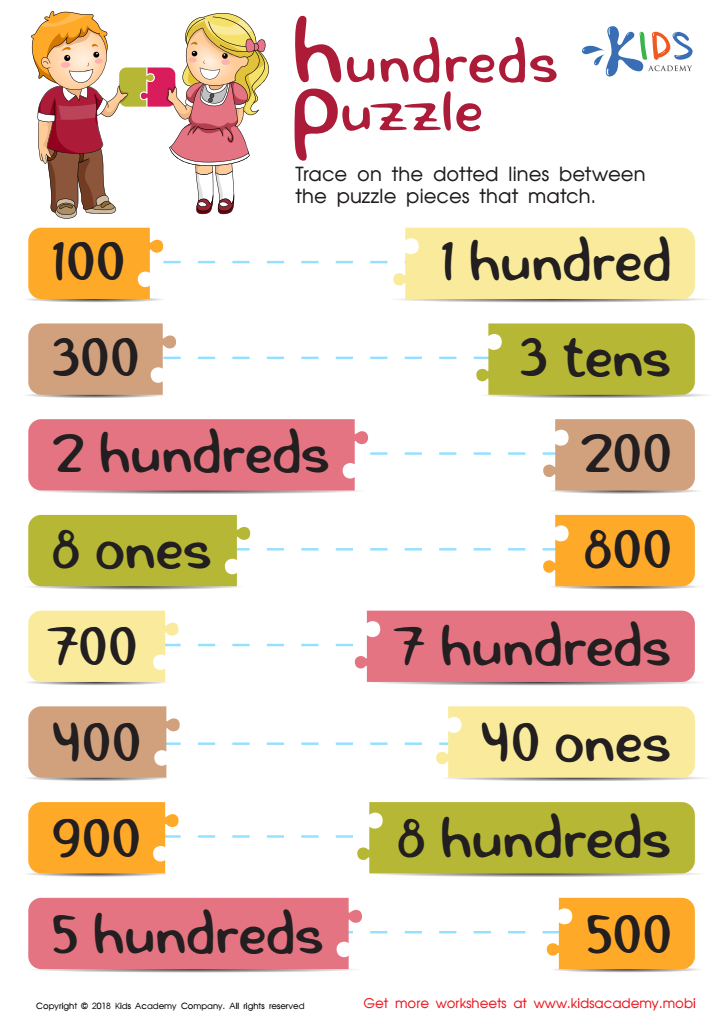
Hundreds Puzzle Worksheet
 Assign to My Students
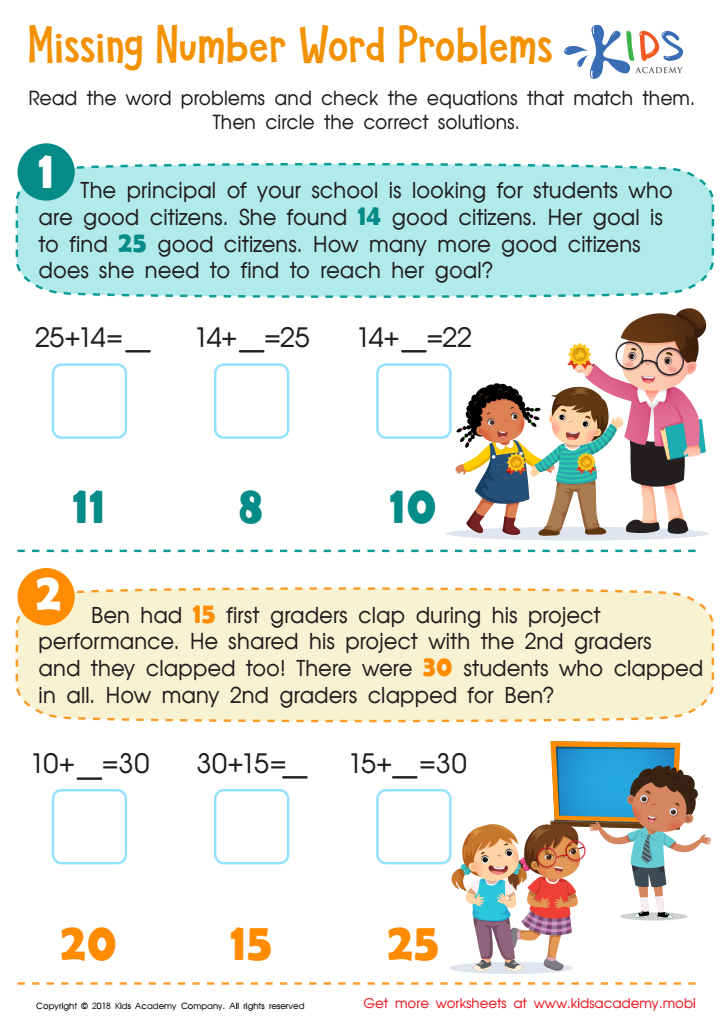
Missing Number Word Problems Worksheet
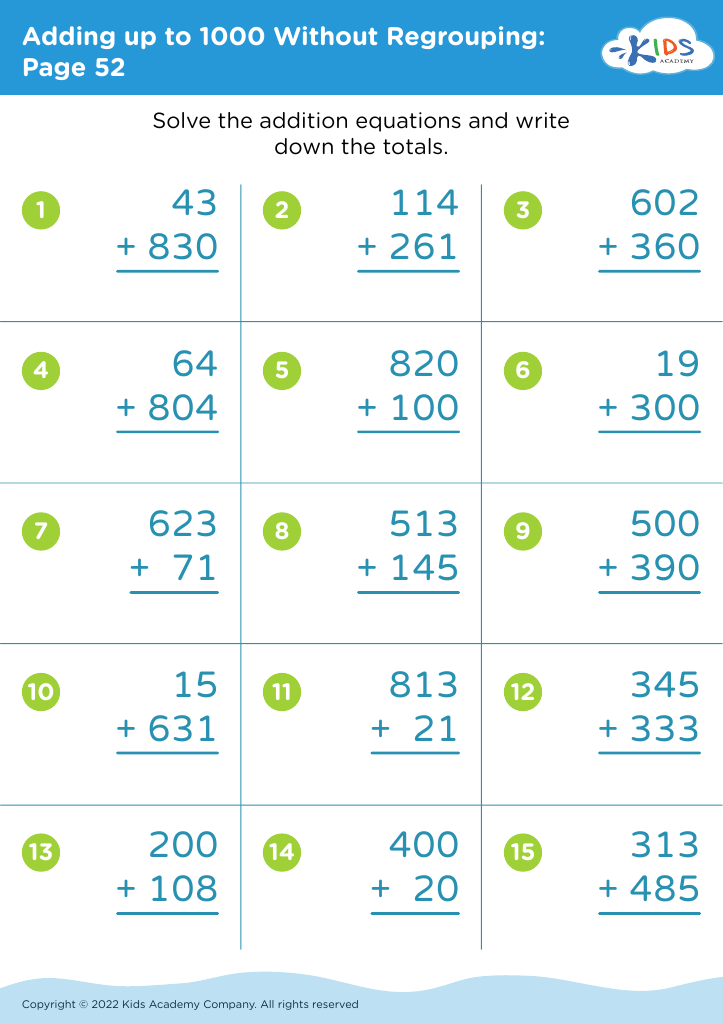
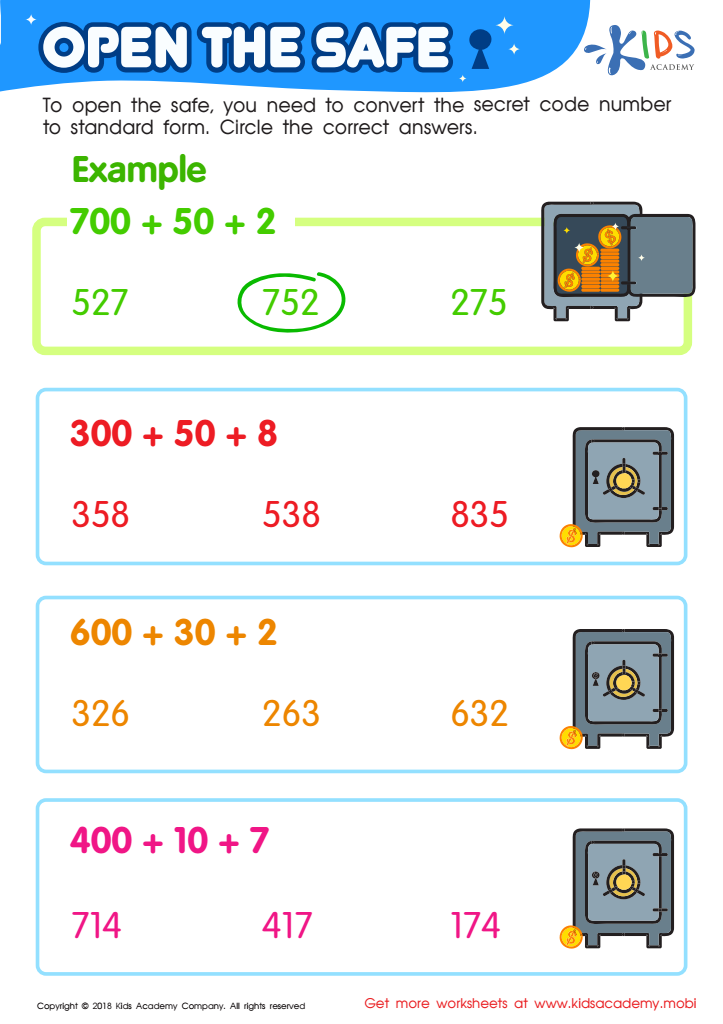
Open the Safe Worksheet
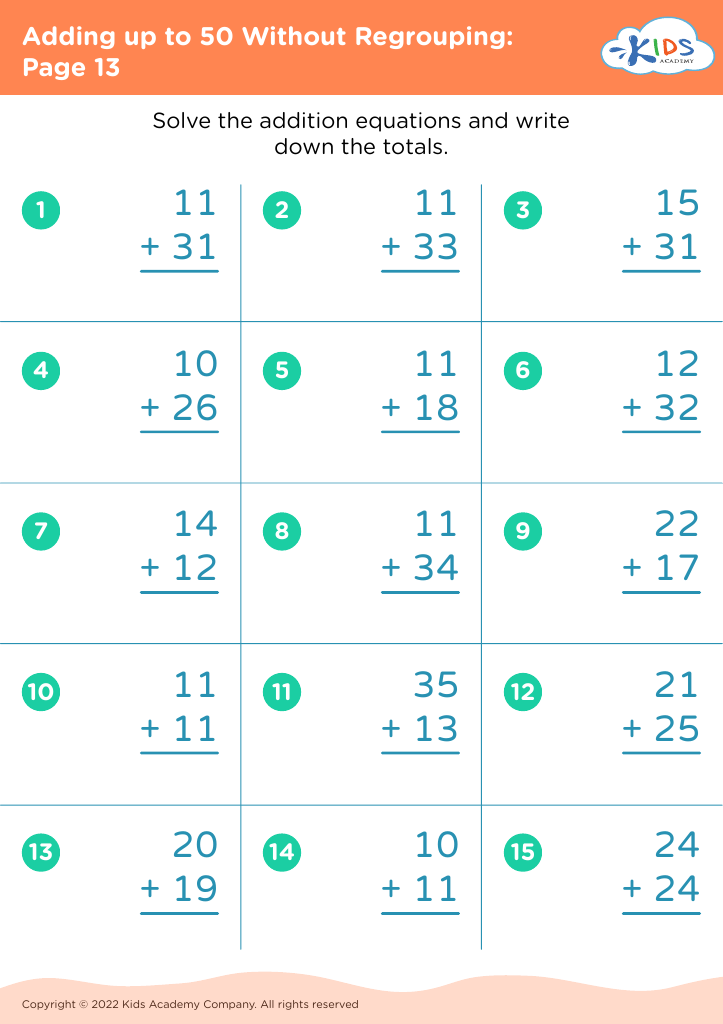
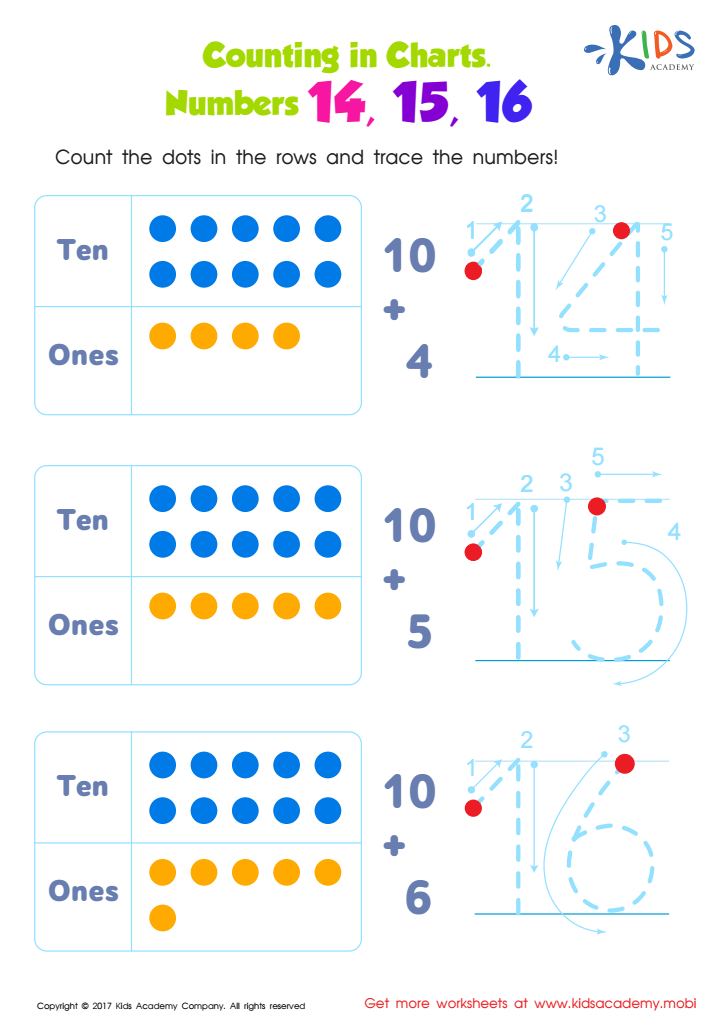
Number Tracing Worksheet






.jpg)

Understanding number sequences is crucial for young children (ages 3-8) as it lays the foundation for essential math skills and cognitive development. For parents and teachers, recognizing the importance of this concept can significantly impact a child’s future academic success.
Firstly, learning number sequences helps in building a strong understanding of basic counting, which is foundational in mathematics. It teaches children the order and structure of numbers, enhancing their ability to comprehend and predict number patterns, a skill pertinent for advanced mathematical concepts such as addition, subtraction, multiplication, and division.
Secondly, grasping number sequences aids in developing problem-solving and critical thinking abilities. As children recognize and generate patterns, they stimulate their logical reasoning, improve memory, and gain confidence in tackling more complex problems. These skills are not only vital for math but also for other areas of learning and everyday life.
Furthermore, understanding number sequences enhances reading readiness. Children who can discern patterns are better equipped to decode text and follow through sequences in storytelling.
Investing time in teaching number sequences at an early age facilitates smoother transitions into formal education, fosters a positive attitude towards learning, and contributes to overall cognitive development. Teachers and parents play a crucial role in cultivating these early skills to prepare children for future educational endeavours.








