Understanding Sequences Worksheets for Ages 3-8 - Page 2
29 filtered results
-
From - To
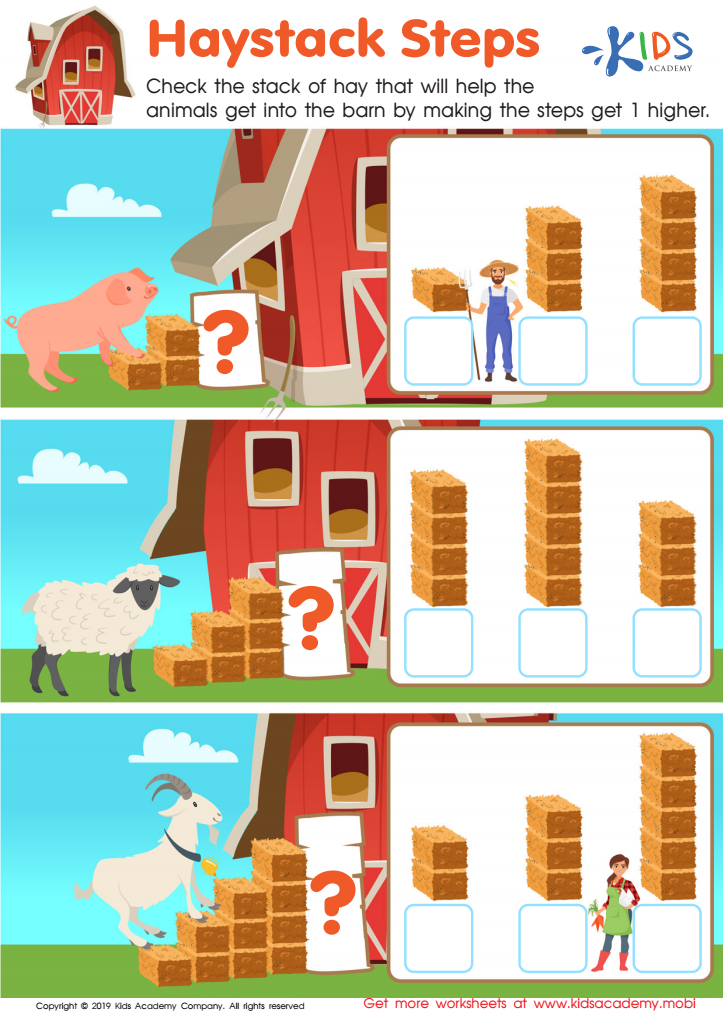
Haystack Steps Worksheet
 Assign to My Students








Understanding sequences is a fundamental concept in early childhood education that helps children develop critical thinking and problem-solving skills. For parents and teachers, prioritizing sequence understanding is crucial for several reasons.
Firstly, sequences play a vital role in language development. When children understand chronological order, they can better comprehend storytelling, follow instructions, and later articulate their thoughts clearly. Engaging in activities like arranging story events encourages this skill.
Secondly, understanding sequences is foundational for mathematical thinking. Concepts such as counting, patterns, and problem-solving involve sequential reasoning. When children learn to recognize patterns and sequences, they build a strong base for more complex mathematical operations later on.
Moreover, sequencing influences cognitive and social-emotional growth. By arranging tasks or events, children learn planning and organizational skills, boosting their confidence and independence. It also helps them understand cause-and-effect relationships, essential for everyday interactions.
Ultimately, when parents and educators emphasize sequencing skills, they pave the way for children's holistic development. By fostering these skills, adults empower children to navigate both academic and real-world challenges, ensuring they are well-prepared for future learning journeys. Investing time in understanding sequences is thus an investment in children's lifelong success.








