Understanding timelines Worksheets for Ages 3-8
7 filtered results
-
From - To
Discover an engaging world of history and storytelling with our "Understanding Timelines Worksheets for Ages 3-8." These printable worksheets simplify the concept of time, helping young learners grasp sequences of events in a fun, interactive way. Perfect for preschool to elementary-age children, our worksheets use colorful visuals and relatable scenarios to teach chronology, enhancing their understanding of past, present, and future. Whether exploring personal milestones, daily routines, or historical events, these worksheets nurture critical thinking and organizational skills, making learning an adventure. Cultivate your child's time-telling talents today with our expertly crafted, age-appropriate timeline worksheets!
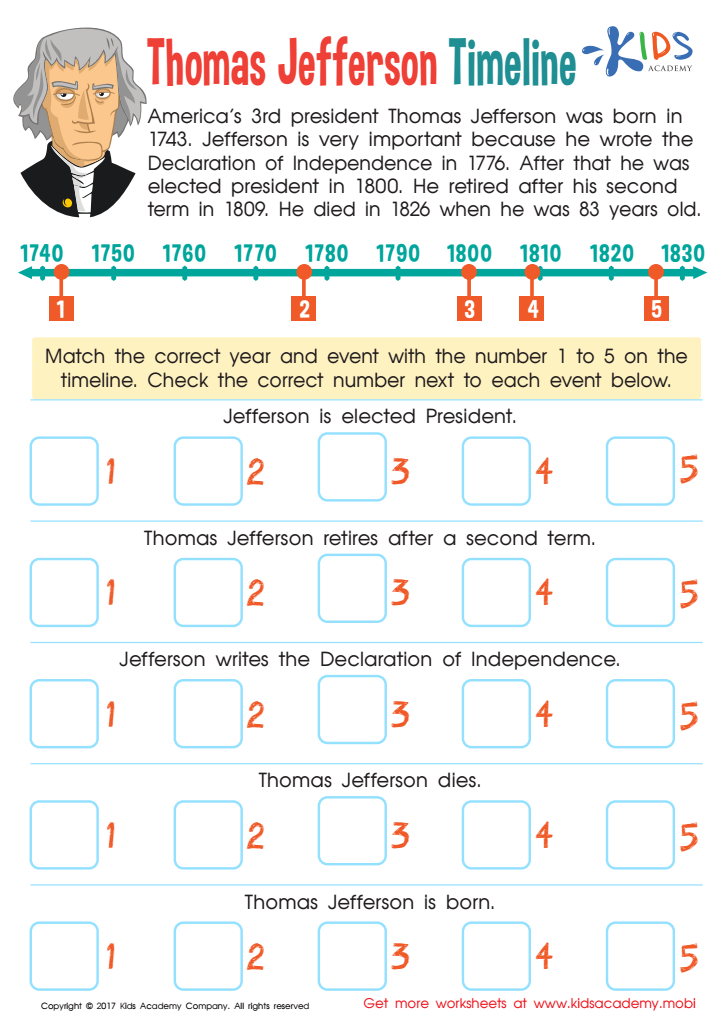
Thomas Jefferson Timeline Worksheet
 Assign to My Students
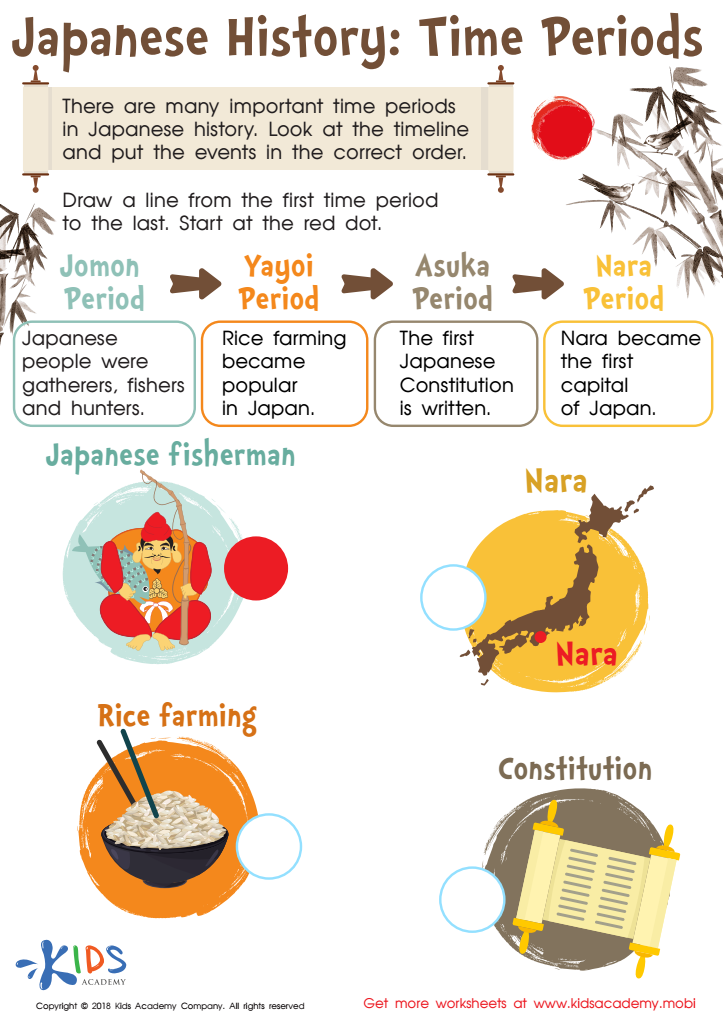
Japanese History: Time Periods Worksheet
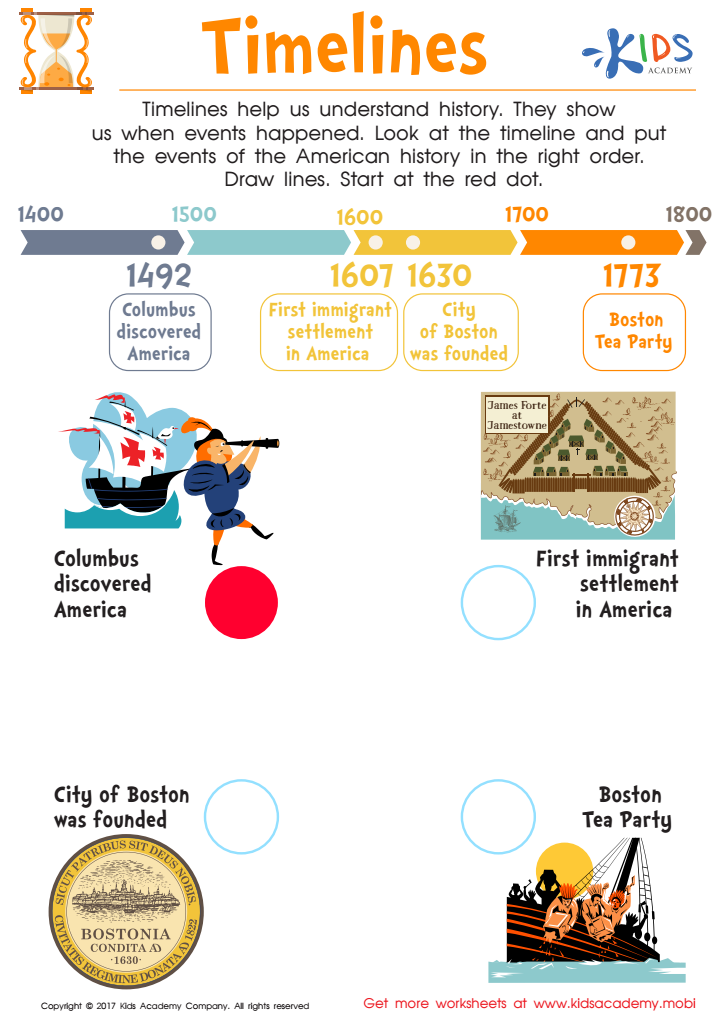
American History Timeline Worksheet
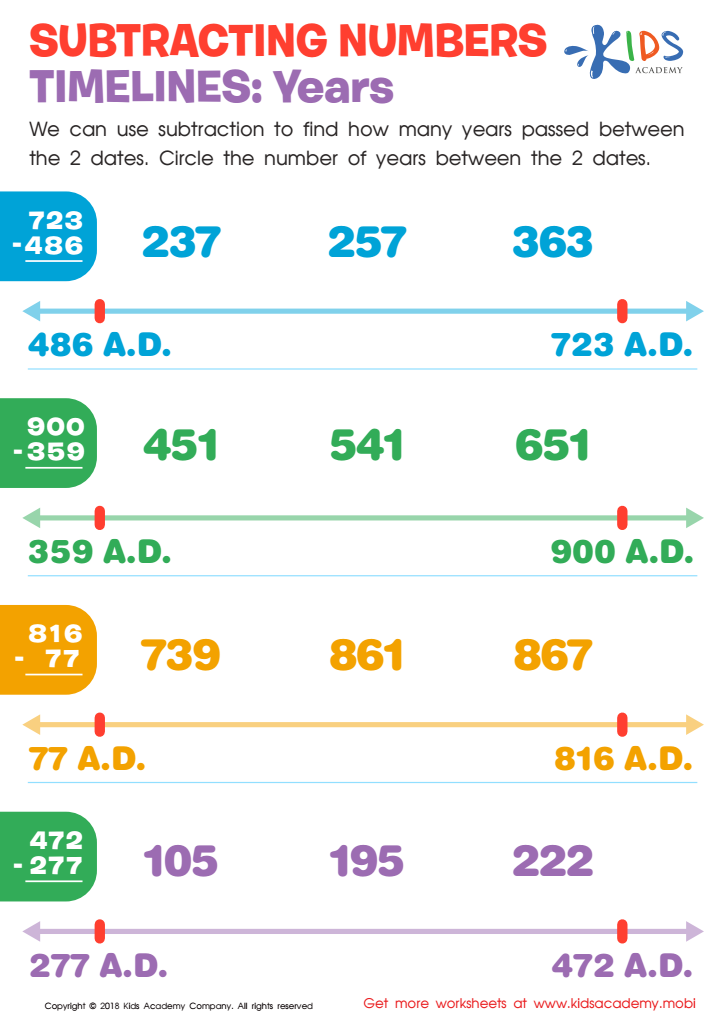
Subtracting Numbers Timelines: Years Worksheet
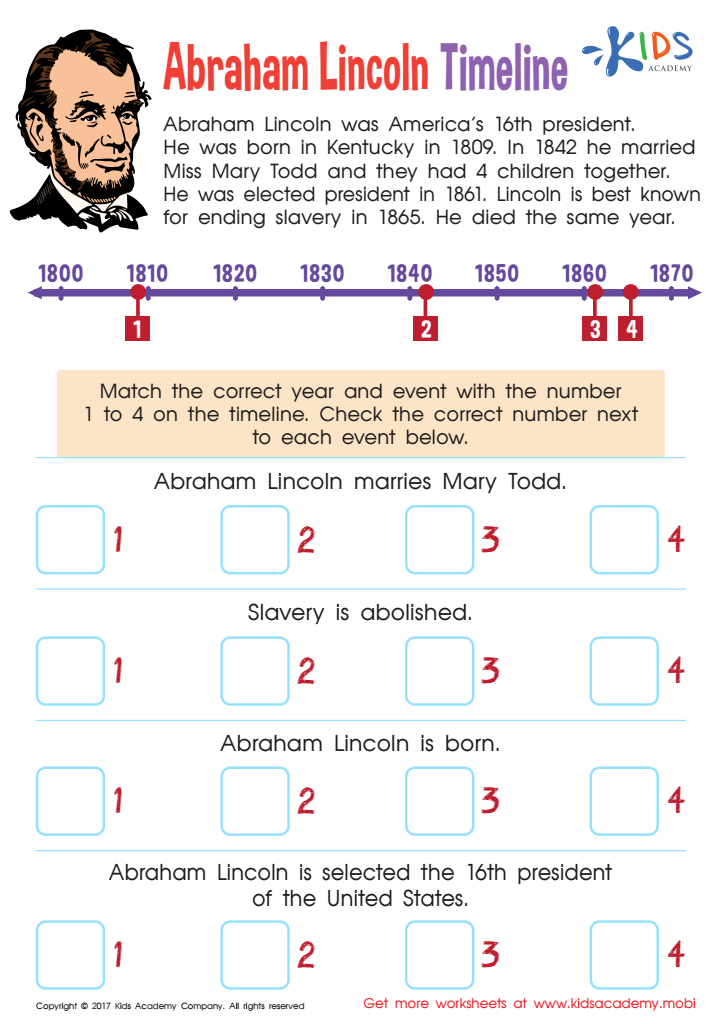
Abraham Lincoln Timeline Worksheet
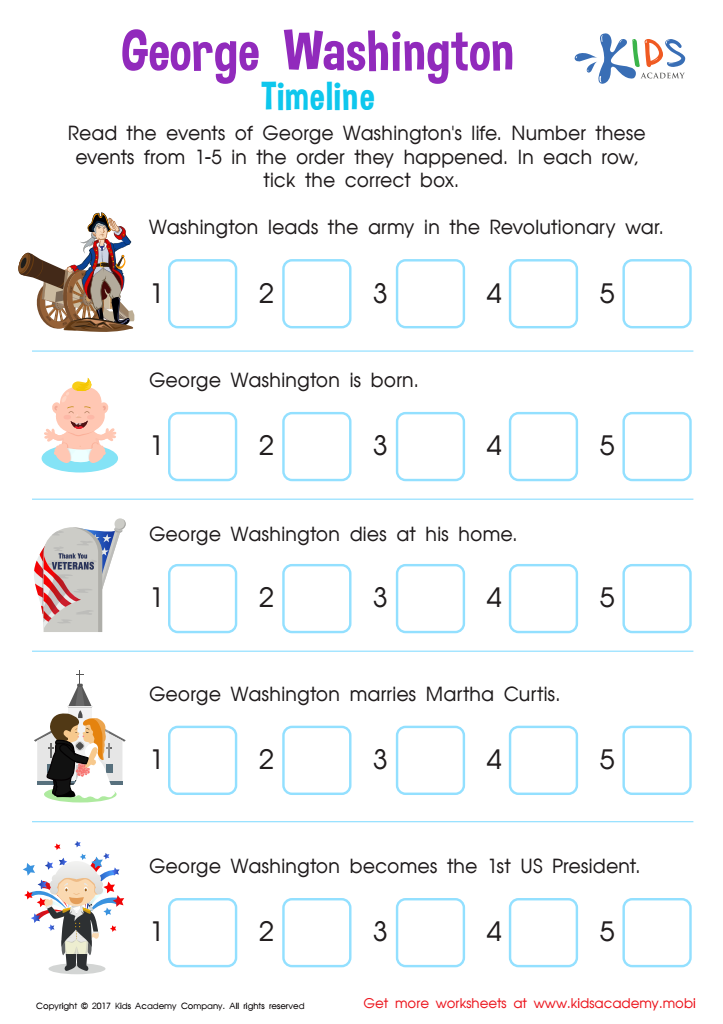
George Washington Timeline Worksheet







Understanding timelines for children aged 3-8 is crucial for both parents and teachers as it aids in their developmental milestone monitoring, educational planning, and fostering a nurturing environment. This age range encompasses critical growth phases across physical, cognitive, and emotional domains.
Firstly, at ages 3-8, children undergo significant brain development. Understanding these timelines helps caregivers introduce age-appropriate challenges that can stimulate cognitive abilities, language development, and problem-solving skills. For instance, knowing when children typically learn to read can guide timely intervention if a child lags, ensuring they don't fall behind.
Secondly, timeless offer insight into social and emotional development. Recognizing stages when children typically refine skills like sharing or controlling impulses assists in cultivating a supportive environment, promoting healthy interactions, and instilling positive behaviors.
Educational planning also benefits from understanding developmental timelines. Teachers can design curricula that align with students’ readiness—introducing basic math concepts when children begin to grasp numbers or initiating more complex activities as fine motor skills advance.
Lastly, awareness of typical timelines can alleviate parental anxiety. Parents better understand what to expect, set realistic goals, and avoid undue pressure, fostering positive self-esteem and a love for learning. Therefore, comprehending these timelines ensures comprehensive and holistic development for young children, serving their long-term success.








