Understanding vowel sounds Worksheets for Ages 3-8
4 filtered results
-
From - To
Explore our engaging "Understanding Vowel Sounds Worksheets" designed specifically for children aged 3-8! Perfect for early learners, these worksheets help kids master the essential vowel sounds through fun and interactive activities. Featuring colorful illustrations and playful exercises, each worksheet strengthens phonetic skills, enhancing reading and spelling abilities. Whether you're a parent, teacher, or caregiver, our resources provide the perfect foundation for your child's literacy journey. With easy-to-follow instructions and whimsical themes, learning vowels becomes an enjoyable experience. Download our worksheets today and help your child unlock the magic of language while building confidence and a love for learning!
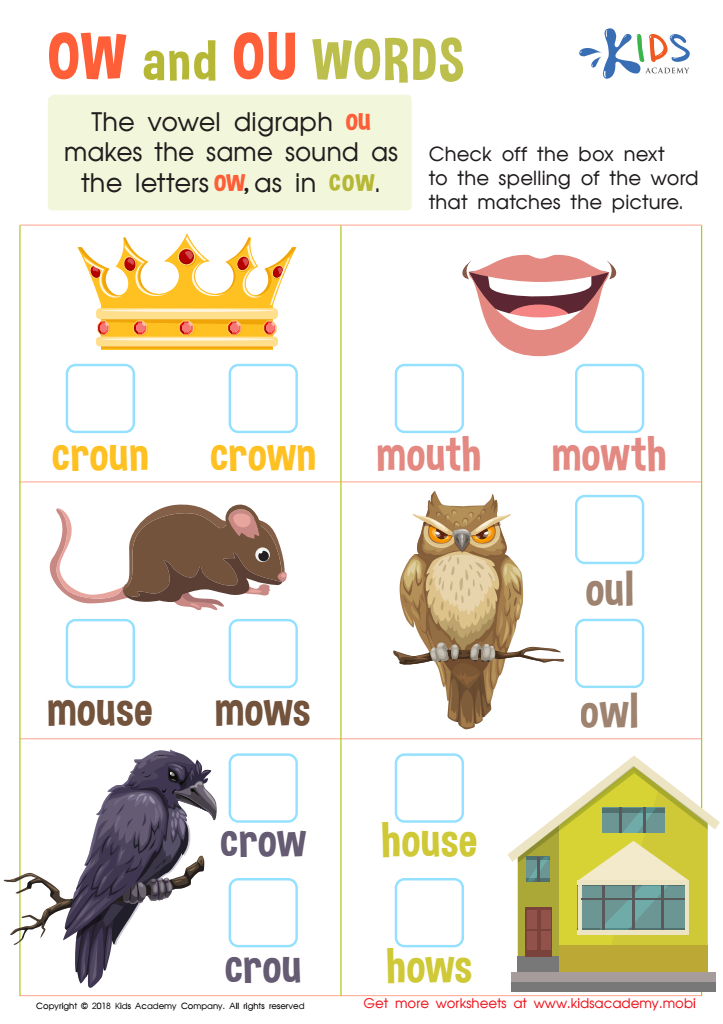
Reading: OW and OU Words Worksheet
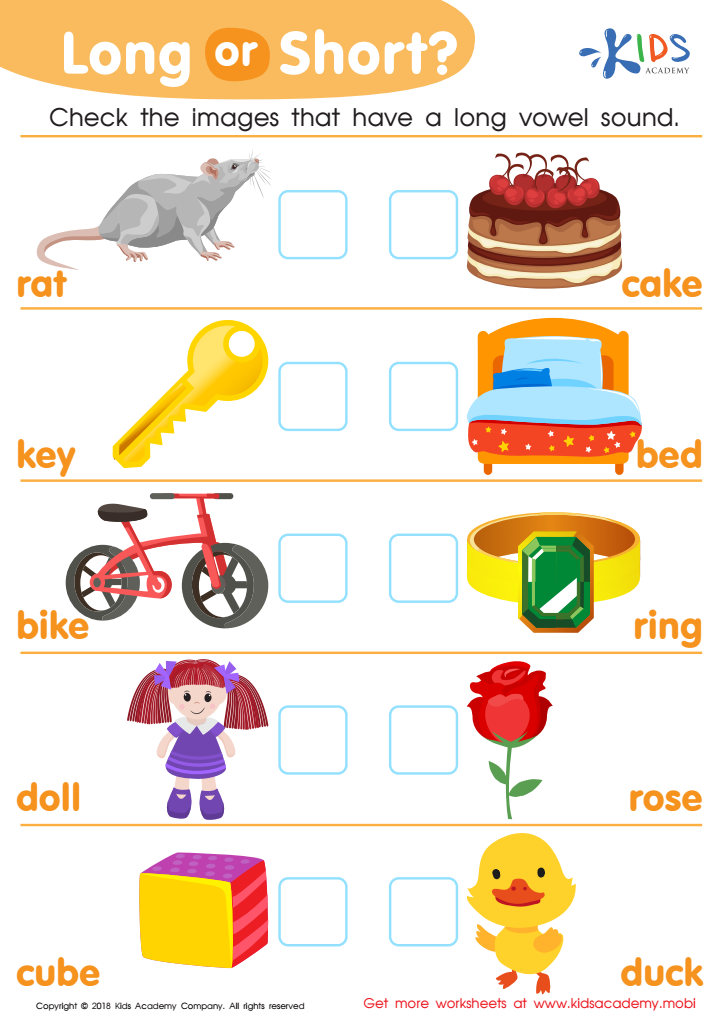
Long or Short Reading Worksheet
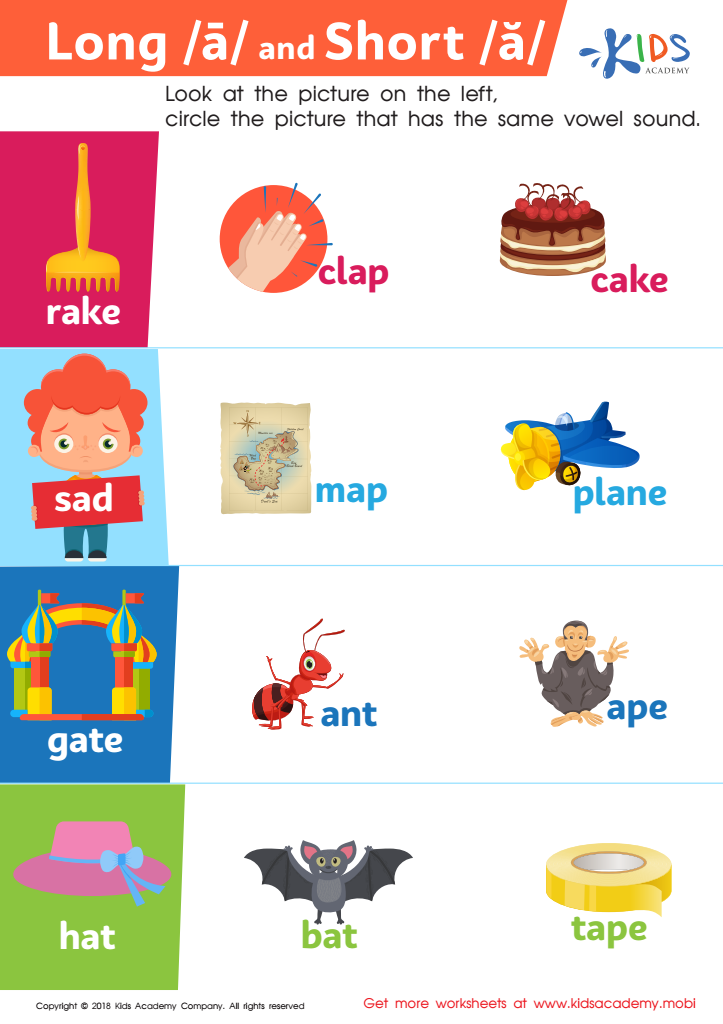
Reading: Long a and Short a Worksheet
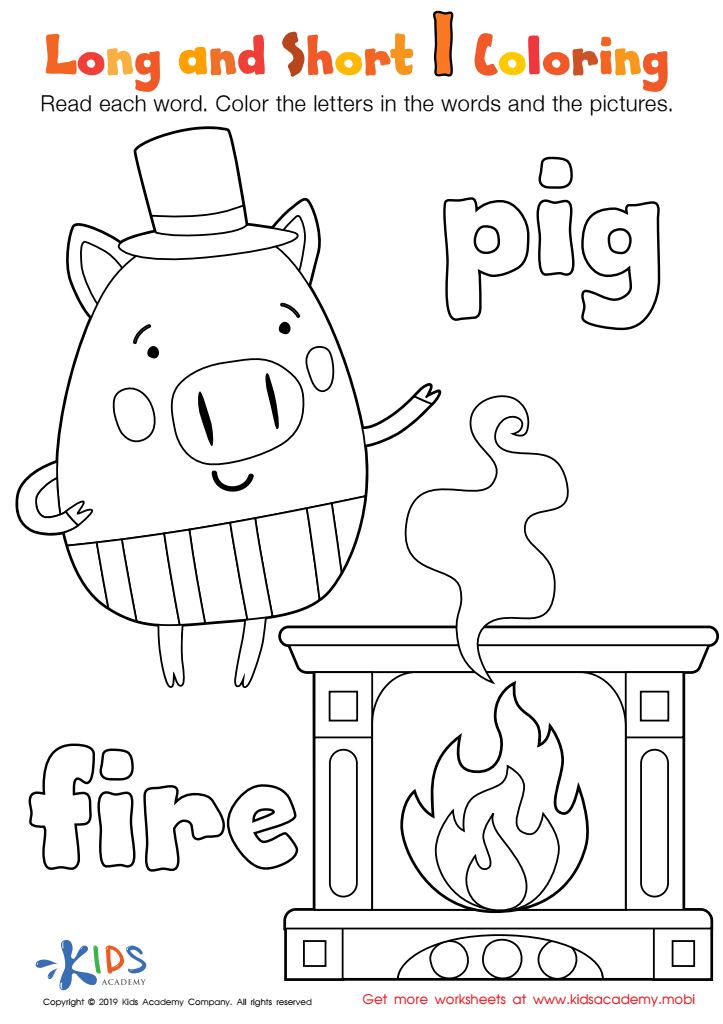
Long and Short I Worksheet
 Assign to My Students








Understanding vowel sounds is crucial for children aged 3-8, as it lays the foundation for literacy and language development. Vowel sounds are the building blocks of words and play a vital role in phonics, which is essential for reading and writing. When children grasp the different vowel sounds, they become more proficient in decoding words, spelling, and ultimately enhancing their comprehension.
For parents and teachers, caring about vowel sounds means recognizing the impact these sounds have on a child's confidence and academic success. Early exposure to vowel sounds—through songs, games, and storytelling—can stimulate phonemic awareness, allowing children to distinguish between sounds and improve their oral language skills. This phonemic awareness is directly linked to successful reading abilities in later grades.
Moreover, consistent practice with vowel sounds encourages children to explore language in a fun and engaging way, heightening their curiosity for learning. For educators, incorporating vowel sound activities into daily lessons fosters a supportive environment where children can thrive. Ultimately, prioritizing vowel sound understanding equips young learners with essential tools that impact their educational journey and lifelong communication skills. Supporting this foundational knowledge is a vital responsibility and benefits both children and the community as a whole.








