
Visual representation Worksheets for Ages 3-8
3 filtered results
Difficulty Level
Grade
Age
-
From - To
Subject
Activity
Standards
Unlock the power of learning with our Visual Representation Worksheets for kids aged 3-8. These engaging and educational worksheets are designed to enhance young children's understanding of key concepts through vivid illustrations and interactive activities. By combining fun visuals with foundational learning skills, our worksheets help develop critical thinking, pattern recognition, and problem-solving abilities in a playful way. Perfect for both classroom settings and home learning, these printables make education an exciting adventure. Give your little ones a head start on their educational journey with Kids Academy's expertly crafted visual representation resources, ensuring a solid base for future learning success.
Favorites
With answer key
Interactive
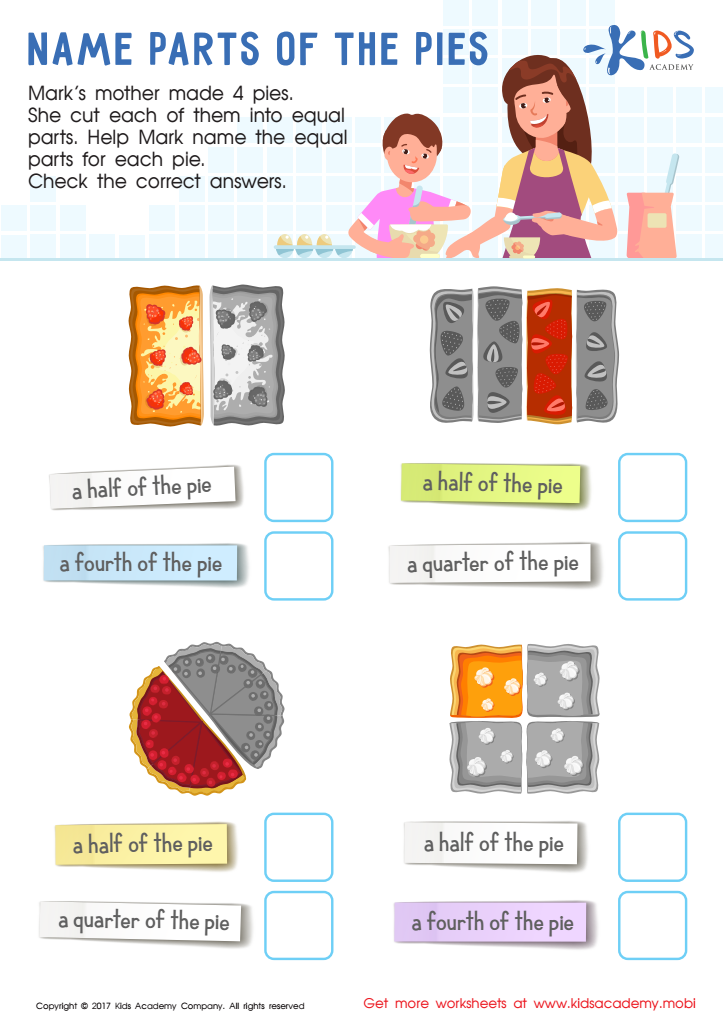
Name Parts of the Pies Worksheet
Mark and his mom are making pies. He's dividing them into equal parts and needs help to name them. Let your students aid him by checking the correct answer for each picture. Have them think of their own roles in the kitchen when they're done. How do they help their moms?
 Assign to My Students
Name Parts of the Pies Worksheet
Worksheet
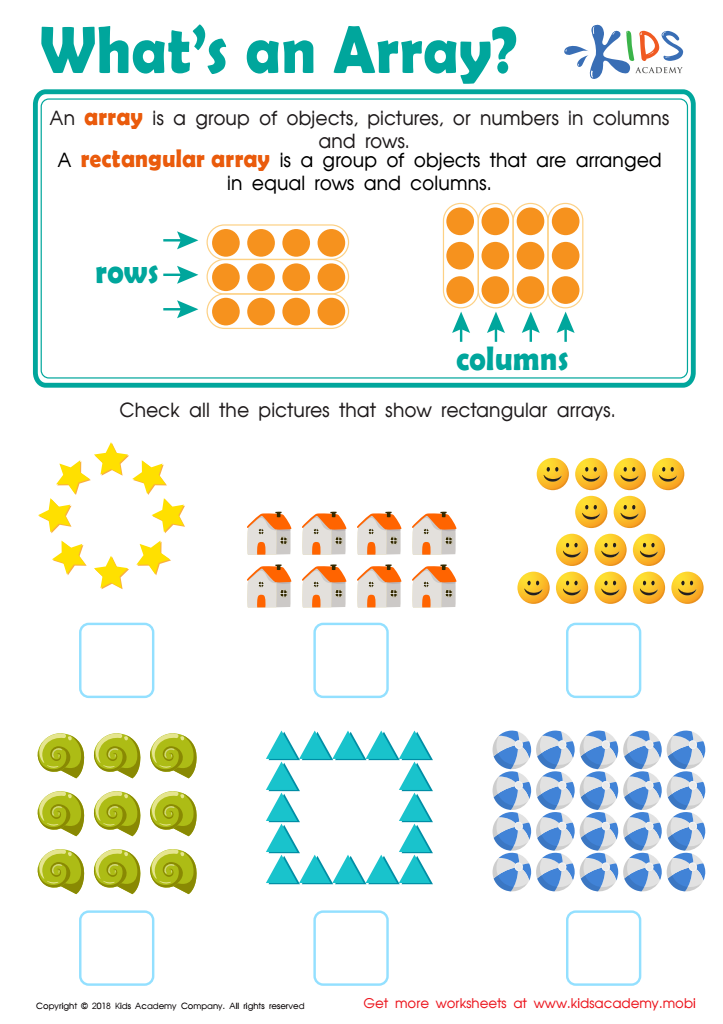
What's an Array? Worksheet
Explain to your child that an array is a group of objects, pictures, or numbers in columns and rows. Show them a rectangular array is a group of objects in equal rows and columns. Guide them to check the pictures in the worksheet to spot any rectangular arrays. Help them remember this concept.
What's an Array? Worksheet
Worksheet
Join Kids Academy for Free
Who is primarily going to use this learning content?







Parents and teachers should care deeply about visual representation for children ages 3-8 because it significantly impacts their learning and development. At this early age, children's cognitive abilities are rapidly evolving. Visual representations such as pictures, diagrams, charts, and icons help make abstract concepts more concrete. When students, for instance, see pictures alongside words in storybooks, it aids their language development and comprehension skills. Visuals facilitate better memory retention, allowing young children to grasp and remember new information more effectively.
Additionally, visual learning can cater to diverse learning styles, making it crucial for inclusive education. Some children may find it challenging to follow verbal instructions alone, and visuals can provide the necessary cues to improve understanding. Interactive visual tools like puzzles, flashcards, and educational apps also make learning engaging and fun, fostering a positive association with education.
Furthermore, visuals aid in critical thinking and problem-solving skills. For example, interpreting a chart or assembling a picture puzzle stimulates cognitive processes such as recognizing patterns, forming connections, and analyzing elements.
Visual representation is not merely about entertaining children; it is a fundamental pedagogical tool that enriches their educational experience, enhances comprehension, and supports holistic development during these formative years.








