Basic geometry understanding 2D Shapes Worksheets for Ages 3-8
4 filtered results
Difficulty Level
Grade
Age
-
From - To
Subject
Activity
Standards
Foster foundational geometry skills in young learners with our "Basic Geometry Understanding: 2D Shapes Worksheets" tailored for ages 3-8. Our engaging and educational worksheets help children identify, trace, and draw various 2D shapes such as circles, squares, triangles, and more. These activities build essential skills in recognition, spatial reasoning, and problem-solving. Perfect for both classroom and home use, our worksheets make learning fun and interactive. Whether your child is just starting or needs extra practice, our collection supports their journey toward mastering basic geometric concepts while boosting their confidence and academic growth.
Favorites
With answer key
Interactive
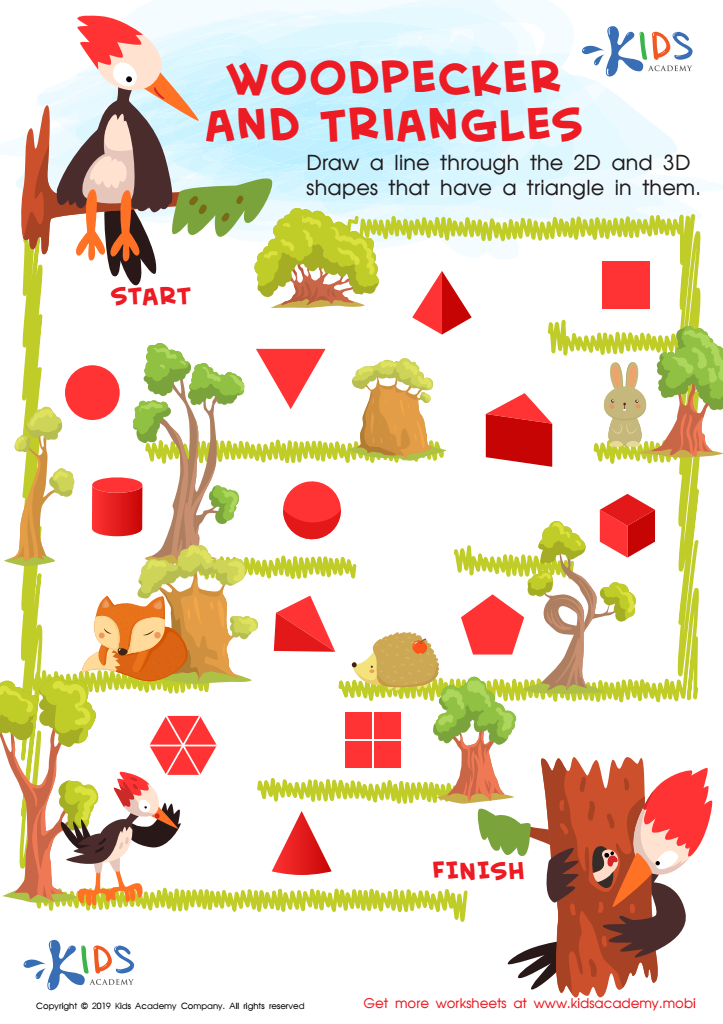
Woodpecker and Triangles Worksheet
Woodpeckers peck wood, and this printout helps kids learn about triangles. Ask your kindergartners to draw a triangle, then draw a line through the shapes that have a triangle in them to help the woodpecker get out of the maze.
 Assign to My Students
Woodpecker and Triangles Worksheet
Worksheet


Shape Connections Worksheet
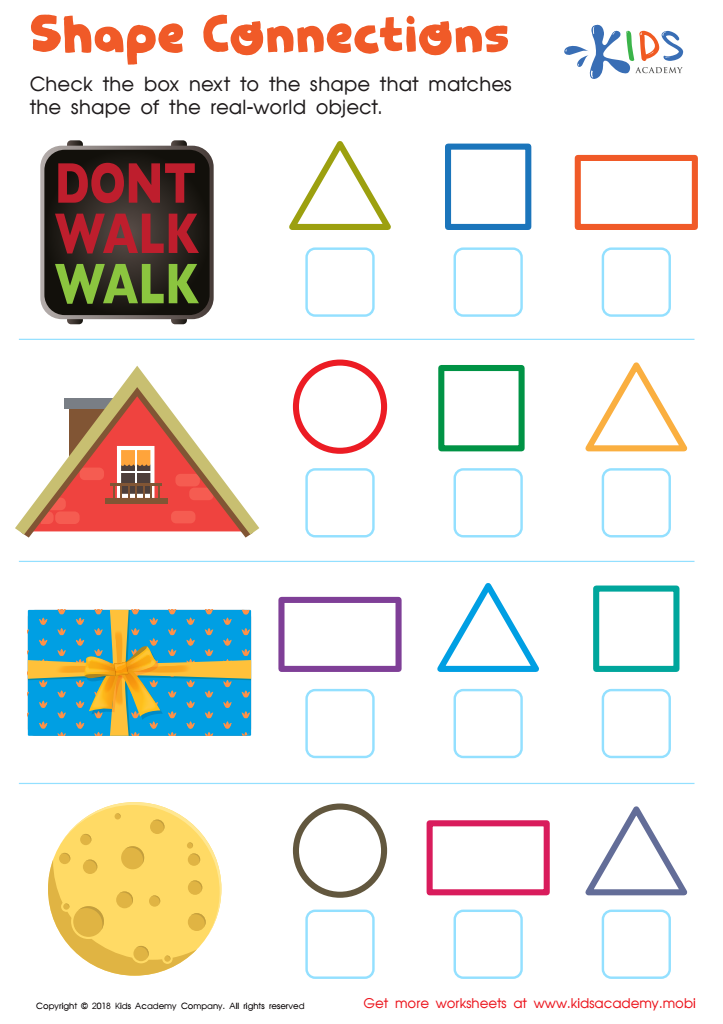
Geometric shapes are all around us and this fun worksheet brings it to life. Kids will match real-world pictures with the corresponding basic shapes, connecting how math is used in various aspects of daily life. A great way to reinforce these concepts!
Shape Connections Worksheet
Worksheet
Geometry Review Printable
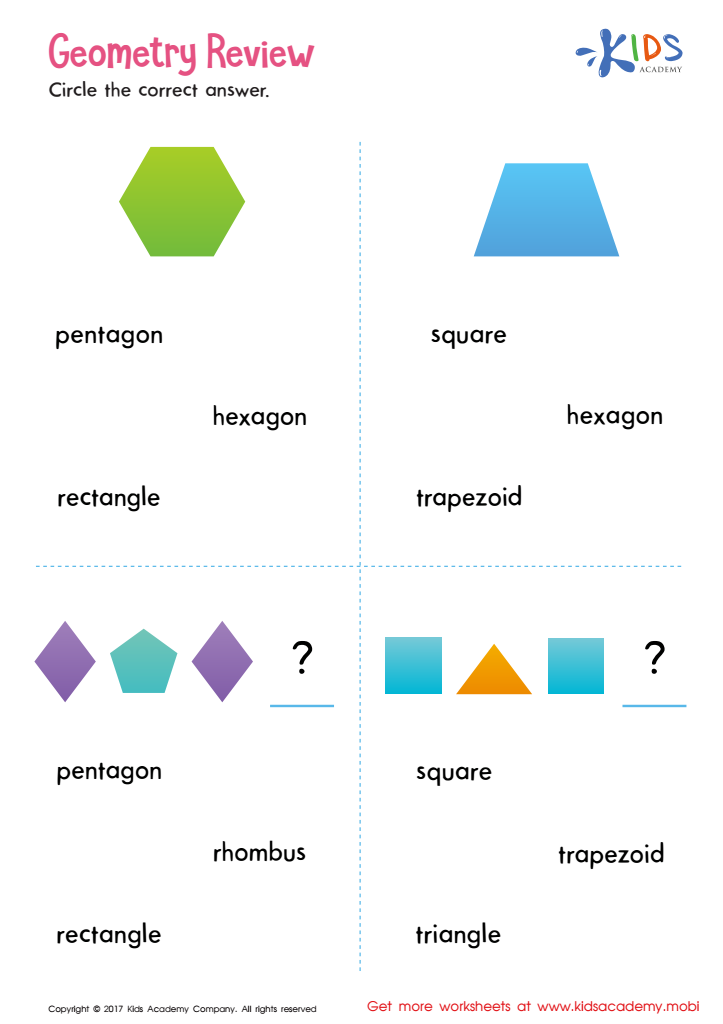
Repetition is key to success; give your child the practice they need with this geometry worksheet.
Geometry Review Printable
Worksheet
Drawing Ovals And Triangles with Fun Printable
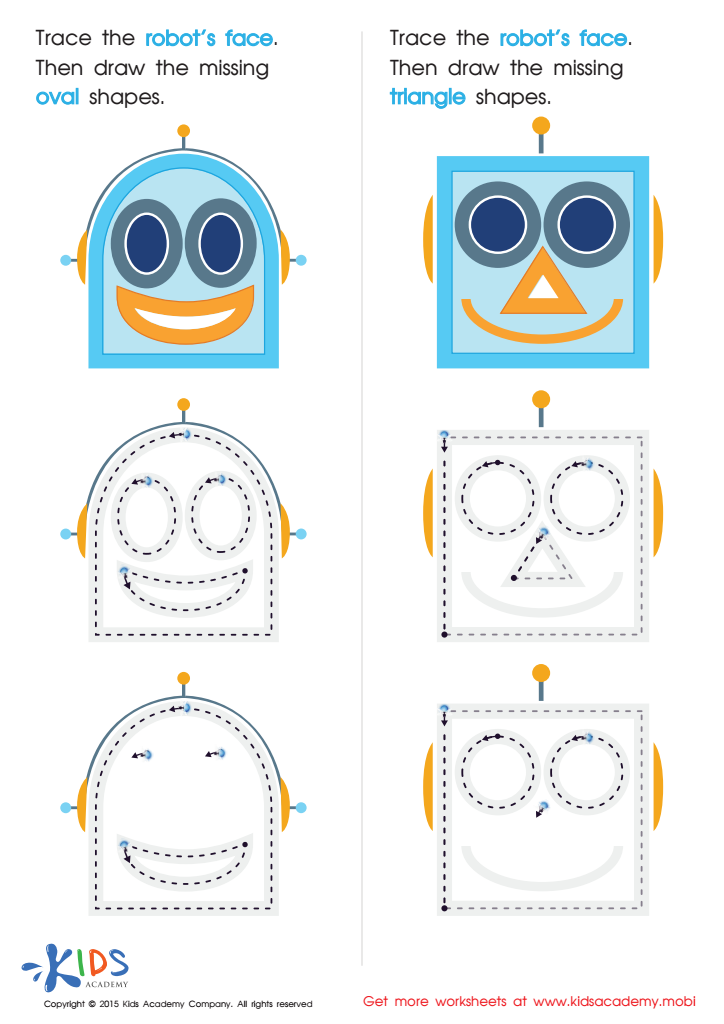
Trace the face and draw missing ovals and triangles. Test your memory and recall shapes' names. Check if you remember how to draw them!
Drawing Ovals And Triangles with Fun Printable
Worksheet
Join Kids Academy for Free
Who is primarily going to use this learning content?








Basic geometry, particularly understanding 2D shapes, is crucial for young children ages 3-8 for several reasons. At this developmental stage, recognizing and interacting with shapes lays the foundation for essential cognitive and academic skills. First, understanding shapes enhances spatial awareness and visual perception. Children learn to observe and categorize their environment, which supports problem-solving and critical thinking.
Second, familiarity with shapes aids in developing fine motor skills. For example, drawing or identifying shapes helps in hand-eye coordination and prepares children for writing and other dexterous activities.
Third, early geometry introduces basic math concepts such as symmetry, patterns, and geometry vocabulary, which are fundamental as children progress into more complex mathematical concepts. Recognizing shapes like circles, squares, and triangles helps children grasp the notion of sides and angles, forming the basis for future studies in geometry.
Additionally, knowing shapes supports language development and literacy, as children learn to describe their observations and enhance their communication skills. Engaging with shapes through fun and educational activities—such as puzzles, drawing, or interactive games—also makes learning enjoyable and fosters a lifelong interest in learning and exploration. Therefore, a solid grasp of 2D shapes provides a comprehensive foundation for academic and personal growth in young children.