Logical Reasoning 2D Shapes Worksheets for Ages 3-8
4 filtered results
Difficulty Level
Grade
Age
-
From - To
Subject
Activity
Standards
Discover our engaging "Logical Reasoning 2D Shapes Worksheets" designed specifically for children ages 3-8! These colorful, interactive worksheets help young learners develop crucial logical reasoning skills by exploring a variety of 2D shapes. Kids will love identifying, sorting, and matching circles, squares, triangles, and more, all while enhancing their problem-solving abilities. Perfect for home or classroom use, our expertly crafted activities make learning fun and effective. Foster a love of math and critical thinking in your child today with these delightful, educational resources from Kids Academy! Download and print now to get started!
Favorites
With answer key
Interactive
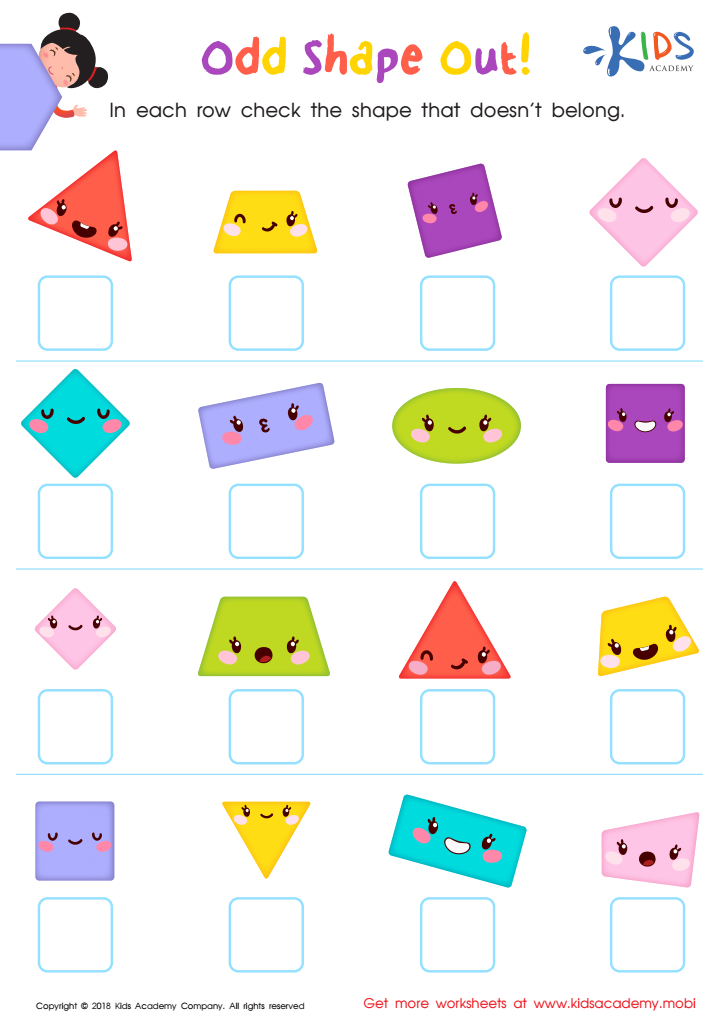
Odd Shape Out Worksheet for Grade 3
Time to test your child's shape knowledge! With this worksheet, help them find the odd shape out in each row and check the box under it. Print out the pdf and look through it with them – each row has four brightly colored shapes. See if they can spot any differences among them and then check the box below the shape that does not belong.
 Assign to My Students
Odd Shape Out Worksheet for Grade 3
Worksheet

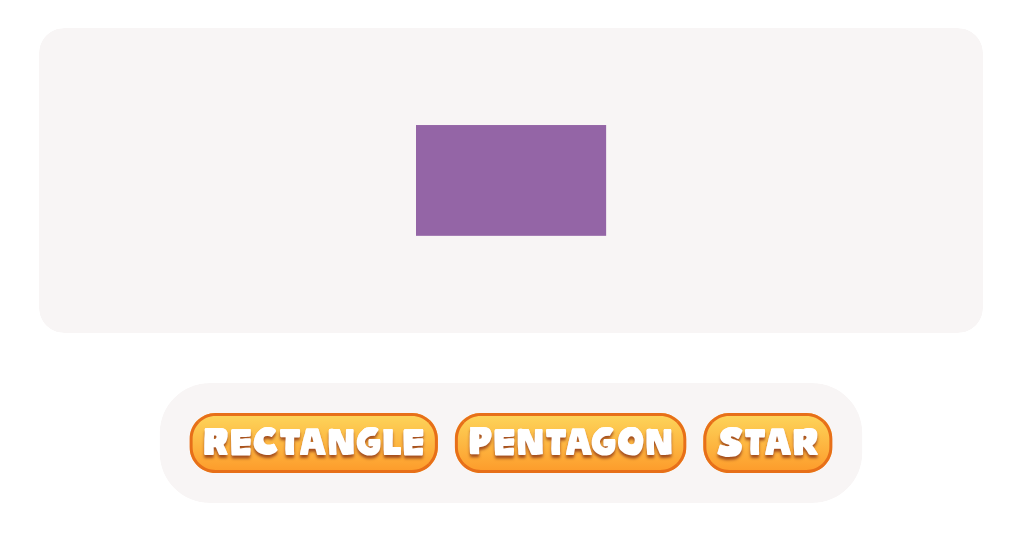
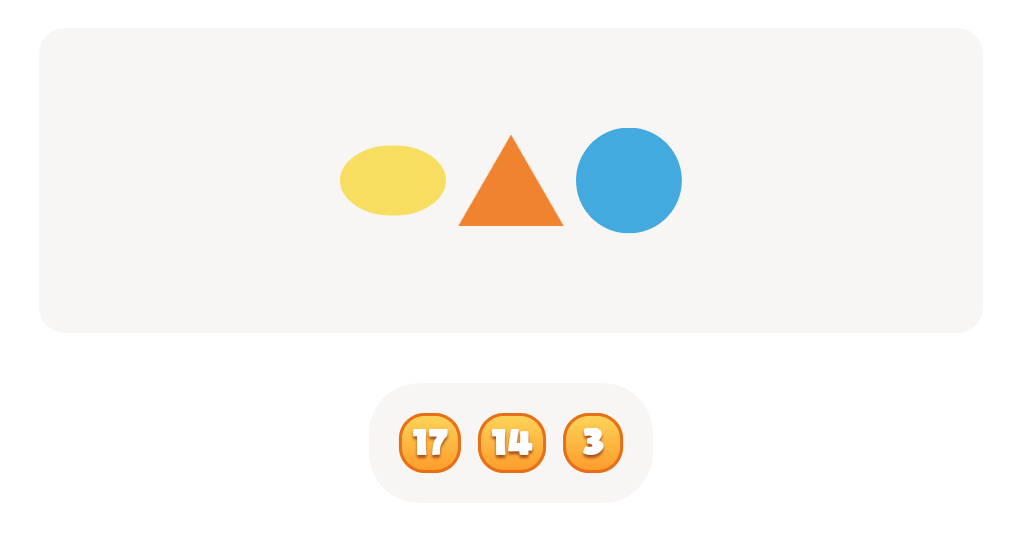
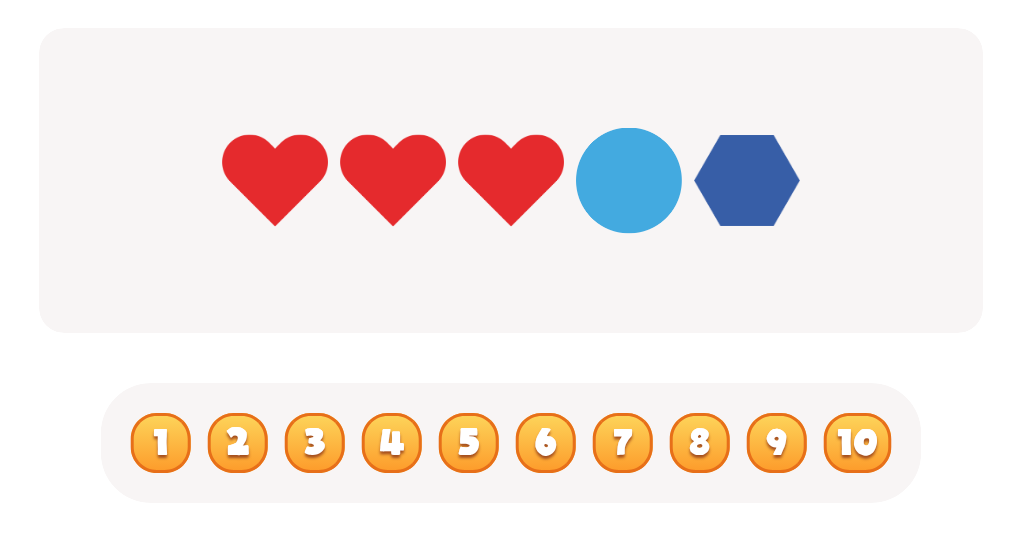
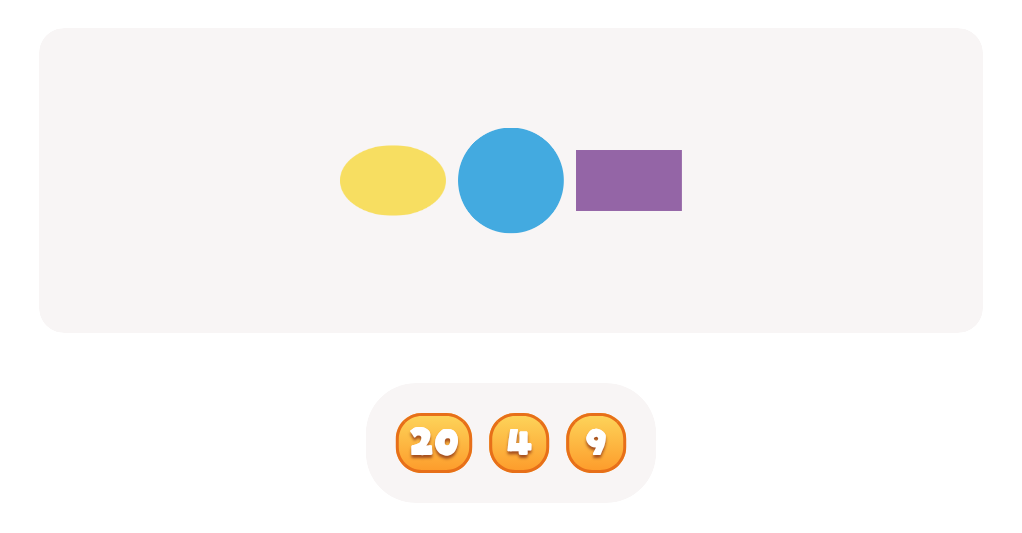
Find the Pattern Worksheet
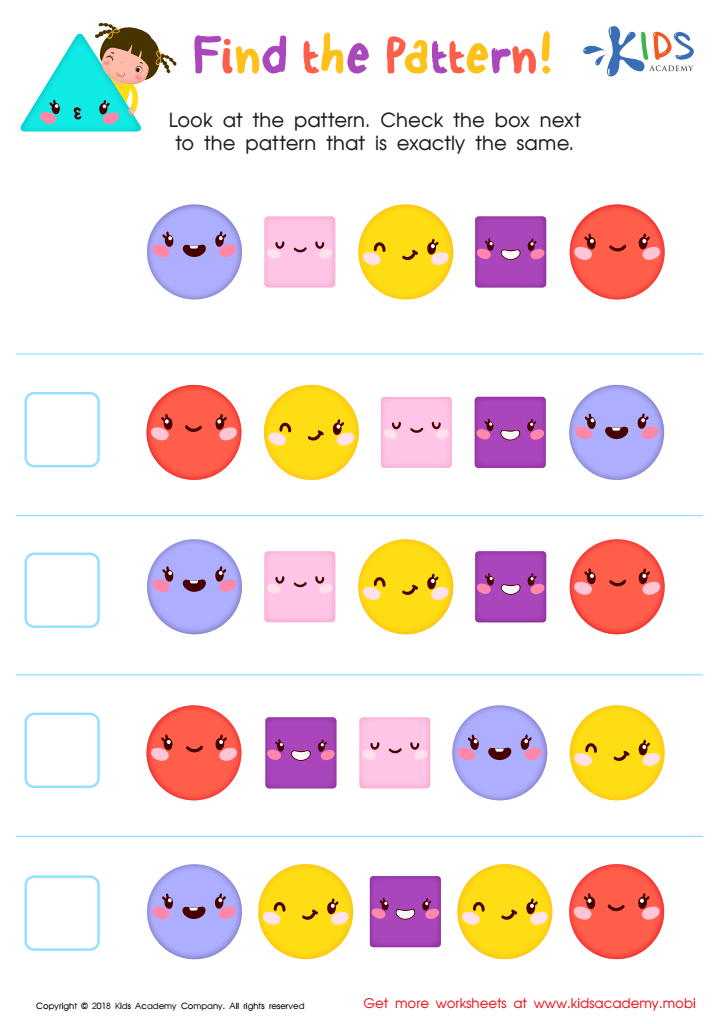
This colorful pattern worksheet is perfect for testing your kids' pattern recognition. The bright colors will keep them engaged, while they check the box next to the pattern that is the same. Ask your kids to identify the colors used and see how well they can spot similarities!
Find the Pattern Worksheet
Worksheet
Shapes: Assessment 2 Worksheet
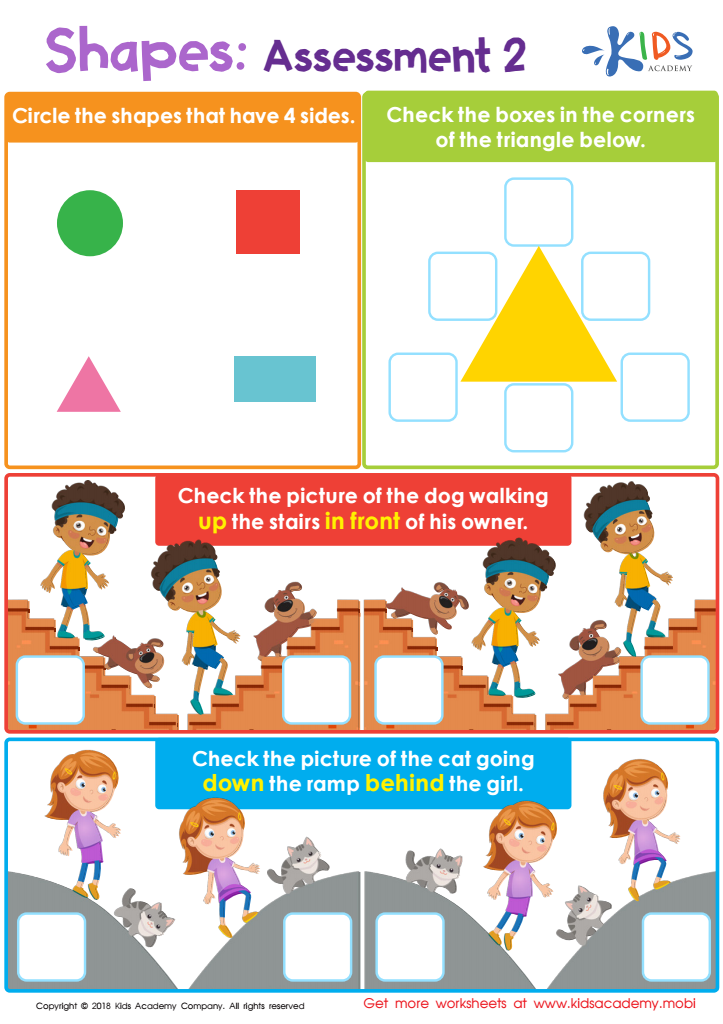
This geometry worksheet assesses a student's knowledge of shapes and positional words. They must identify shapes with 4 sides and corners on a triangle. The worksheet also tests understanding of words like "up", "front", "down" and "behind". Easily determine what your student knows about these concepts with this downloadable worksheet!
Shapes: Assessment 2 Worksheet
Worksheet
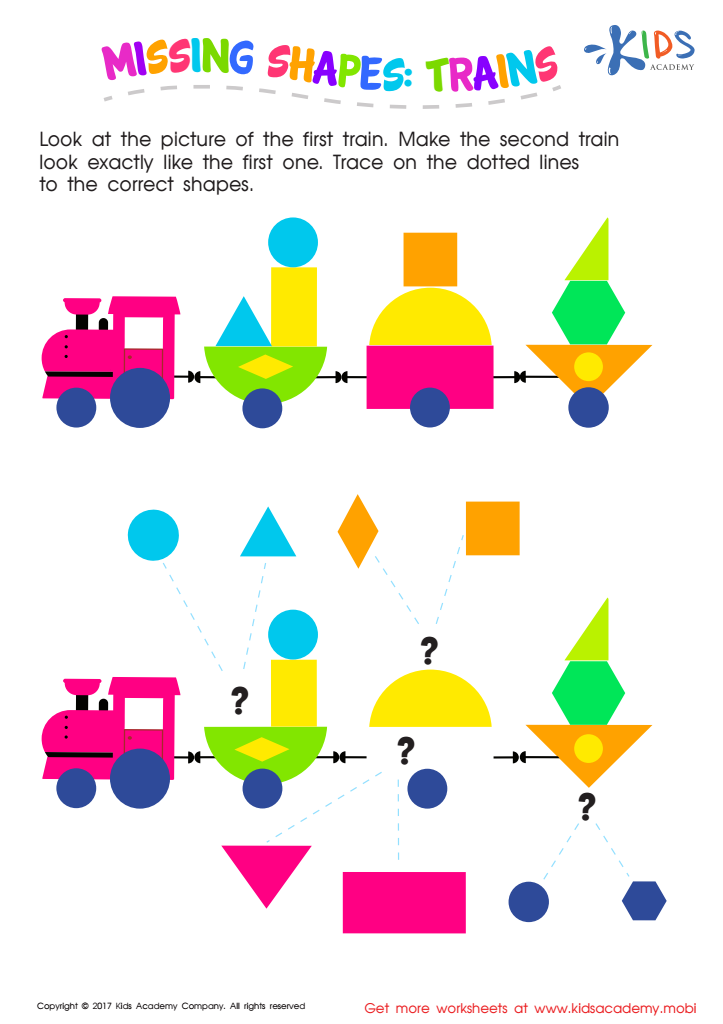
Missing Shapes: Trains Worksheet
Before beginning, ask your child what the object in the picture is, the sound it makes and where it can be found. If they know, confidently move on. Help them make the second train look like the first by tracing dotted lines. Hold their hand for guidance.
Missing Shapes: Trains Worksheet
Worksheet
Join Kids Academy for Free
Who is primarily going to use this learning content?








Logical reasoning and the understanding of 2D shapes are crucial components of early childhood development, playing a significant role in laying the foundation for future mathematical competencies and critical thinking skills. For children aged 3 to 8, engaging with 2D shapes fosters spatial awareness and the ability to discern patterns, which are fundamental skills not only in math but also in everyday problem-solving. Recognizing shapes like circles, squares, and triangles helps children to classify objects, understand geometry, and improves their visual perception.
Moreover, logical reasoning is sharpened as children learn to identify and compare different shapes, understand their properties, and figure out how they fit together in a coherent structure. For instance, identifying that squares have four equal sides or that triangles can vary in type enhances their cognitive structured thinking.
Parents and teachers who invest time in activities involving 2D shapes help nurture children’s abilities to think systematically and make predictions based on observed patterns. These early experiences might include playing with shape sorters, drawing shapes, or even simple jigsaw puzzles. By enhancing logical reasoning skills and shape recognition, children can better navigate more complex mathematical concepts in later schooling, boosting their confidence and academic success. Thus, a focus on 2D shapes and logical reasoning equips children not only for academic achievement but also practical life skills.