Recognizing shapes 2D Shapes Worksheets for Ages 3-8
5 filtered results
-
From - To
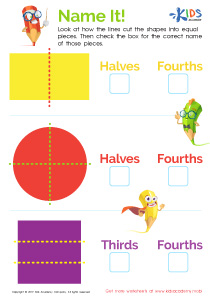
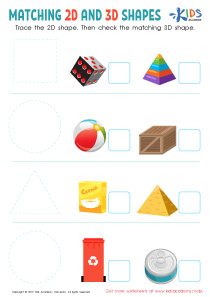
Unlock the world of geometry with our "Recognizing 2D Shapes Worksheets" designed for children aged 3-8. At Kids Academy, we offer expertly crafted worksheets that make learning fun and engaging, helping young minds identify and name a variety of 2D shapes. Our activities cater to different learning levels, enhancing shape recognition skills through visual aids, tracing, coloring, and interactive tasks. Each worksheet is thoughtfully created to promote critical thinking, fine motor skills, and early math foundations. Perfect for both classroom use and at-home practice, these worksheets are a delightful addition to any child's learning journey.
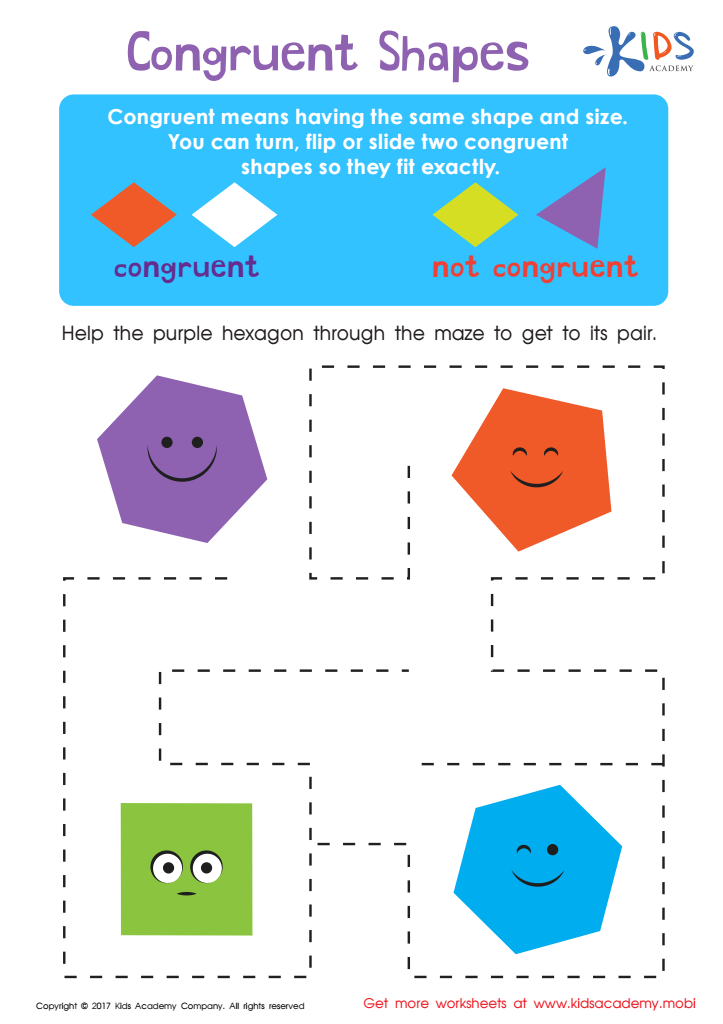
Congruent Shapes Worksheet
 Assign to My Students

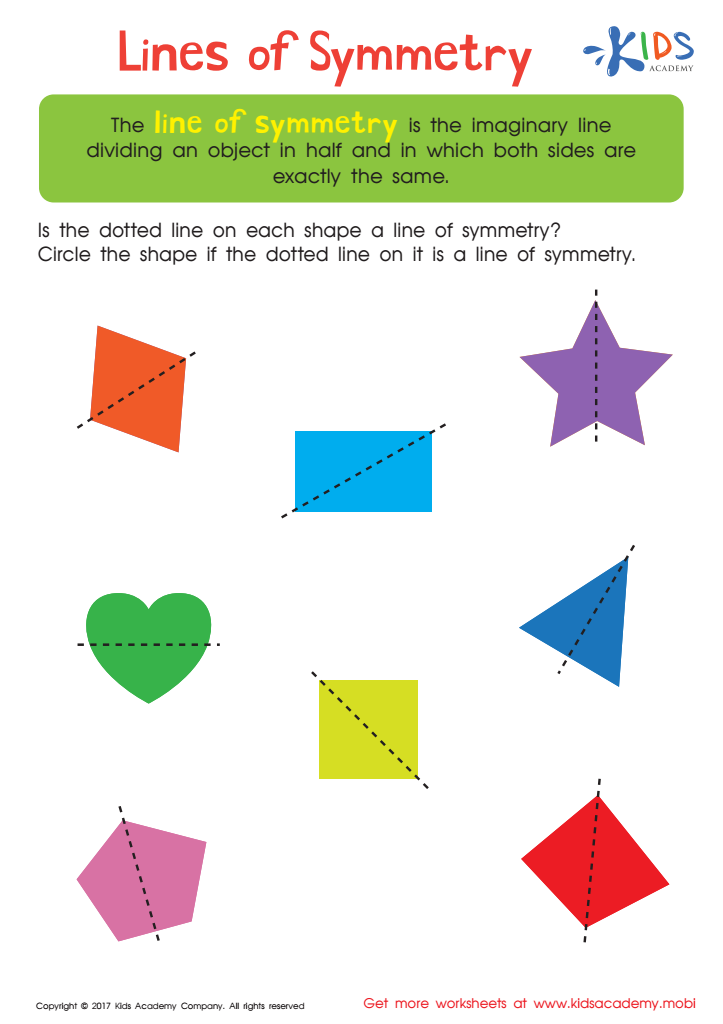
Lines of Symmetry Printable
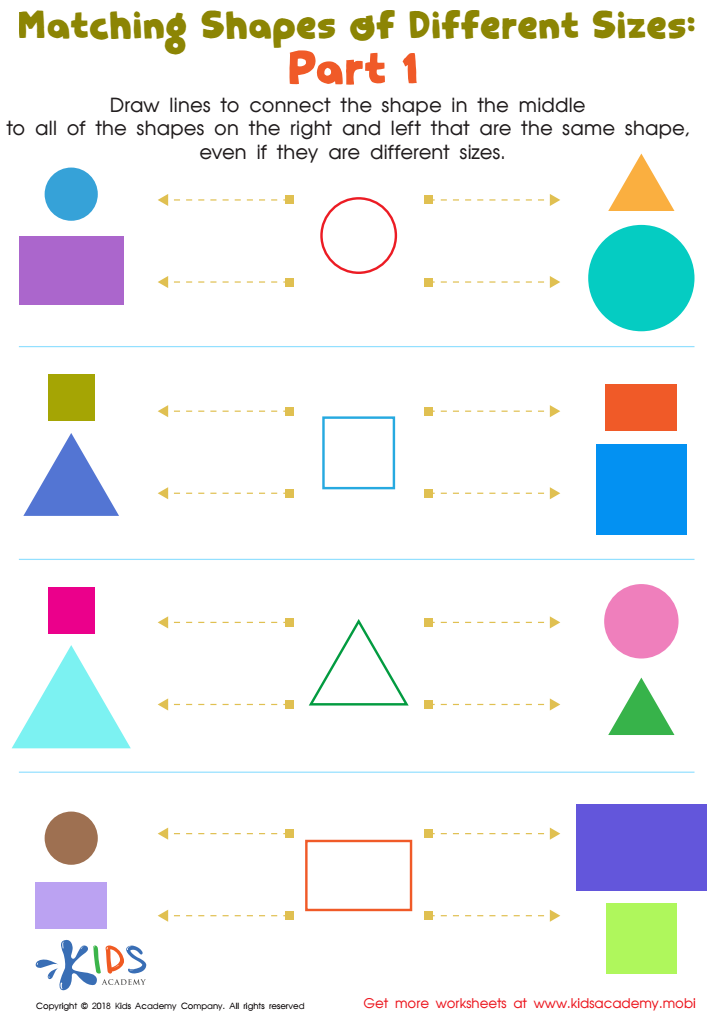
Geometry: part 1 Worksheet
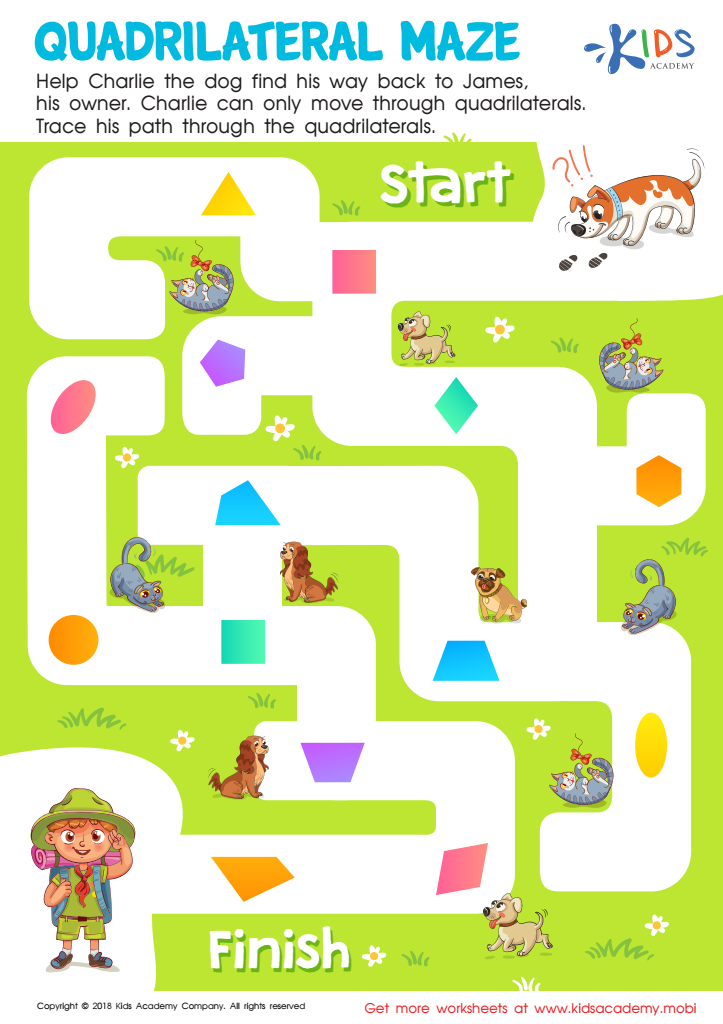
Quadrilateral Maze Worksheet
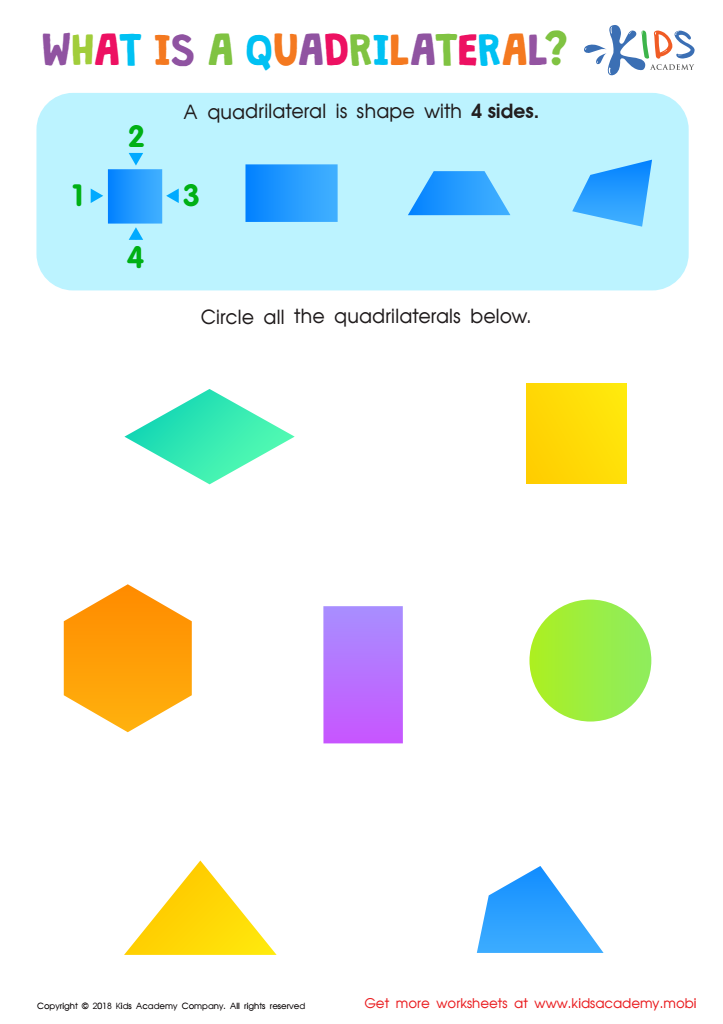
What Is a Quadrilateral? Worksheet








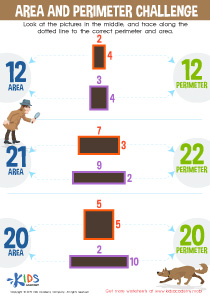
Recognizing 2D shapes is fundamental for young children, typically between ages 3-8, for several reasons. Firstly, understanding shapes boosts early mathematics skills, providing the foundation for geometry. By learning about circles, triangles, squares, and rectangles, children begin to grasp essential math concepts, such as symmetry, area, and perimeter.
Secondly, it enhances fine motor skills and spatial awareness. When children identify and interact with shapes, they improve hand-eye coordination and the ability to judge distances and space, which is crucial for everyday tasks like writing and drawing. Recognizing 2D shapes also supports cognitive development by encouraging logical thinking and problem-solving. Sorting, comparing, and contrasting shapes helps children recognize patterns and categorize objects, which are vital brain functions.
Moreover, familiarity with shapes lays the groundwork for more complex ideas in later grades, like understanding three-dimensional figures and their properties. Social and communication skills also benefit as children describe shapes, discuss their characteristics, and work with peers on shape-based activities. In essence, recognizing 2D shapes is not merely about identifying figures; it is an integrative activity that advances mathematical reasoning, motor skills, cognitive abilities, and effective communication. Hence, both parents and teachers should prioritize incorporating shape recognition into early childhood education.