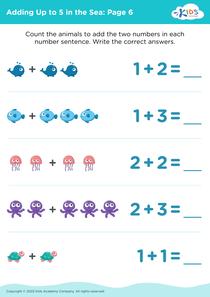
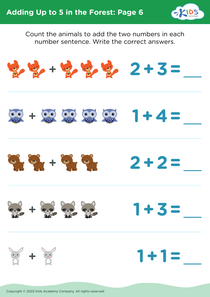
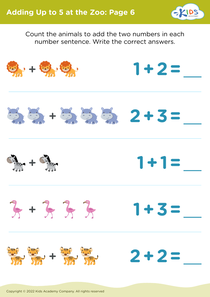
Animal recognition Adding on the Farm Worksheets for Ages 3-8 - Page 2
31 filtered results
-
From - To
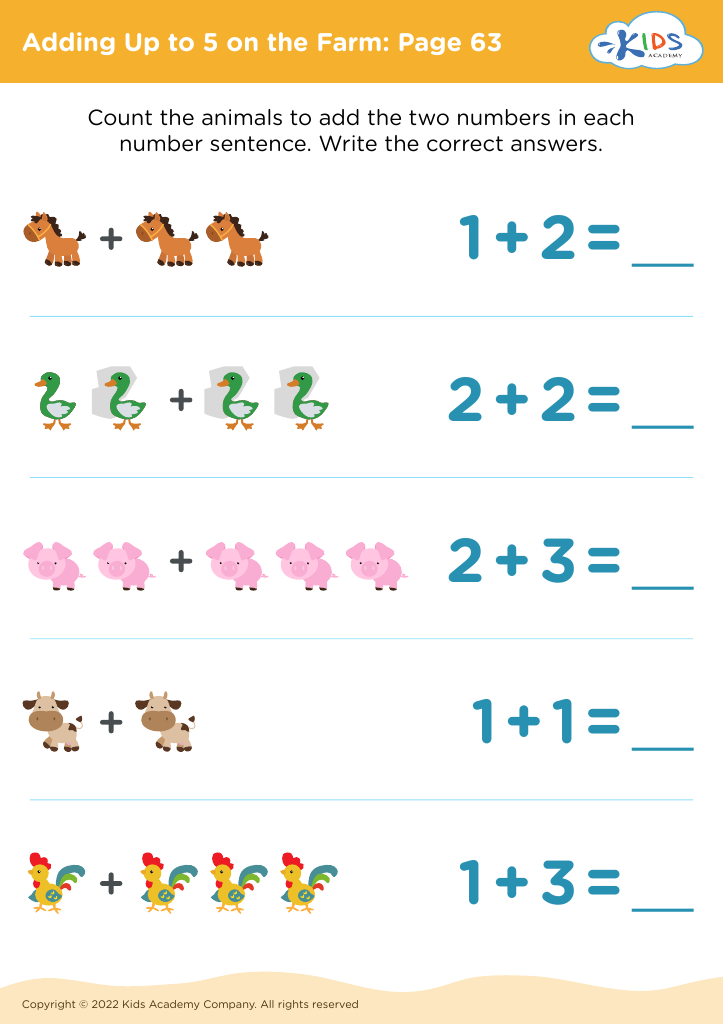
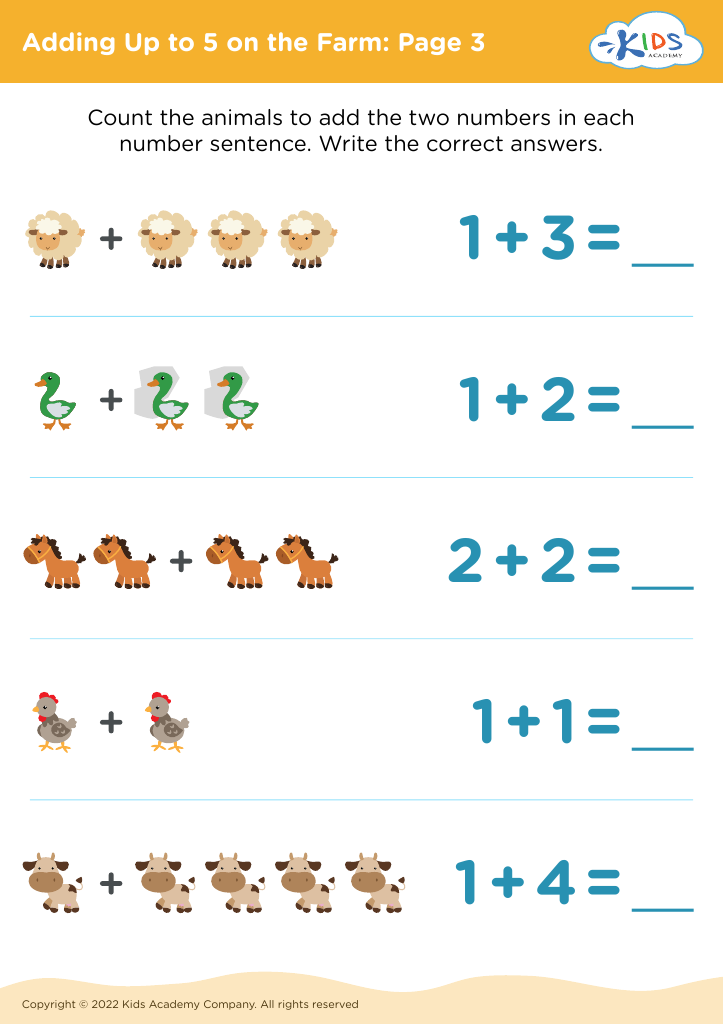
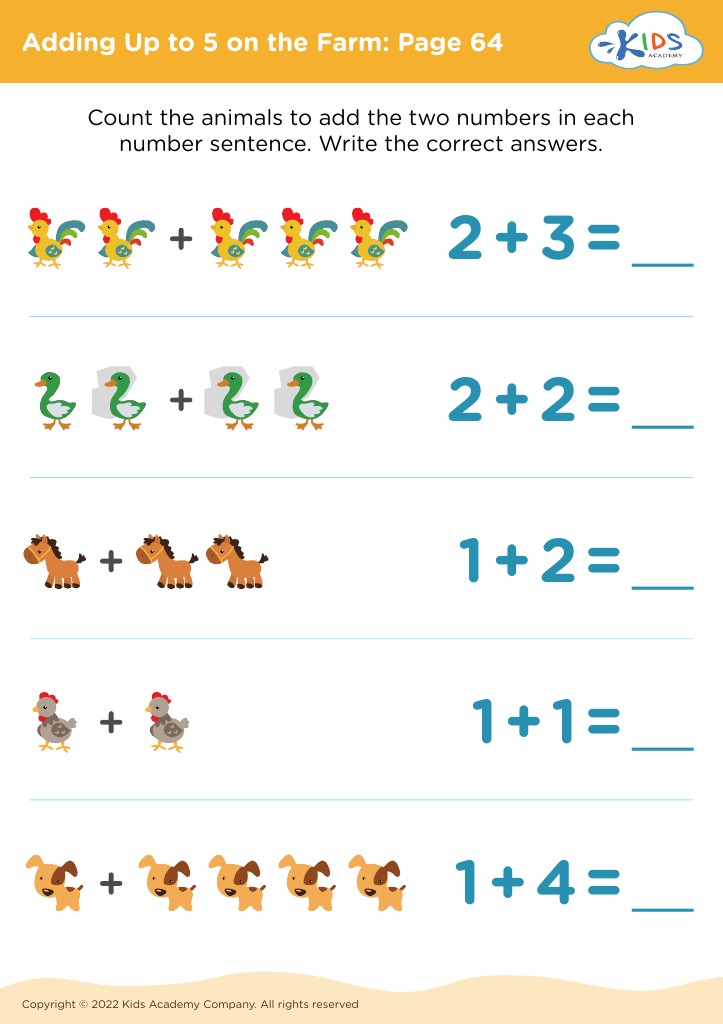
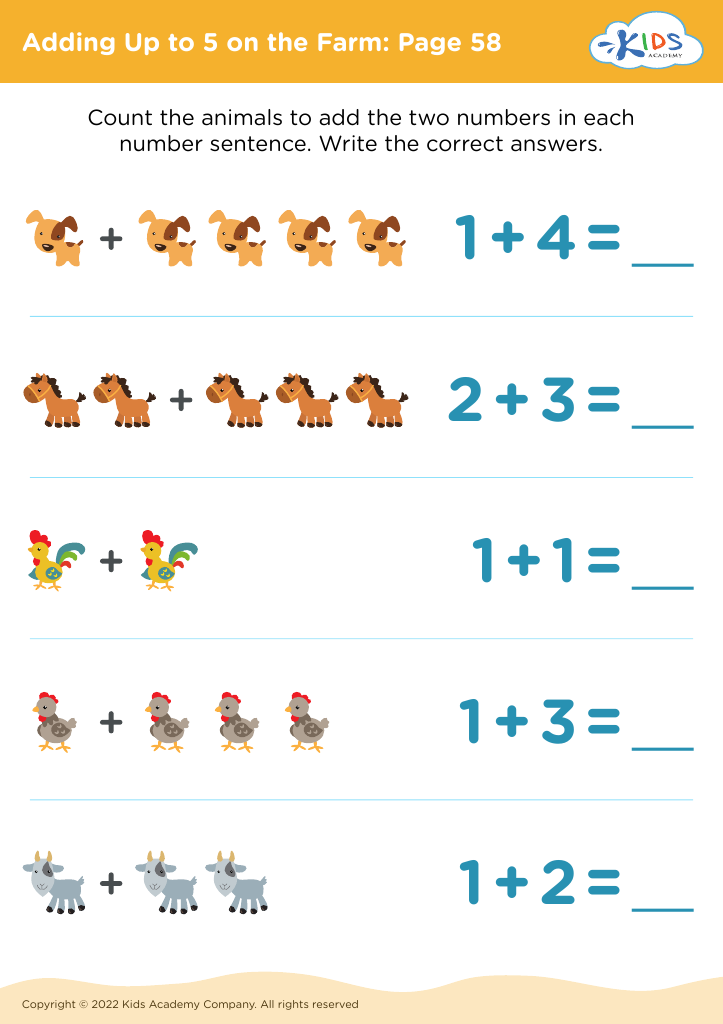
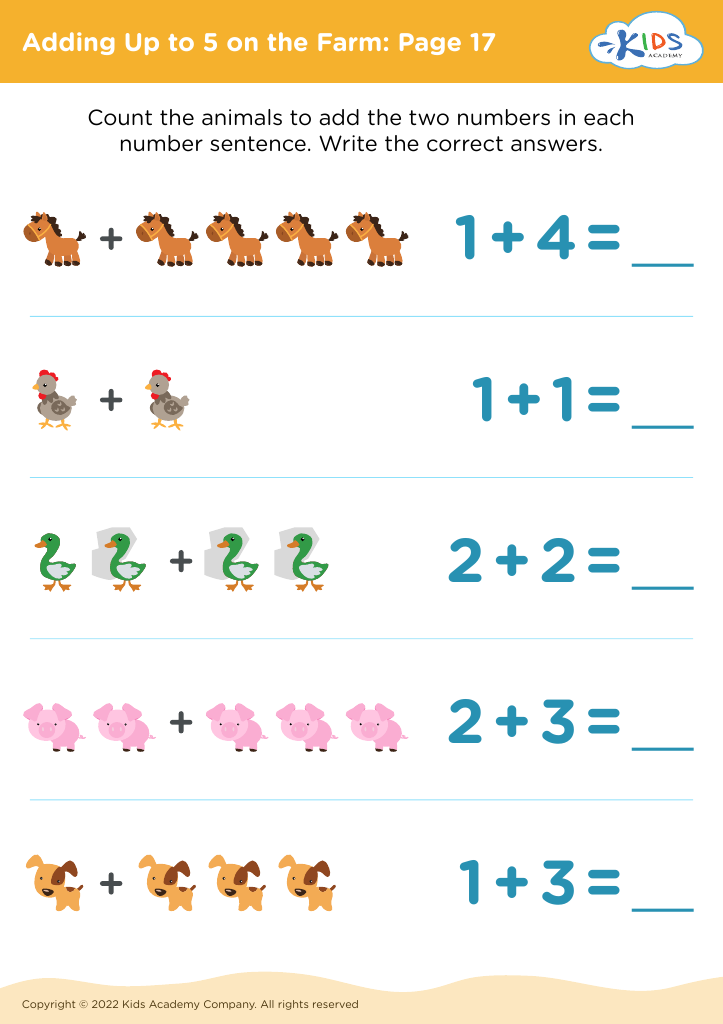
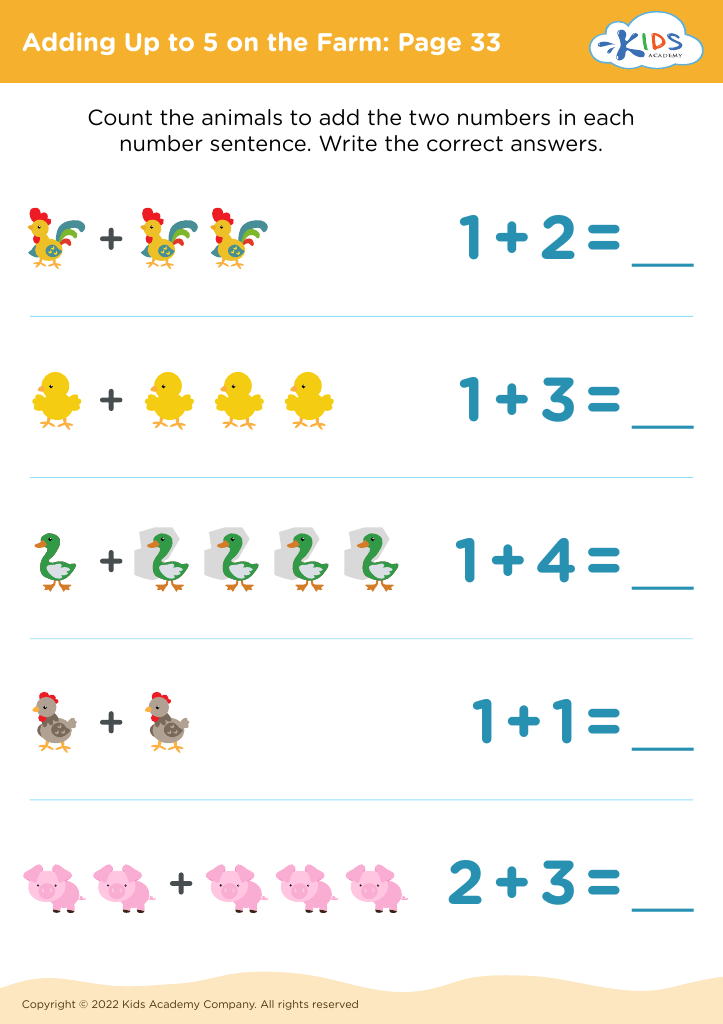
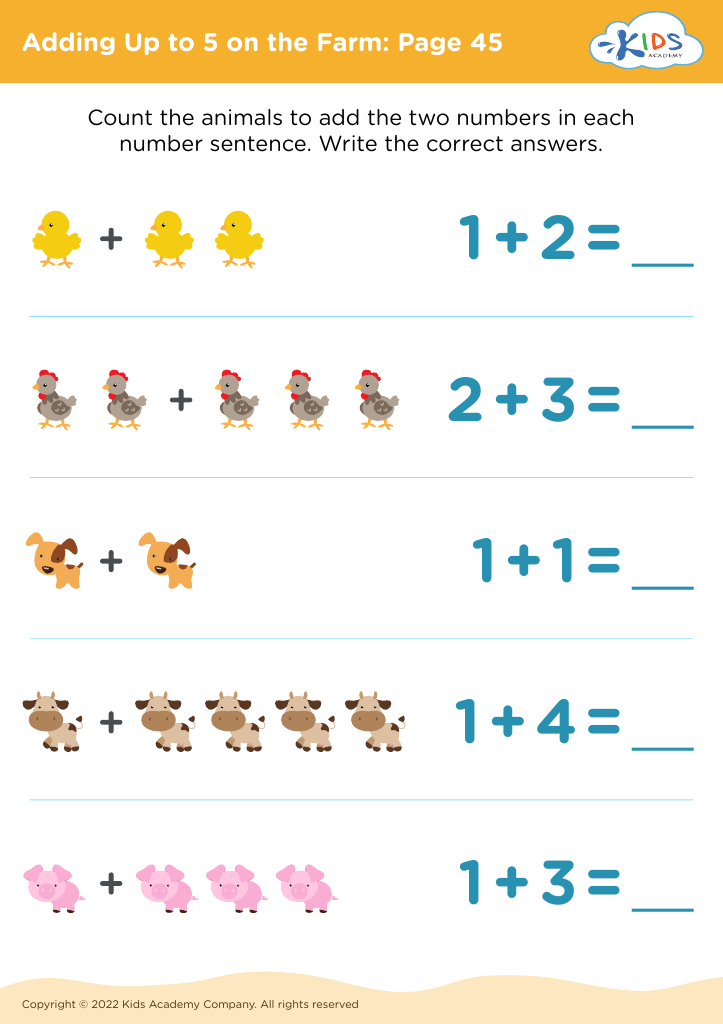



Animal recognition on a farm is an essential aspect of early childhood education for children aged 3-8. First and foremost, it fosters cognitive development as children learn to identify different animals, understand their characteristics, and differentiate between species. This foundational knowledge helps enhance their observational skills and strengthens their vocabulary.
Engaging children with farm animals fosters connections to nature and encourages curiosity about the environment, which is vital for their social and emotional growth. It teaches responsibility, as they learn about the care and importance of animals in agriculture. Furthermore, recognizing animals promotes empathy; as children understand that each animal has unique needs, they develop a sense of compassion.
From an educational standpoint, animal recognition activities can incorporate multiple subjects, like science, language arts, and art, making learning holistic and enjoyable. It provides opportunities for hands-on experiences, whether through field trips or interactive play, making lessons memorable.
Moreover, parents and teachers can utilize this learning to create a sense of community and storytelling, where children share stories or experiences related to farm animals. Ultimately, nurturing this knowledge not only benefits academic growth but also lays the groundwork for lifelong values of respect and stewardship towards living beings.