Basic Arithmetic Adding on the Farm Worksheets for Ages 3-8
4 filtered results
-
From - To
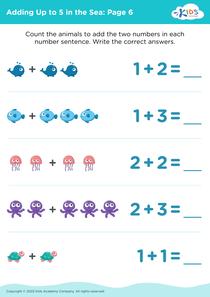
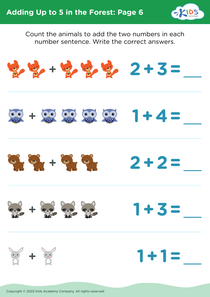
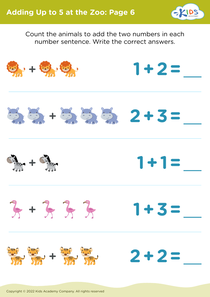
Explore the fun of learning basic arithmetic with our "Adding on the Farm" worksheets, designed specifically for ages 3-8! These engaging worksheets combine vibrant farm-themed illustrations with essential addition exercises, making math enjoyable and relatable for young learners. From counting adorable animals to solving simple addition problems, children will enhance their math skills while developing a love for numbers. Perfect for parents and teachers, these worksheets promote early numeracy in a playful and educational environment. Download and print these resources now to embark on an exciting arithmetic adventure in the joyful world of the farm!
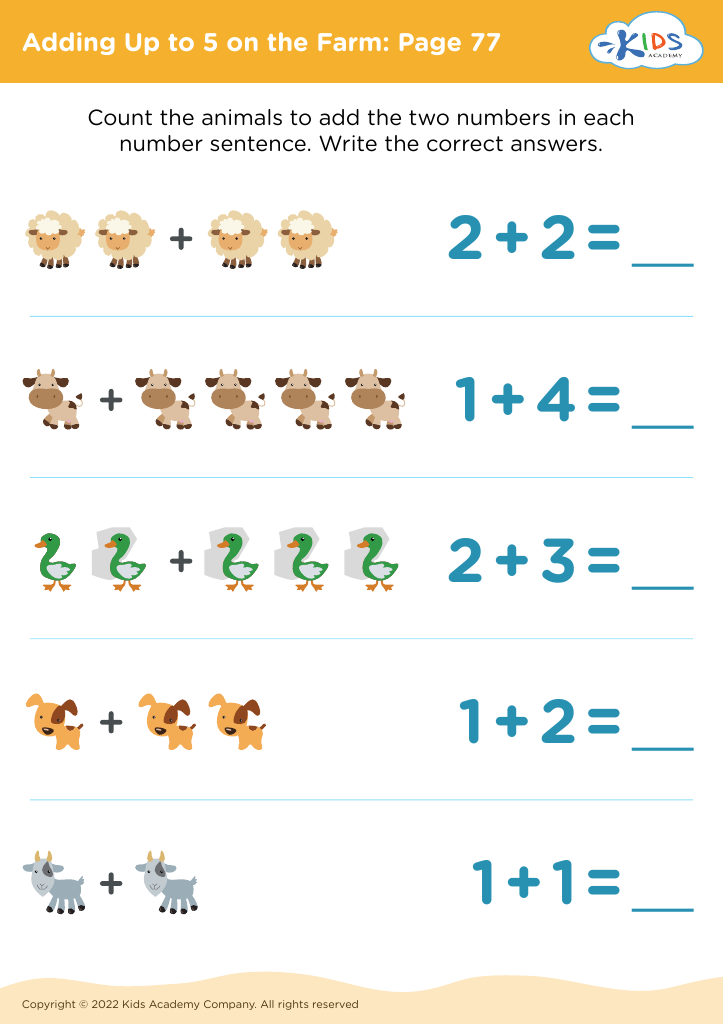
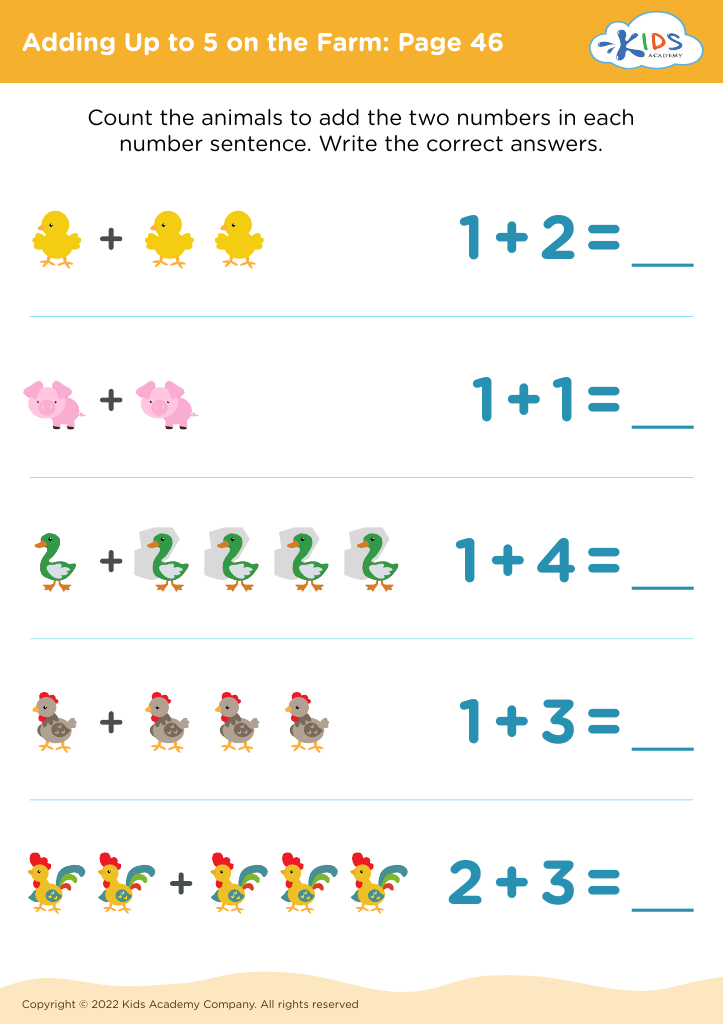
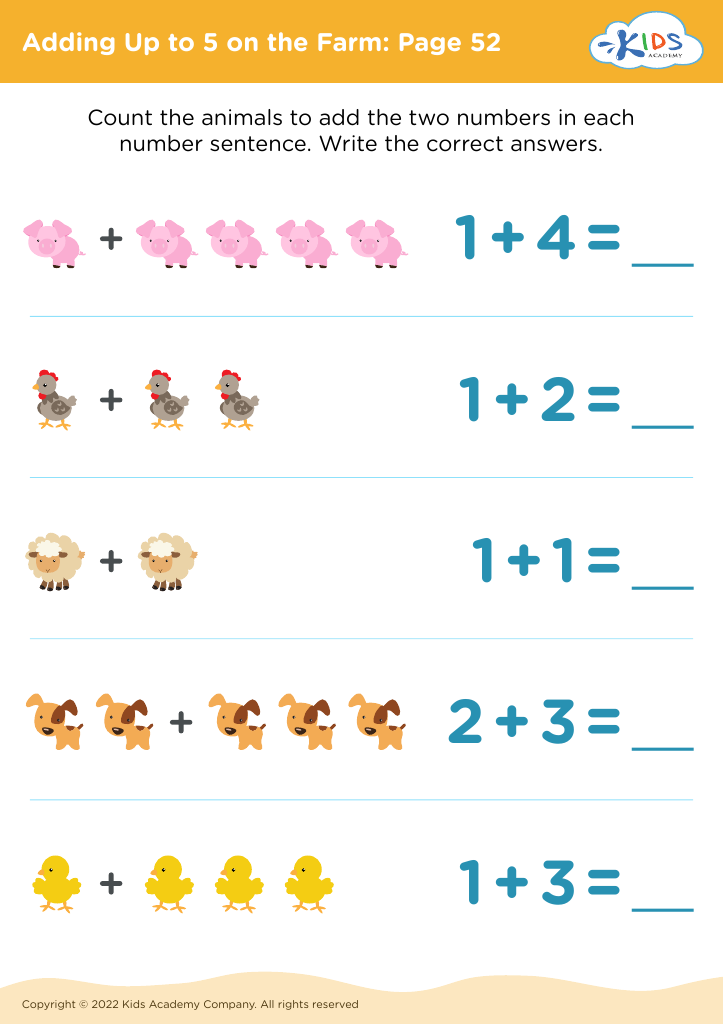
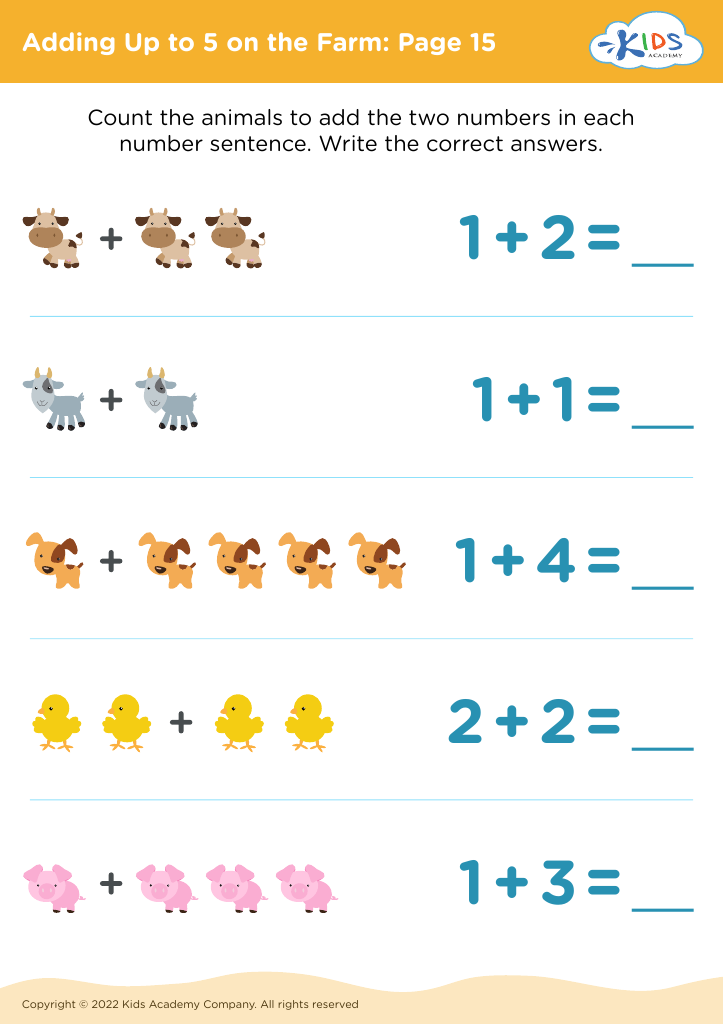



Basic arithmetic, particularly adding, is a fundamental skill that serves as the building block for more complex math concepts. For children ages 3-8, incorporating themes like “Adding on the Farm” can make learning engaging and relatable. Here’s why parents and teachers should prioritize this:
-
Real-World Application: Farm scenarios allow children to visualize math in everyday life, making it easier for them to understand its practical significance. For example, counting animals or crops can transform abstract numbers into tangible experiences.
-
Cognitive Development: Early exposure to basic arithmetic stimulates brain development. Engaging activities can improve critical thinking, problem-solving skills, and cognitive flexibility, which are essential for overall academic success.
-
Creativity and Exploration: Farm-themed activities often involve hands-on learning, such as using toys or drawings. This creative approach nurtures imaginative thinking and makes math fun, breaking the intimidation factor often associated with numbers.
-
Social Skills: Learning in group settings promotes collaboration and communication. Children can work together on farm-based math problems, thereby enhancing their social interactions and teamwork skills.
-
Foundation for Future Learning: Mastering basic arithmetic in a fun, accessible way sets a strong foundation, enabling children to tackle more difficult math concepts with confidence as they progress in their education.