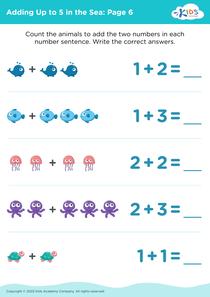
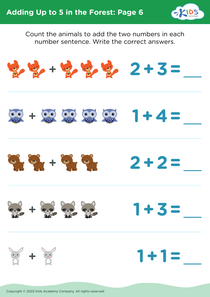
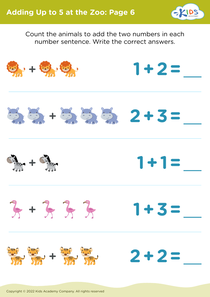
Fine motor skills (writing numbers) Adding on the Farm Worksheets for Ages 3-8
3 filtered results
-
From - To
Enhance your child’s fine motor skills and mathematical abilities with our "Adding on the Farm Worksheets for Ages 3-8". These interactive and engaging worksheets are specifically designed to support young learners in writing numbers and refining their pencil control. Set in a delightful farm theme, each worksheet combines fun farm activities with essential math practice, facilitating learning through play. Perfect for early learners, these printables help children aged 3-8 to accurately write numbers, perform basic addition, and develop their fine motor skills while enjoying charming barnyard scenes and characters. Simple, educational, and entertaining!
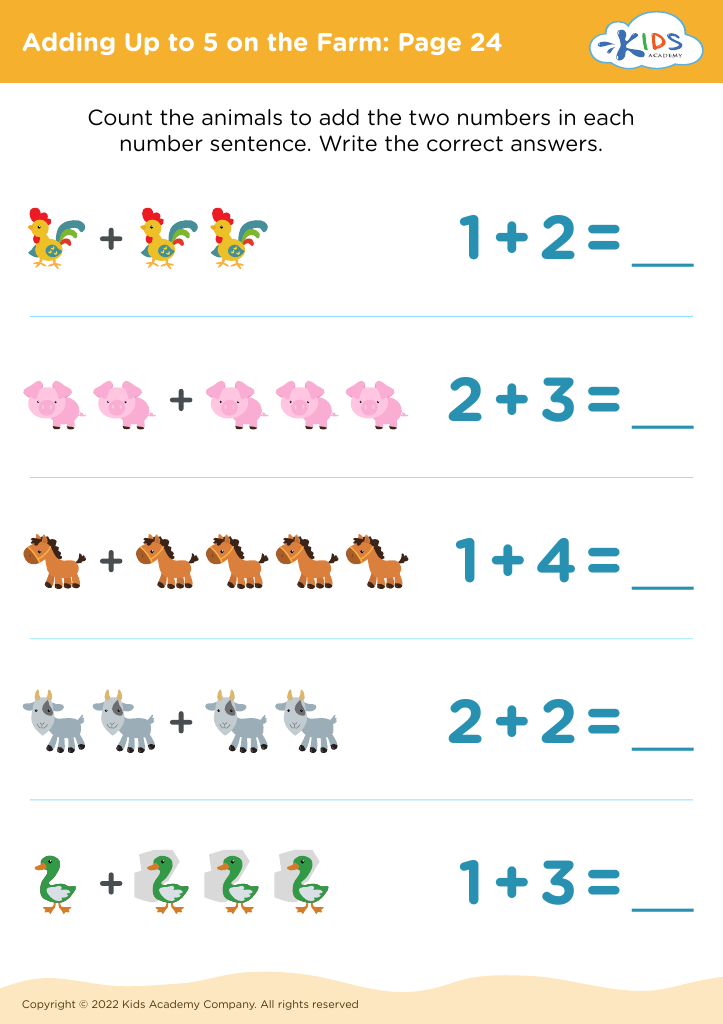
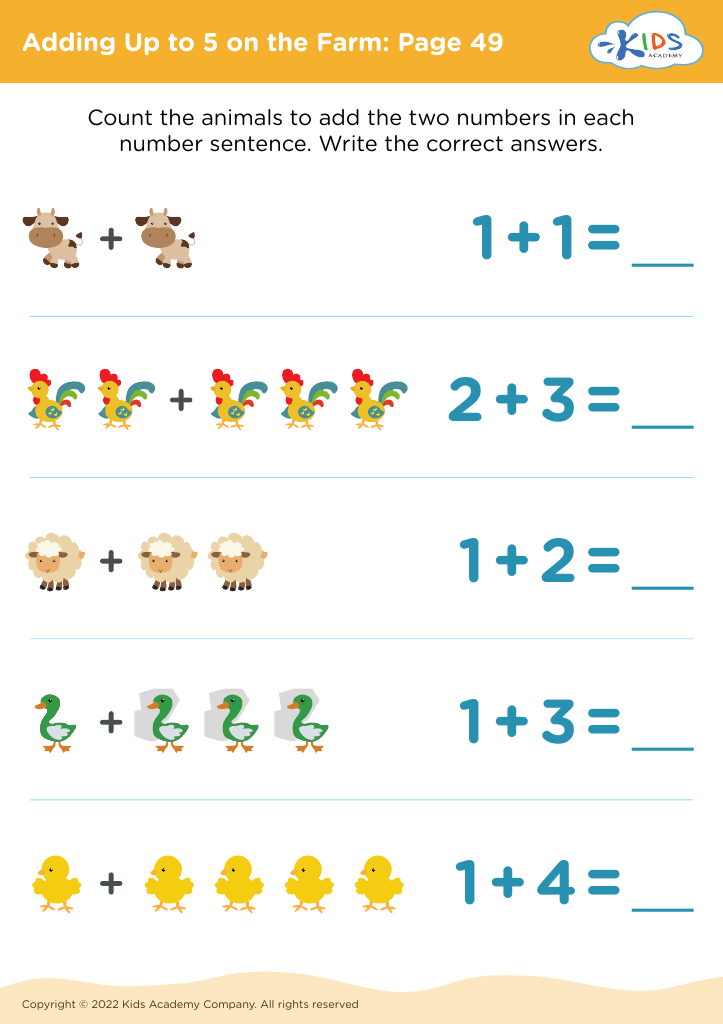
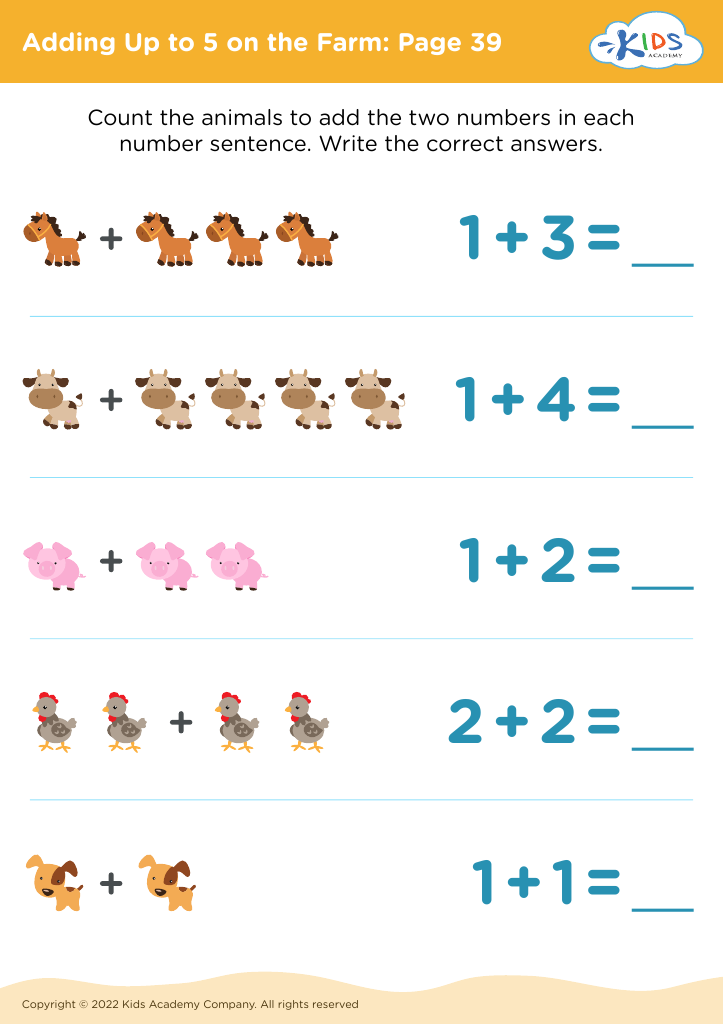



Fine motor skills are essential for young children's development, particularly in their ability to perform tasks that involve precise hand and finger movements, such as writing numbers. Activities like "Adding on the Farm" target ages 3-8 and offer a playful yet educational approach to practice these skills. Early education experts and parents should recognize the importance of developing fine motor skills for several compelling reasons.
First, engaging in such hands-on activities enhances hand-eye coordination, which is crucial for writing, drawing, and various daily tasks. Writing numbers requires children to control their pencil grip and movement, laying the foundation for later academic success in mathematics and literacy.
Second, activities like adding on the farm integrate basic arithmetic concepts with fine motor practice. Children not only improve their physical skills but also grasp foundational mathematical ideas in an engaging and accessible way. This dual focus cultivates both cognitive and motor development.
Third, fine motor skills reinforce children's independence and confidence. As children master the ability to write numbers and perform simple addition, they gain a sense of accomplishment, fostering a positive attitude towards learning.
Incorporating educational activities that combine fine motor skill practice with foundational arithmetic learning can ensure holistic development, essential for future academic pursuits and everyday life tasks. Therefore, parents and teachers should seize opportunities to nurture fine motor skills through creative and educational experiences.