Fine Motor Skills Adding up to 100 with Regrouping Worksheets for Ages 3-8
3 filtered results
-
From - To
Enhance your child's fine motor skills and mathematical abilities with our "Fine Motor Skills Adding up to 100 with Regrouping Worksheets" designed for children aged 3-8. These engaging, printable worksheets foster essential skills, combining counting and writing practices. Through fun activities like tracing, filling in numbers, and visual aids, young learners build dexterity and strengthen their understanding of addition and regrouping. Each worksheet is thoughtfully crafted to suit developmental stages, offering a comprehensive learning experience. Perfect for both classroom and home use, these worksheets make mastering early math concepts enjoyable and effective. Unlock your child's potential today!
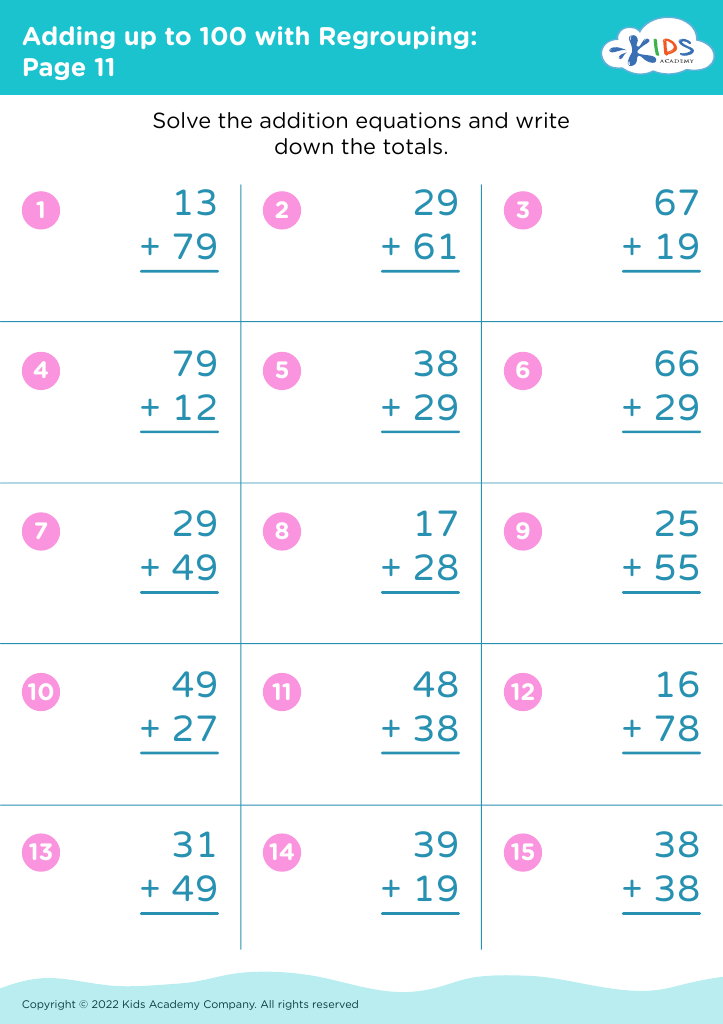
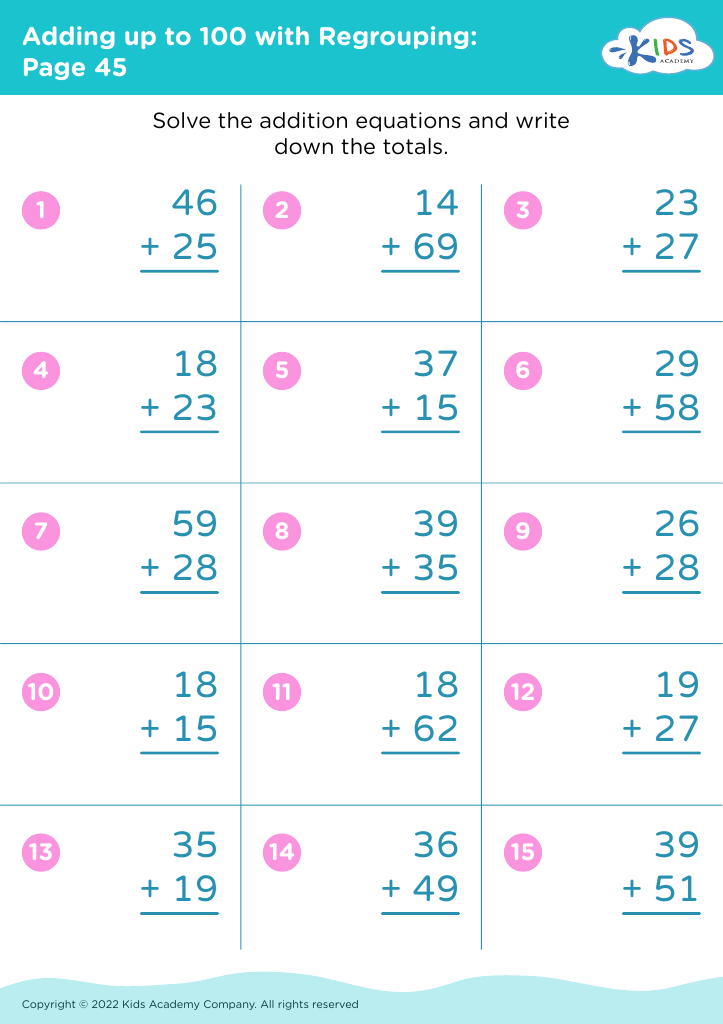
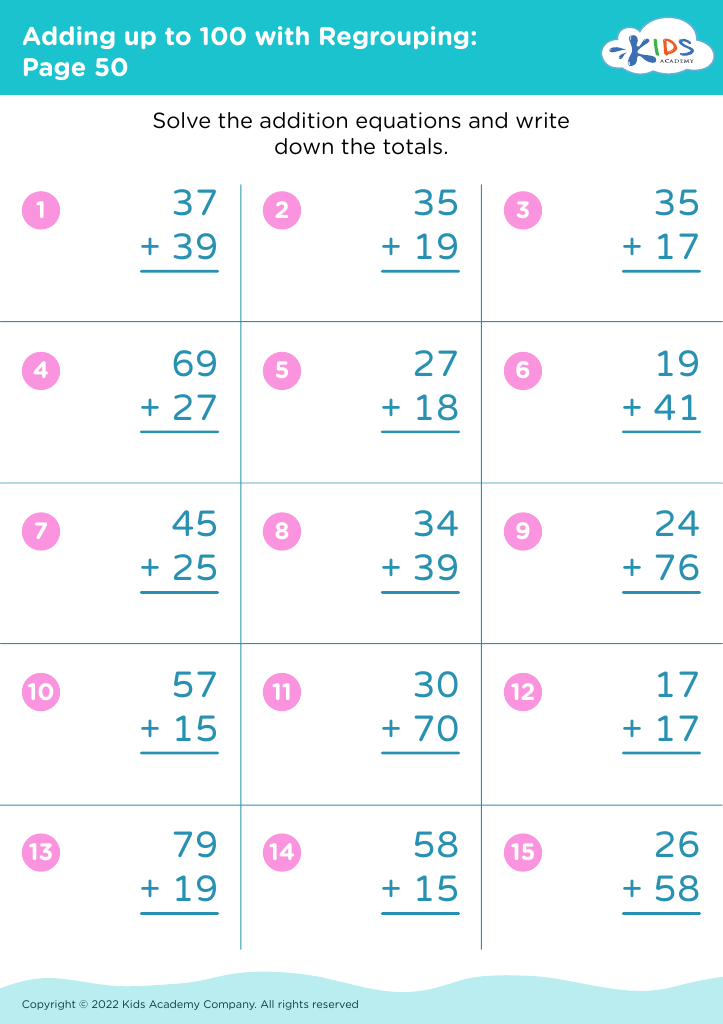




Fine motor skills are critical for young children's overall development, particularly when it comes to adding numbers up to 100 with regrouping. For children ages 3-8, mastering these skills prepares the foundation for critical academic and everyday tasks.
Parents and teachers should prioritize fine motor skills because they play a significant role in mathematical concepts involving regrouping. To perform addition with regrouping proficiently, children must be able to write, manipulate objects, and use tools such as pencils and calculators. Activities like holding pencils correctly, tracing numbers, and manipulating counters strengthen the small muscles in their hands, which are vital for precise movements.
Enhancing these skills directly impacts their ability to focus on the task at hand, as efficient motor skills reduce the cognitive load and make problem-solving easier. Additionally, strong fine motor skills enhance writing legibility and can encourage a positive attitude toward learning, as children feel more competent and confident.
Moreover, honing fine motor skills supports cognitive development. Tasks that require precision can sometimes be seen as early puzzles, spurring critical thinking and problem-solving skills.
In conclusion, fostering fine motor skills in the context of math is crucial as it not only assists with immediate academic tasks but also lays down neural pathways essential for broader cognitive and personal development. Encourage playful, engaging, and diverse activities to build these essential skills effectively.